UNICEF–FAST Teacher Digital & AI Literacy Drive Reaches 90% of Kotayk Province, Armenia
Armenia
From March to June 2026, UNICEF Armenia and the Foundation for Armenian Science and Technology trained 252 teachers from 91 …
Venezuela · Caracas · See the Venezuela profile · See the Caracas profile
Evidence: Descriptive / self-reported Top 81% 33/100 · Ask Evidence Copilot about this practice
Fundación Telefónica Movistar's first nationwide survey of 1,726 Venezuelan primary teachers found 40% already use AI tools like ChatGPT, with a sharp generational gap (80% of young teachers vs 54% of over-65s aware of AI), prompting a new ethics-focused ProFuturo training track.
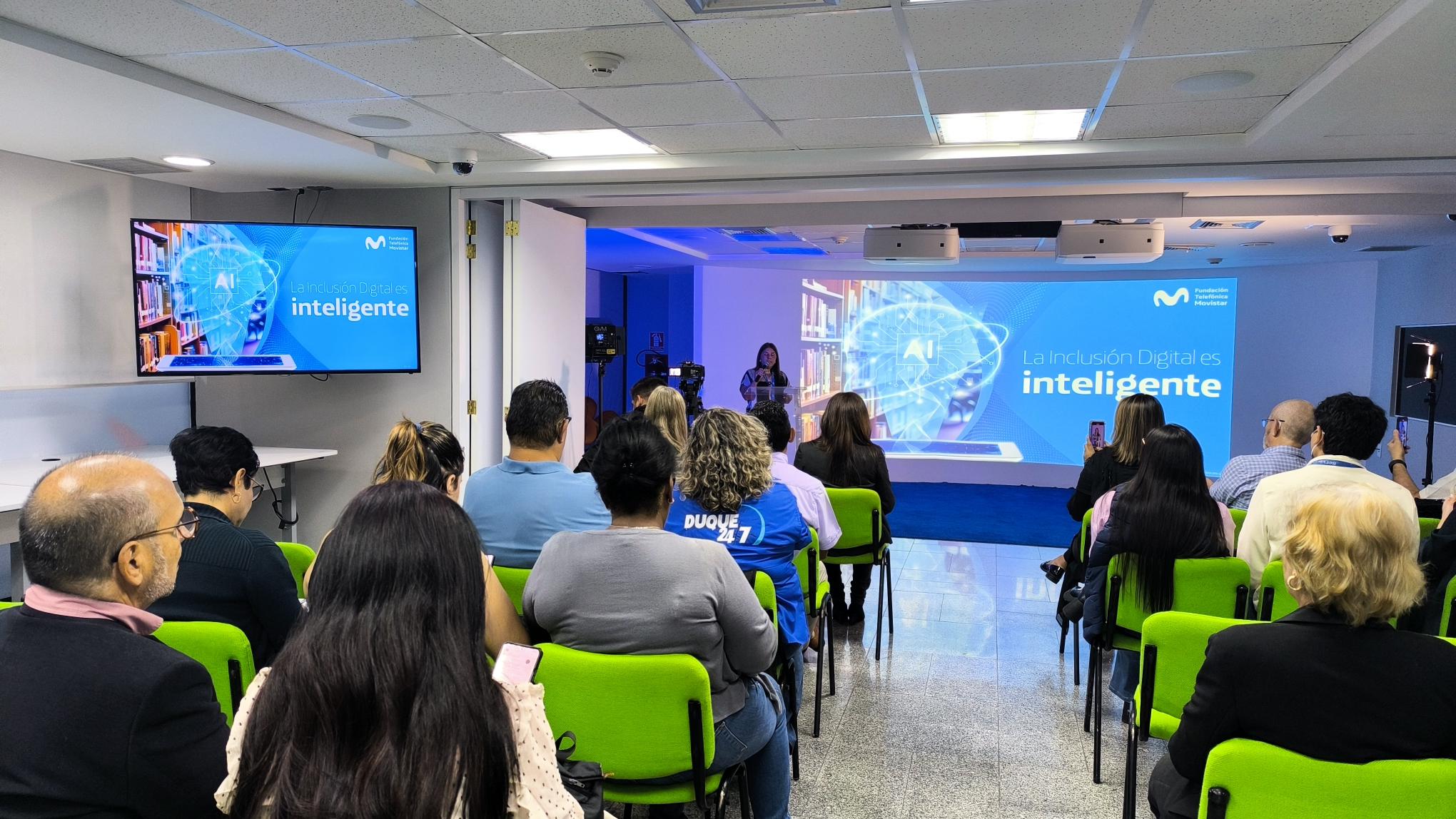
Fundación Telefónica Movistar's Digital Education team, with statistical analysis support from Jenny Bolívar of the Universidad Central de Venezuela's School of Statistics, ran Venezuela's first large-scale study of how primary-school teachers use AI in the classroom, reaching 1,726 teachers across the country's states and presented on 6 March 2025.
The study aimed to measure teacher AI adoption and attitudes, and to inform a new AI-training track for educators, focused on ethical and pedagogical use, inside the foundation's regional ProFuturo digital-education platform.
The survey measured which AI tools teachers already use in their pedagogical practice and their awareness levels across age groups, surfacing a clear generational divide.
40% of respondents said they already use AI tools in their pedagogical practice, dominated by general-purpose assistants — ChatGPT (37%), Bing (22%) and Gemini (18%) — while purpose-built education tools such as Grammarly (10%) and Tutor.ai (11%) remain little known. 80% of younger teachers reported familiarity with AI, against 54% of teachers over 65.
Teachers who use AI credited it with fostering creativity, motivation, collaborative work, problem-solving and critical thinking, but the report is explicit that this is an adoption snapshot, not a measured learning-outcomes study. Venezuela is described as still in an early, exploratory phase of AI adoption in classrooms amid acute resource constraints in its public education system.
Philanthropic / foundation funding
Indicative funding routes for practices of this type — always check each programme's current calls and eligibility rules.
Do you run this practice? Claim it — verified implementers get a public contact pathway and can propose corrections.
Where this practice's information was retrieved from, and when.
Armenia
From March to June 2026, UNICEF Armenia and the Foundation for Armenian Science and Technology trained 252 teachers from 91 …
Canada
Montreal nonprofit Digital Moment (formerly Kids Code Jeunesse) is Canada's sole partner for Experience AI, a free bilingual AI curriculum …
Israel
National 2025 programme deploying AI tools — Google Gemini, MagicSchool, Minecraft sandbox — across all Israeli schools for grades 4–12, …
Slovenia
Slovenia's education ministry, University of Maribor and National Education Institute piloted the EU Erasmus+ AI4T programme, training 262 teachers across …
Open full copilot Grounded in cited practices — always check the sources.