Caribbean Girls Hack — Regional AI, Coding and Digital-Skills Hackathon Network
Grenada
A WEI Forward-led hackathon network has trained over a thousand Caribbean girls aged 13–21 in coding, AI, animation and pitching …
Belgium · Namur · See the Belgium profile
Evidence: Descriptive / self-reported Top 24% 60/100 · Ask Evidence Copilot about this practice
Since 1988, Namur's Interface3 has trained around 400 disadvantaged women a year for IT careers with roughly 70% finding jobs; its 'IA-ccès pour toutes et tous' project extends that model to critical, responsible AI literacy via trained digital mediators.
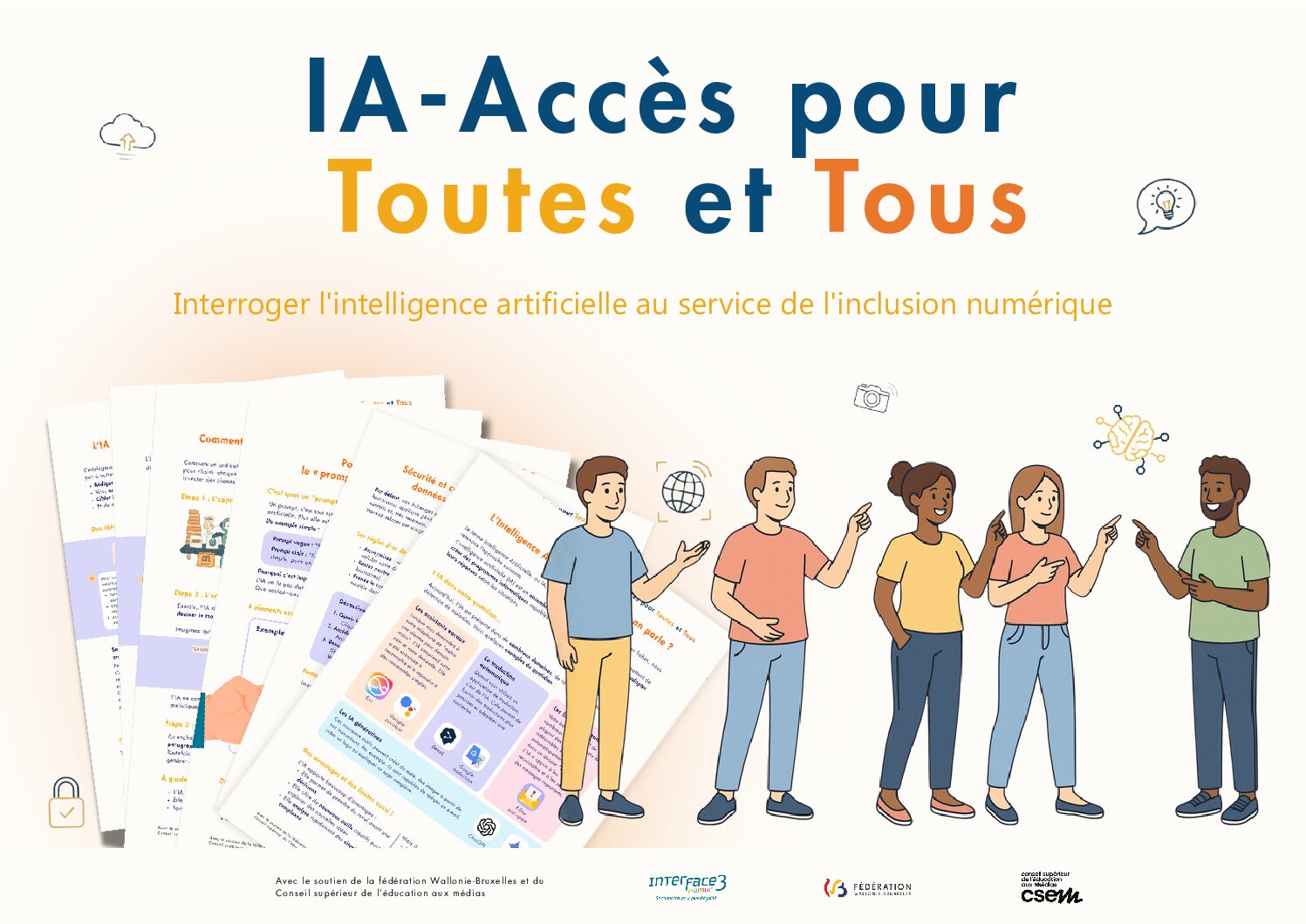
BE35Interface3 Namur is a Belgian nonprofit active since 1988 that trains women — particularly those with low formal education or facing other social disadvantage — for careers in information technology and related technical fields. The organisation is recognised as a good practice in the European Institute for Gender Equality's (EIGE) gender-mainstreaming database.
Building on its IT-training base, Interface3 Namur launched 'IA-ccès pour toutes et tous' ('AI-ccess for all'), explicitly framing artificial intelligence education as a lever for digital equality, aiming to build critical and responsible AI use among people at risk of being left behind by the AI transition.
Each year roughly 400 women complete an orientation, initiation or qualifying IT training course, out of more than 600 who come to Interface3 for guidance, supported by internship placements in more than 150 partner enterprises. The AI project works with 'digital mediators' — frontline facilitators who support disadvantaged publics in digital-inclusion settings such as public libraries and community centres — to produce practical, accessible AI-literacy resources.
Published sources describe the AI project's approach and its integration into Interface3's broader women's-employment training, but do not report separate participant counts or outcome metrics for the AI strand specifically. The organisation's decades of employment-outcome data (about 70% of trainees finding employment within six months, 62% among those with low education levels and 75% among those with secondary education or higher) cover its IT training as a whole, not the newer AI content in isolation.
CERV — Citizens, Equality, Rights and Values Digital Europe Programme Erasmus+
Indicative funding routes for practices of this type — always check each programme's current calls and eligibility rules.
Reusable artefacts from this practice — as published by their sources.
Do you run this practice? Claim it — verified implementers get a public contact pathway and can propose corrections.
Where this practice's information was retrieved from, and when.
Grenada
A WEI Forward-led hackathon network has trained over a thousand Caribbean girls aged 13–21 in coding, AI, animation and pitching …
Slovakia
Slovak nonprofit Aj Ty v IT has reached 65,000+ girls, women and teachers with IT workshops since 2012; backed by …
Canada
Montreal nonprofit Digital Moment (formerly Kids Code Jeunesse) is Canada's sole partner for Experience AI, a free bilingual AI curriculum …
Senegal
STMicroelectronics Foundation, ITU and a blind Milan professor run train-the-trainer digital-literacy classes for blind and visually-impaired adults in Dakar. An …
Open full copilot Grounded in cited practices — always check the sources.