AIS (Indonesian for 'scavenger', the ministry's negative-content crawling machine) was procured by the then Ministry of Communication and Informatics in 2017–2018 from state-owned PT INTI at a corrected price of about Rp194 billion, with a further Rp74 billion budgeted for operating services. Press reports at the time questioned whether that price was justified for a crawling-based system. The ministry stresses that it is a crawling and search system, not deep packet inspection, and that it does not block content by itself.
A team of about 100 staff, formed in January 2018, works alongside the machine 24 hours a day to crawl, identify, verify and validate content: hoaxes, terrorism and radicalism, pornography, gambling and other 'negative content'. Hoaxes judged to be false are published with a 'hoaks' stamp on the ministry's channels, and the public can submit complaints by email, X or WhatsApp. The machine was run around the clock during the 2019 elections.
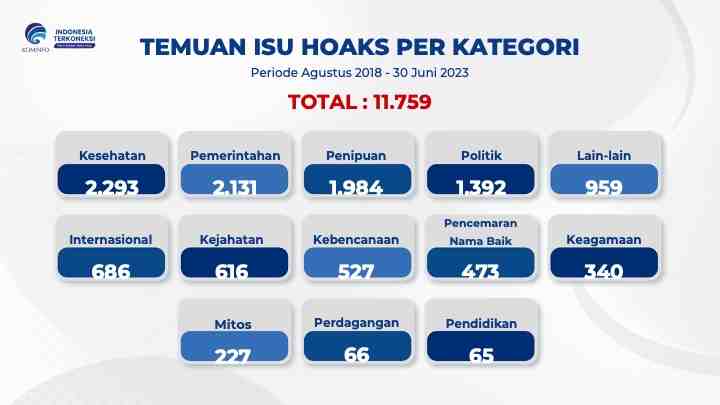
Official figures: 11,759 hoax items identified between August 2018 and June 2023, led by health (2,293), government (2,131), fraud (1,984) and politics (1,392). There were 117 items in June 2023, down from 141 in May. The ministry reported 1,923 hoax items for 2024.
Evidence gaps and cautions: no independent evaluation of accuracy, false-positive rates or effect on the spread of false information has been published. The 'hoax' stamp is often issued without an explanation of why a claim is false. The same infrastructure feeds a wider blocking regime, which civil-society groups such as SAFEnet and AJI say is increasingly used against politically sensitive content. Any transfer should separate fact-checking from takedown powers and add independent oversight.
Read the full analysis: https://infopublik.id/kategori/siaran-pers/760717/siaran-pers-juni-2023-kominfo-identifikasi-117-konten-hoaks
Where this practice's information was retrieved from, and when.