Piauí Inteligência Artificial — Brazil's First Compulsory AI Curriculum in Public Schools
Brazil
In 2024 Brazil's Piauí state made AI compulsory from 9th grade through upper-secondary -- the Americas' first such curriculum -- …
Slovakia · Bratislava · See the Slovakia profile · See the Bratislava profile
Evidence: Observational / pre–post Top 14% 67/100 · Ask Evidence Copilot about this practice
Slovakia's annual IT Fitness Test, run since 2010, now embeds AI-literacy questions and issued personal digital-skills certificates to over 66,000 participants in 2025, including 60,000+ students and 5,000+ teachers, with Slovak students scoring highest among Visegrád-4 peers.
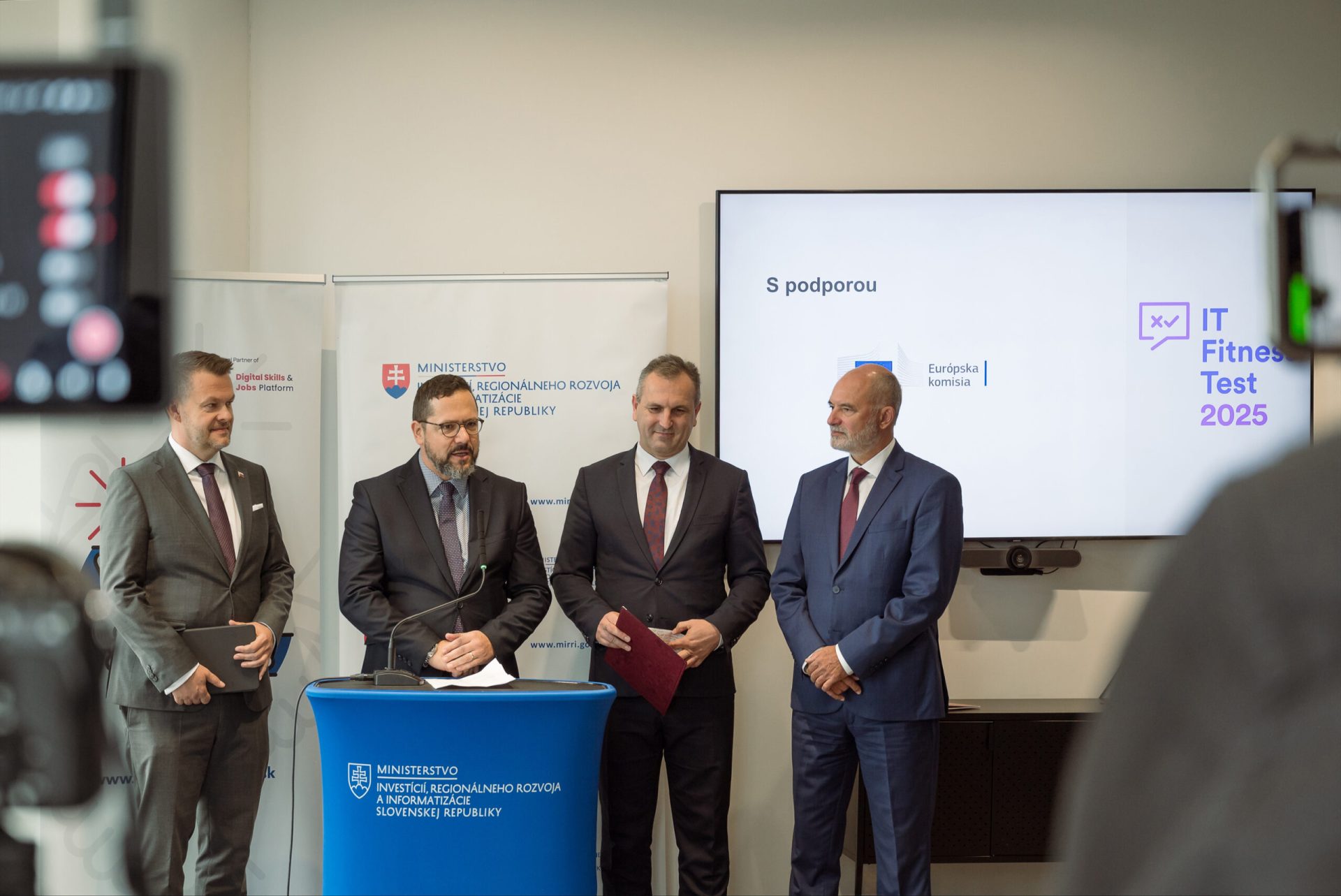
Since 2010, Digitálna koalícia and the IT Association of Slovakia, working with Slovakia's Ministry of Education and the Ministry of Investments, Regional Development and Informatization (MIRRI), have run the IT Fitness Test, an annual, free, standardised digital-skills assessment open to students, teachers and the public.
Measure and certify digital skills nationally, track skill levels over time, and — since AI-literacy questions were added from the 2023 edition — begin assessing AI literacy alongside general digital skills.
Participants complete a standardised online assessment and each receives a personalised results certificate. The 2025 (15th) edition was completed by more than 66,000 people, including over 60,000 primary and secondary students and more than 5,000 teachers.
Elementary-age participants (7–16) averaged 55.09% correct answers, while secondary and university-level participants averaged 58.69% — the best average result among the Visegrád Four countries (Slovakia, Czechia, Hungary, Poland), according to Slovakia's Ministry of Education. Since 2010, close to one million people have taken the test.
The credential is a general digital-skills score report rather than a standalone verified AI badge, and the Ministry has used lower scores in some categories to justify curriculum reform rather than as a certification threshold. Coverage is national but participation is voluntary, so uptake may skew toward more digitally engaged schools.
National / regional programmes Digital Europe Programme ESF+ — European Social Fund Plus
Indicative funding routes for practices of this type — always check each programme's current calls and eligibility rules.
Do you run this practice? Claim it — verified implementers get a public contact pathway and can propose corrections.
Where this practice's information was retrieved from, and when.
Brazil
In 2024 Brazil's Piauí state made AI compulsory from 9th grade through upper-secondary -- the Americas' first such curriculum -- …
Bosnia and Herzegovina
Under the EU-funded EU4Education and Employment project, the ILO trained 170+ vocational teachers across Bosnia and Herzegovina in a five-month …
Taiwan
Taiwan's Ministry of Education committed NT$11.76bn (~US$372.5m) over four years to a six-part "AI Talent Ark" programme pairing a national …
Romania
Vodafone Foundation Romania, the Ministry of Education and CyberKnowledge Club ran a six-module AI-literacy curriculum reaching 17,626 middle-school students and …
Open full copilot Grounded in cited practices — always check the sources.