Copenhagen Business Hub (Erhvervshus Hovedstaden)
Denmark
Erhvervshus Hovedstaden is one of six regional business houses in Denmark. At Erhvervshus Hovedstaden, they help more than 5,000 companies …
Denmark · Kalundborg · See the Denmark profile
Evidence: Descriptive / self-reported Top 27% 76/100 · Ask Evidence Copilot about this practice
In the small Danish port town of Kalundborg, a refinery, power plant, gypsum-board maker and biotech firms have traded waste heat, steam, water and biomass since 1972, now saving the partner companies roughly 4 million m³ of groundwater and 586,000 tonnes of CO2 a year — a market
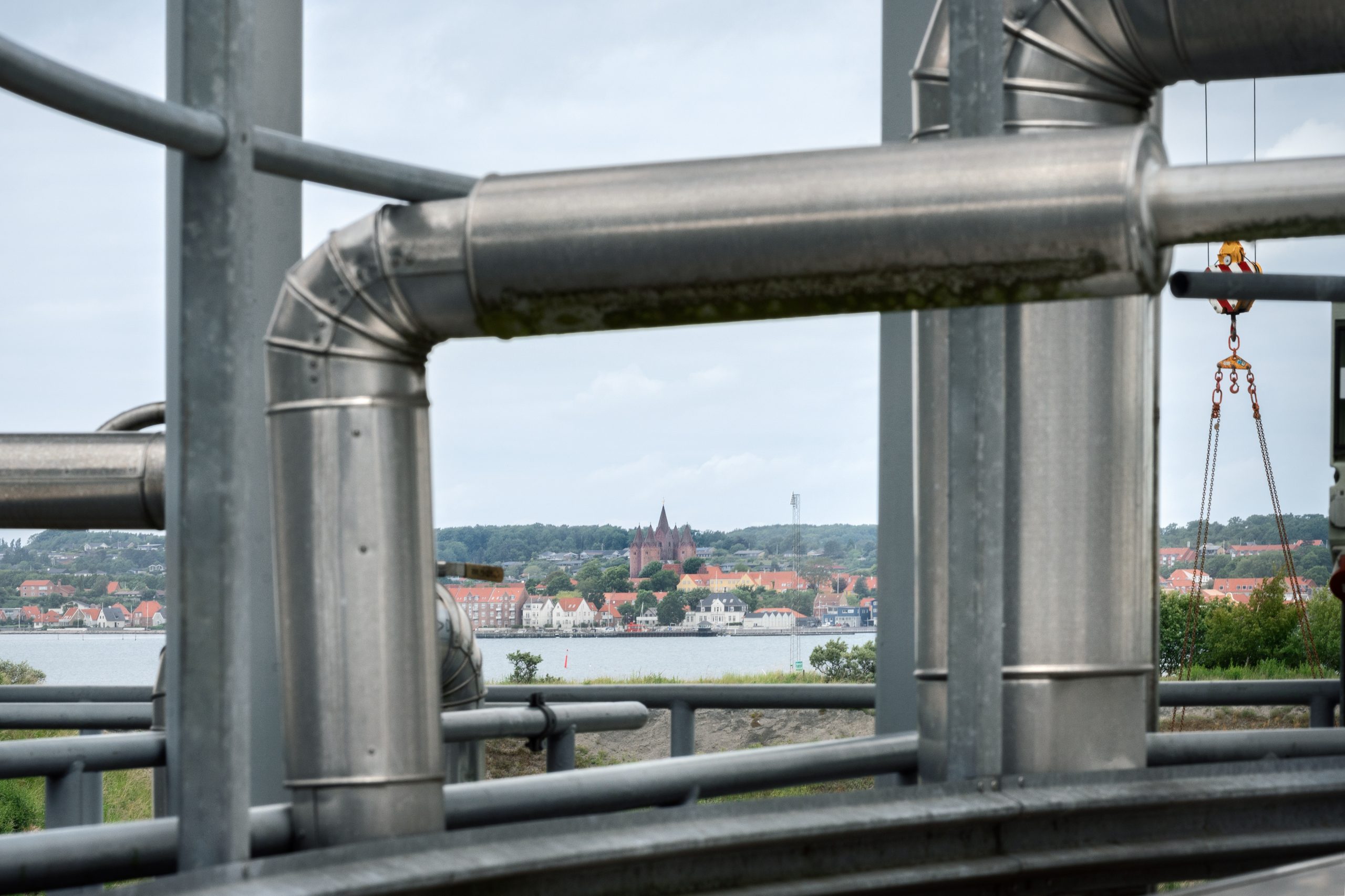
DK02Kalundborg's industrial symbiosis began pragmatically in 1961 when the town's oil refinery, short of local groundwater, piped in surface water from a nearby lake, a project co-financed with the city; through the 1960s the refinery and adjacent power station began trading steam and water.
The exchanges aimed to let resident industries — a refinery, power plant, gypsum-board maker and later biotech and pharmaceutical firms — cut costs and disposal fees by trading residual heat, water, steam and biomass rather than each managing these individually.
The 1972 exchange between the refinery and gypsum-board plant is recognised as the network's founding transaction; biotech and pharmaceutical producers later joined, sending surplus fermentation biomass to become fertiliser, and the network grew to 16–17 resident companies exchanging more than 20 residual streams, coordinated loosely through Symbiosis Center Denmark and Kalundborg Municipality.
An independent Euronews report on the original seven partners quantified their exchanges as cutting CO2 emissions by 275,000 tonnes a year and saving roughly €80 million a year in costs; the partnership's own current reporting, cross-referenced against the European Circular Economy Stakeholder Platform, cites the fuller present-day network saving roughly 4 million m³ of groundwater, 586,000 tonnes of CO2 and 62,000 tonnes of residual materials annually.
The two sets of figures describe different points in the network's growth and should not be added together, but both independently point to the same mechanism: bilateral, market-driven trading of residual heat, water and materials cuts real, measurable costs and emissions without government subsidy.
Own resources / municipal budget
Indicative funding routes for practices of this type — always check each programme's current calls and eligibility rules.
Do you run this practice? Claim it — verified implementers get a public contact pathway and can propose corrections.
Where this practice's information was retrieved from, and when.
Denmark
Erhvervshus Hovedstaden is one of six regional business houses in Denmark. At Erhvervshus Hovedstaden, they help more than 5,000 companies …
Kazakhstan
Kazakhstan's Damu Fund tested three SME finance instruments; a 2026 World Bank study found market-aligned partial guarantees raised employment ~24% …
Italy
Milan's Food Policy office, Politecnico di Milano and partners run hubs that recover unsold food from markets for redistribution; recovery …
Belgium
City-wide non-profit (founded 2013) steering Leuven toward climate neutrality via a quadruple-helix model of government, knowledge institutions, companies and citizens. …
Open full copilot Grounded in cited practices — always check the sources.