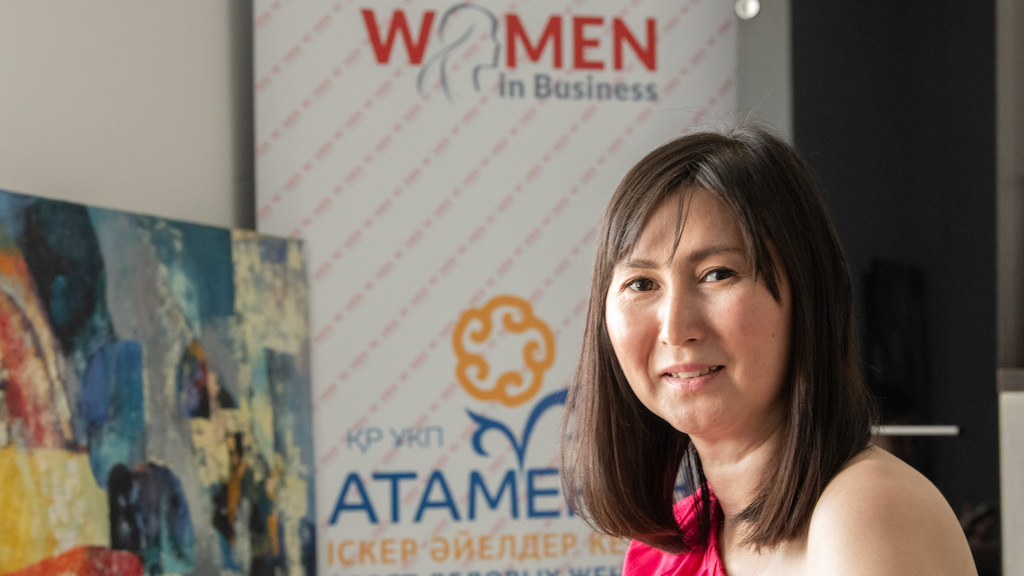
Kazakhstan opened 20 Women's Entrepreneurship Development Centres across all regions by 2023, delivering 84,000+ consultations in 2022 alone. Backed by ADB, UNDP, and $6M in national budget, the network supports a country where women already account for 44.6% of SME owners.
3 centres
WEDC pilot centres opened (2021)
14 centres
WEDCs operating across Kazakhstan's regions (March 2022)
National budget approved to sustain WEDC operations through 2025 (approved December 2022)
44.6 %
Share of SME entrepreneurs who are women (2021)
Details
Maturity
Scaling
Promoter
National Commission for Women's Affairs, Family and Population Policy (Kazakhstan); UNDP Kazakhstan; Asian Development Bank
Period
2021–2023
Keywords
government, entrepreneurship, SME support, women's economic empowerment
Context
Kazakhstan made a formal commitment at the 2021 UN Women Generation Equality Forum to establish Women's Entrepreneurship Development Centres (WEDCs) in every region of the country, as part of the Action Coalition on Economic Justice and Rights. Women account for 44.6% of all SME entrepreneurs nationally (2021) and over 30% of enterprise heads, among the highest shares in Central Asia.
Activities
Three pilot centres opened in 2021 in Turkestan, Almaty and Mangystau regions, co-funded by the Asian Development Bank (ADB) and the United Nations Development Programme (UNDP) Kazakhstan, in partnership with the National Commission for Women's Affairs and Family and Population Policy under the President and the National Chamber of Entrepreneurs Atameken. The centres provide business mentoring, legal advice, and access to financing through one-stop centres. A parallel EBRD programme has provided subsidised loans and management training.
Results
By March 2022, 14 centres had opened across Kazakhstan's 14 regions. By December 2023, the network had grown to 20 centres. In 2022 alone, the centres delivered 84,000 consultations on information support and more than 17,000 consultations on business services. In December 2022, the Kazakh government approved approximately $6 million from the national budget to sustain WEDC operations through 2025, transitioning from ADB/UNDP co-financing to domestic funding.
Conclusions
No independent impact evaluation of the WEDCs had been published as of 2024, limiting causal attribution; UNDP Kazakhstan monitoring data and media reporting confirm sustained operation at scale.
Implementation
Indicative cost
Medium (€50k–€500k) — Approximately $6 million approved from Kazakhstan's national budget in December 2022 to sustain WEDC operations through 2025, transitioning from initial ADB/UNDP co-financing.
Time to results
Medium (1–3 years) — 3 pilot centres opened in 2021; expanded to 14 centres (all regions) by March 2022; 20 centres by December 2023.
Staffing & skills
Implemented in partnership with Kazakhstan's National Commission for Women's Affairs and Family and Population Policy and the National Chamber of Entrepreneurs Atameken, co-funded by the Asian Development Bank (ADB) and UNDP Kazakhstan
Conditions for success
Transition from ADB/UNDP co-financing to approximately $6 million in domestic budget funding (approved December 2022) to sustain operations through 2025, signalling political and financial sustainability
Strong pre-existing base of female entrepreneurship (44.6% of SME entrepreneurs, over 30% of enterprise heads) providing demand for services
One-stop centre model combining business mentoring, legal advice and access to financing
Complementary EBRD programme providing subsidised loans and management training
Common failure modes
No independent impact evaluation of the WEDCs had been published as of 2024, limiting causal attribution of outcomes to the programme
Where it fits
Governance type
national government programme with multilateral co-financing (ADB, UNDP, EBRD)
Scale
national (all 14 regions of Kazakhstan)
Income level
upper-middle-income (Kazakhstan)
Commonly funded by
National / regional programmes
Indicative funding routes for practices of this type — always check each programme's current calls and eligibility rules.
Do you run this practice?
Claim it —
verified implementers get a public contact pathway and can propose corrections.
Data sources
Where this practice's information was retrieved from, and when.
Since 2010, Nairobi's AkiraChix has trained under-resourced East African women in software development via its residential codeHive programme; reported graduation …