Kigali Innovation City and Carnegie Mellon University Africa
Rwanda
Rwanda pairs government-led Kigali Innovation City with Carnegie Mellon University Africa as academic anchor. CMU-Africa has graduated 870+ alumni (94% …
Rwanda · Kigali · See the Rwanda profile · See the Kigali profile
Evidence: Descriptive / self-reported Top 83% 52/100 · Ask Evidence Copilot about this practice
Rwanda's Kigali Innovation City anchors Carnegie Mellon University Africa (open since 2019), but wider district construction only broke ground in Sept. 2024. Financing figures range $300M-$2B across sources, and only 3 anchor institutions are yet operational.
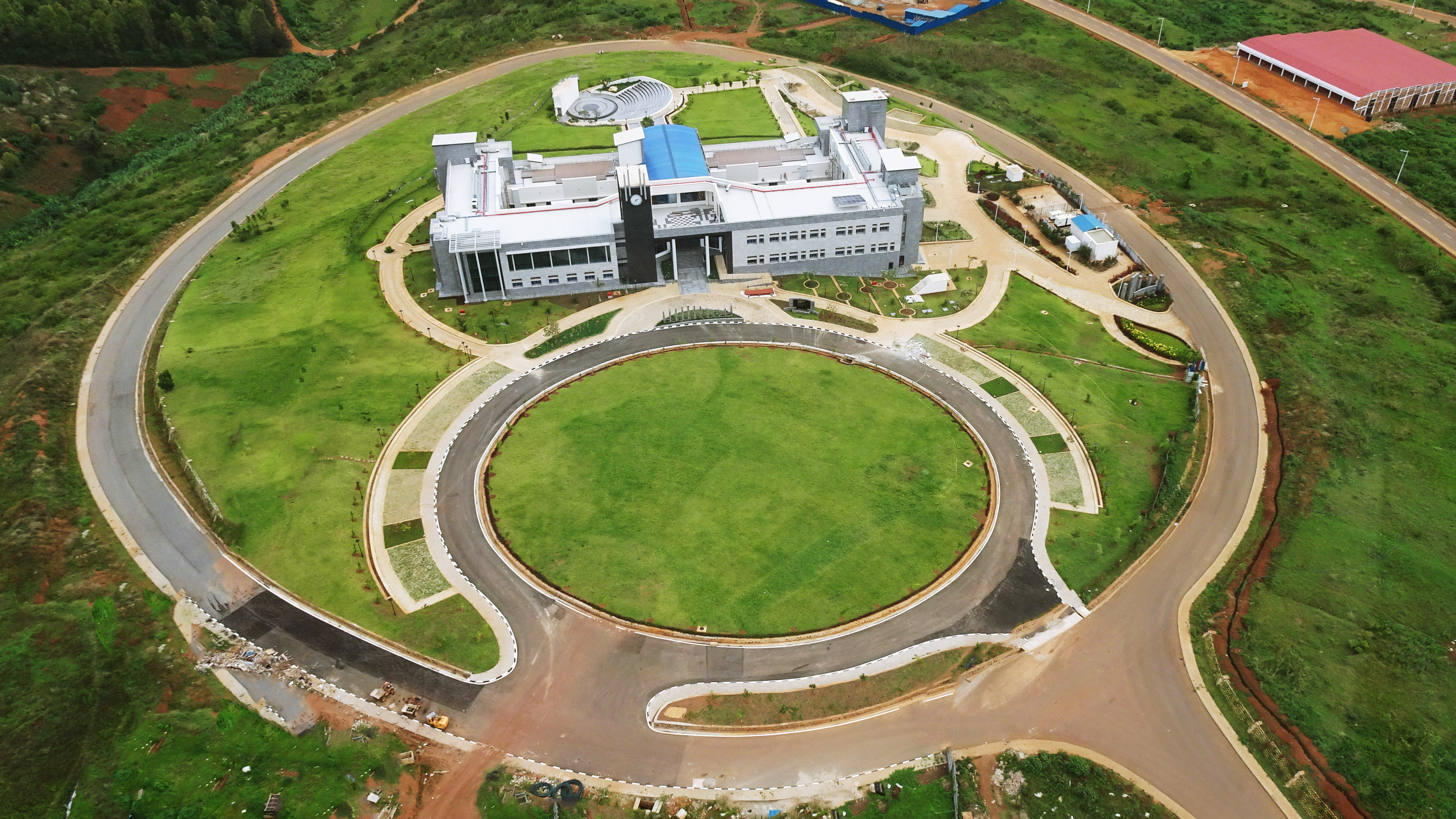
Kigali Innovation City (KIC) is a public-private innovation district on a 60-61.9 hectare site in Kigali's Gasabo District, developed by the Rwanda Development Board (RDB) and Ministry of ICT and Innovation together with Africa50 (an African Development Bank-founded infrastructure investment platform) and the Arab Bank for Economic Development in Africa (BADEA) as a financing partner. Its goal is to co-locate universities, R&D centres, incubators and technology companies as a pan-African knowledge-transfer and talent-development hub.
Its first anchor tenant, Carnegie Mellon University Africa (CMU-Africa), opened a dedicated Rwf 9 billion (about US$10 million) campus in November 2019 with initial capacity for 300 students. A full urban masterplan for the wider district was unveiled in December 2021, and construction of the district itself broke ground in September 2024 — a roughly five-year gap between the anchor institution opening and the surrounding district's construction start. BADEA committed US$20 million toward basic infrastructure in 2024.
CMU-Africa opened in 2019 with 130 students and 35 faculty/staff against its 300-student campus capacity; the university's own figures (not independently audited) report 800-1,000+ alumni to date and a self-reported 94% employment rate within one year of graduation. Beyond CMU-Africa, only two further anchor institutions — Africa Leadership University and Cooper Pharma — were confirmed operational within KIC as of a 2026 status check.
Total project financing figures are inconsistent across sources — Africa50's own materials cite a project cost around US$300 million, other Africa50 statements cite a $400 million commitment, and press coverage has described KIC as a '$2 billion' project of which only roughly $420 million in commitments had actually been announced by 2025. Projected outcomes circulated by RDB and Africa50 — over 50,000 jobs 'over the life of the project,' $150 million per year in ICT exports, over $300 million in FDI, and about 2,600 graduates per year across all KIC institutions over 30 years — are targets, not achieved results, and no independent World Bank or African Development Bank evaluation of KIC specifically was found. Rwanda ranked 103rd of 132 countries in the 2023 Global Innovation Index, underscoring a gap between the district's branding as 'Africa's Silicon Valley' and the country's broader digital-infrastructure conditions.
National / regional programmes
Indicative funding routes for practices of this type — always check each programme's current calls and eligibility rules.
Do you run this practice? Claim it — verified implementers get a public contact pathway and can propose corrections.
Where this practice's information was retrieved from, and when.
Rwanda
Rwanda pairs government-led Kigali Innovation City with Carnegie Mellon University Africa as academic anchor. CMU-Africa has graduated 870+ alumni (94% …
Morocco
Created in 2011 under Morocco's energy ministry, IRESEN funds market-oriented renewable-energy research through a 14-lab university network and the Green …
Sri Lanka
Sri Lanka's World Bank-backed AHEAD project built University Business Linkage Cells in 15 state universities, generating 228 patent applications, 77 …
Chile
Since 2011, Chile's CORFO has funded a national network of university Technology Transfer & Licensing Offices, producing 219 documented cases. …
Open full copilot Grounded in cited practices — always check the sources.