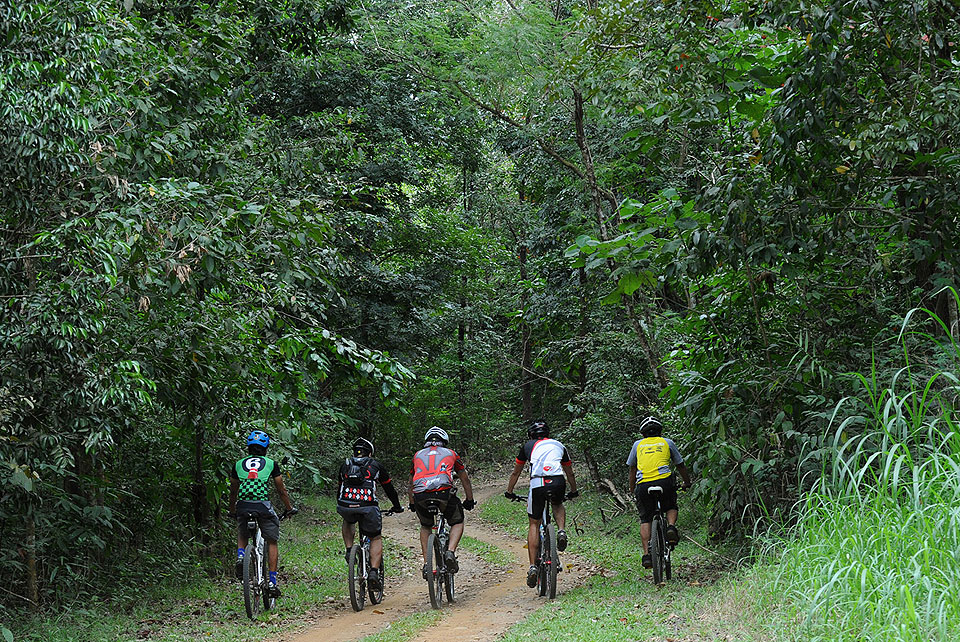
The La Mesa Watershed in Quezon City surrounds the La Mesa reservoir and is described as the last remaining watershed inside Metro Manila. By the late 1990s much of its 2,000-hectare forest zone was degraded and informally settled. In 1999 ABS-CBN Foundation's Bantay Kalikasan programme, the Metropolitan Waterworks and Sewerage System (MWSS, which owns the land) and the Quezon City government signed a tripartite agreement to rehabilitate it.
A 2013 Philippine Star report put plantings at 620,800 trees covering 98.3% of the 2,700-hectare reserve, with PHP 101 million raised for rehabilitation and PHP 247 million for the La Mesa Eco Park; 15% of gross park revenue is returned to park operations and the watershed. GMA News reported in 2015 that 765,000 seedlings of 101 endemic species had been planted on about 1,500 hectares, with more than 200 hectares still to do, and a survival rate of 92.5%.
Caveats: the two reports use different area bases and counts, survival and carbon figures are project-reported rather than independently audited, no published hydrological or biodiversity monitoring links the planting to water quality or wildlife outcomes, and the 1999 clearance involved evicting 36 families (about 100 still lived on site in 2015). Corporate tree-planting days continue, but there is no public consolidated progress report.
Read the full analysis: https://www.gmanetwork.com/news/topstories/metro/525906/after-16-years-reforestation-of-qc-watershed-now-90-percent-done/story
Where this practice's information was retrieved from, and when.