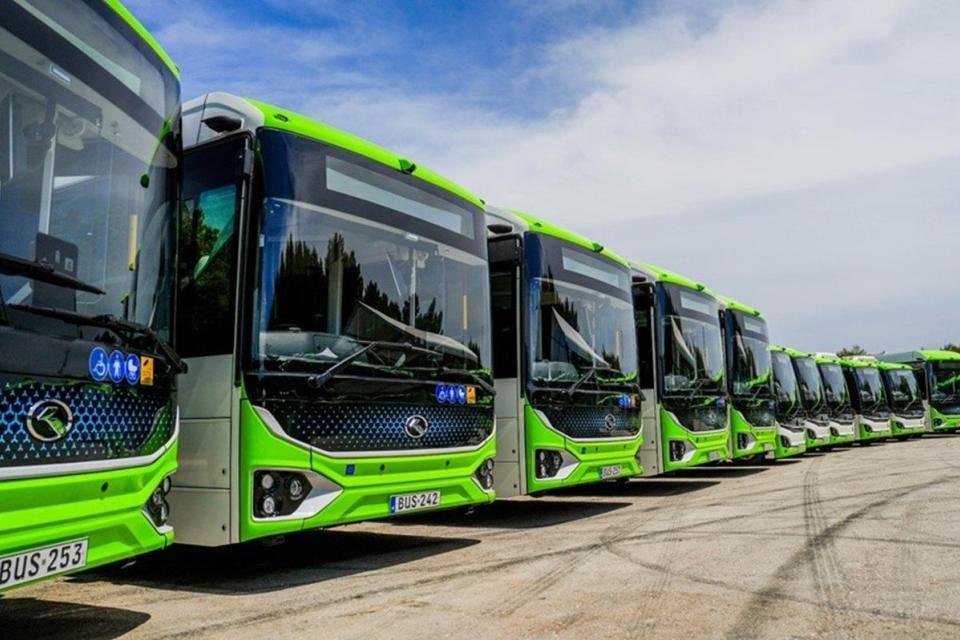
Part of a €14m transport package doubling Malta's electric bus fleet, a 15-seat autonomous shuttle is piloted on pre-approved routes for six months, safety operator aboard. Co-financed by EU Horizon Europe's metaCCAZE project, alongside pilots in Tampere and Amsterdam.
14 € million
Total 'Malta in Motion' transport investment package (2026)
40 buses
New electric buses added to the national fleet (2026)
15 seats
Autonomous shuttle passenger capacity (2026)
6 months
Minimum pilot testing duration (2026)
Details
Maturity
Pilot
Promoter
Ministry for Transport, Infrastructure and Public Works (Malta), with Malta Public Transport and the University of Malta
Period
2026 (6-month pilot)
Region (NUTS)
MT00
Keywords
public transport, autonomous vehicles, mobility, transport safety
Context
Malta's Ministry for Transport, Infrastructure and Public Works, together with Malta Public Transport and the University of Malta, launched an autonomous electric shuttle pilot in 2026 as part of a wider €14 million 'Malta in Motion' investment that also added 40 new electric buses to the national fleet — more than doubling its existing electric bus capacity.
Activities
The shuttle, carrying up to 15 passengers, is being tested for a minimum of six months on pre-approved routes across Malta and Gozo, with a trained safety operator on board at all times, able to take manual control. The pilot is co-financed through the EU's Horizon Europe metaCCAZE project, which is running comparable autonomous-shuttle trials in Tampere (Finland) and Amsterdam (Netherlands).
Results
As of mid-2026 the shuttle had not yet entered public service; reporting covers investment figures, safety protocol and the testing timeline, not ridership, incident data or comparative cost outcomes, which will only become available once the pilot phase concludes.
Implementation
Indicative cost
High (€500k–€5M) — Part of a wider €14 million 'Malta in Motion' investment package that also added 40 electric buses to the national fleet; the shuttle pilot's own cost is not broken out separately.
Time to results
Short (< 1 year) — Launched 2026, minimum six-month pilot; not yet in public service as of the mid-2026 report.
Staffing & skills
Ministry for Transport, Infrastructure and Public Works (Malta), Malta Public Transport (operator), University of Malta (research partner), Trained safety operator on board each shuttle
Conditions for success
Mandatory onboard safety operator able to take manual control at all times
Pre-approved fixed routes across Malta and Gozo
Coordinated design with parallel EU Horizon Europe metaCCAZE trials in Tampere and Amsterdam enabling shared learning
Where it fits
Governance type
national ministry with public transport operator and university partner
State-owned Deutsche Bahn has run AI maintenance pilots since 2015 — faster camera inspections, a Siemens-monitored high-speed-train trial, wheelset forecasting …