LIFE Peat Restore — Fen Rewetting in Słowiński National Park (Poland)
Poland
The EU-funded LIFE Peat Restore project rewetted about 1,350 ha of degraded fen in Poland (part of 5,300 ha across …
Russia · Shatura · See the Russia profile
After catastrophic 2010 peat fires blanketed Moscow in smog, the Moscow Province Administration rewetted 73,000 ha of fire-prone peatlands (2010-2013) with Wetlands International and the Michael Succow Foundation, cutting fire extent and tens of thousands of tonnes CO2eq/year.
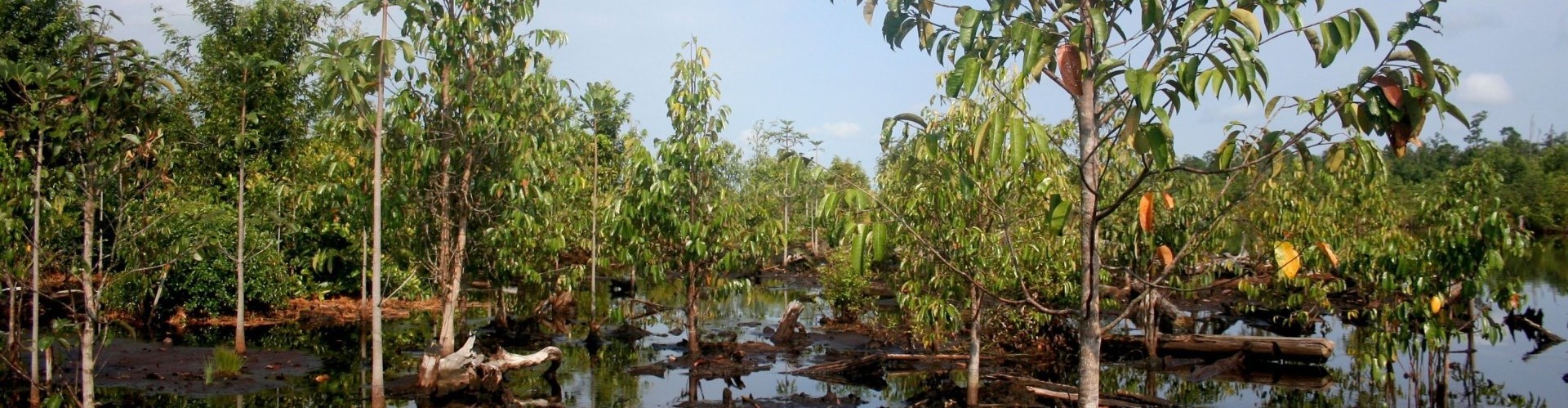
Following catastrophic peat fires around Moscow in summer 2010 that produced toxic smog blamed for thousands of excess deaths and forced a state of emergency, the Moscow Province Administration partnered with Wetlands International Russia, the Michael Succow Foundation, Greifswald University and the Russian Academy of Sciences' Institute of Forest Science to rewet fire-prone peatlands in the Shatura district and Meshchera lowland between autumn 2010 and 2013.
77 drained, fire-prone peatlands covering 73,049.84 ha were rewetted to reduce wildfire risk and greenhouse gas emissions from oxidising peat.
Peer-reviewed multispectral satellite monitoring (Sirin et al.) documented a significant reduction in the number and burnt area of peat fires at rewetted sites in subsequent fire-hazard seasons. Using IPCC default emission factors, researchers estimated a conservative reduction of over 36,000 tCO2eq/year, with programme-wide estimates reaching approximately 320,000 tCO2eq/year, though the authors caution these are model-based estimates rather than direct flux measurements.
The programme's methodology has informed Russia's national climate reporting on organic-soil emissions to the UNFCCC, though researchers note many other fire-risk peatlands elsewhere in Russia still await rewetting.
Implementation detail (cost, timeline, staffing, conditions for success) is not yet available for this practice.
Where this practice's information was retrieved from, and when.
Poland
The EU-funded LIFE Peat Restore project rewetted about 1,350 ha of degraded fen in Poland (part of 5,300 ha across …
Iceland
Since 2018, Iceland's Wetland Fund has rewetted ~300 ha of drained peatland and is piloting an IPCC-aligned carbon-credit methodology with …
Denmark
Denmark's June 2024 Green Tripartite Agreement commits a ~DKK 40bn (EUR 5.4bn) Green Land Fund to voluntarily rewet 140,000 ha …
Finland
Snowchange Cooperative, an Indigenous- and community-led NGO, has rewetted boreal peatlands across Finland — the 110-ha Linnunsuo mire and 874 …
Open full copilot Grounded in cited practices — always check the sources.