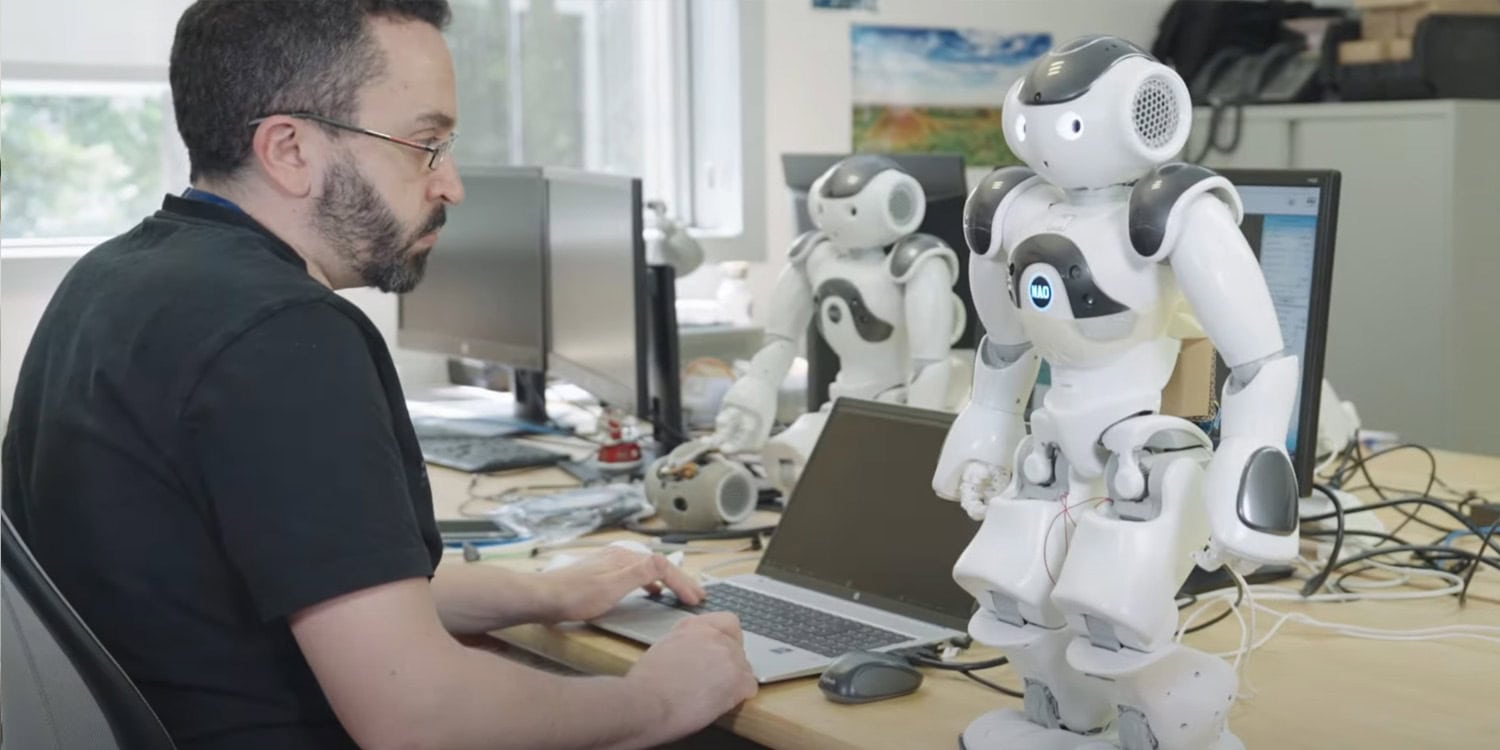
An EdUHK three-arm RCT found a NAO robot delivering 12 weekly social-skills sessions produced significantly greater communication and social-interaction gains for autistic children (n=60) than human-led or no intervention.
60
Children enrolled (2023-2025)
12
Weekly intervention sessions
5-11 years
Age range of participants
Details
Maturity
Pilot
Promoter
The Education University of Hong Kong
Period
2023–2025
Keywords
special education, assistive technology, robotics, autism
Context
Autism-specific evidence is thin in most AI-in-education evidence bases, and much published research on social robots for autistic children relies on small, uncontrolled case studies. Researchers at The Education University of Hong Kong (EdUHK) set out to test a social-robot intervention against a proper comparison design rather than case reports alone.
Objectives
The trial aimed to establish whether a NAO humanoid robot delivering a structured social-skills curriculum could produce greater communication and social-interaction gains for autistic children than either human-led instruction or no intervention.
Activities
Sixty children with autism spectrum disorder, aged 5 to 11 (IQ of at least 70, able to follow simple commands), were randomised into three parallel arms: a robotic-intervention group taught by a NAO humanoid robot, a human-instructed group receiving the same curriculum from a person, and a no-treatment control group. Over 12 weekly sessions, children in the intervention arms worked through structured social games, story-based activities and singing-and-dancing routines covering two-way communication, basic emotions, imitation and reciprocal responses. Outcomes were measured with the Autism Diagnostic Observation Schedule (ADOS) plus parent-reported change, and the trial was pre-registered on ClinicalTrials.gov (NCT04879303).
Results
The robotic-intervention group showed significantly greater improvements in communication and reciprocal social interaction than either the human-instructed or control groups, on both the performance-based assessment and parent report. The results were published in the peer-reviewed Journal of Autism and Developmental Disorders (2025).
Conclusions
The trial is single-site with a modest sample (60 children) and a short, 12-week intervention window, so the authors call for larger, longer, multi-site replication before the approach is treated as established practice. NAO hardware costs and the need for trained facilitators are also practical constraints on near-term scale-up in typical classrooms.
Implementation
Indicative cost
High (€500k–€5M)
Time to results
Short (< 1 year)
Staffing & skills
Trained facilitators delivering the robot- and human-led curricula, EdUHK research team
Conditions for success
Structured 12-week curriculum covering communication, emotions, imitation and reciprocal responses
Trained facilitators able to operate the NAO robot and run parallel human-instructed sessions
Validated outcome measurement (ADOS) plus parent-reported change
Common failure modes
NAO robot hardware cost is a practical constraint on classroom-level scale-up
Need for trained facilitators limits near-term replication
Single-site, modest sample (60 children) not yet replicated at other sites
Commonly funded by
National / regional programmes
Indicative funding routes for practices of this type — always check each programme's current calls and eligibility rules.
Replication kit
Reusable artefacts from this practice — as published by their sources.
A peer-reviewed pilot surveyed 30 special-education teachers in Spain's Valencian Community on their intention to adopt SpectrumSphere, an AI/VR/AR/AAC learning …