Be My Eyes — AI and Volunteer-Powered Visual Assistance
Denmark
Be My Eyes, founded in Copenhagen in 2015, connects blind and low-vision users with sighted volunteers and, since 2023, AI …
Australia · Brisbane · See the Australia profile · See the Brisbane profile
Evidence: Observational / pre–post Top 24% 92/100 · Ask Evidence Copilot about this practice
Free, open-source Windows screen reader from Australian non-profit NV Access. WebAIM's independent 2024 survey of 1,539 users found NVDA the most commonly used screen reader worldwide (65.6%), with a 97.6% satisfaction rate - ahead of paid alternatives.
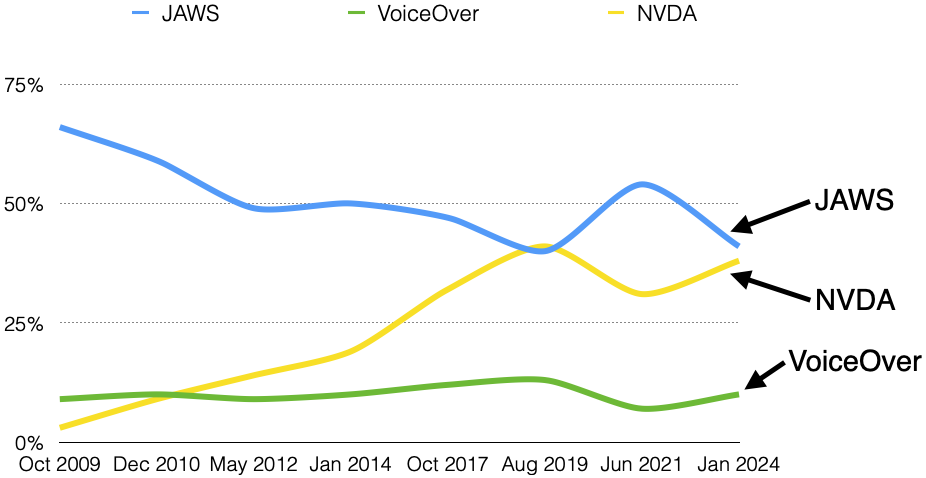
NonVisual Desktop Access (NVDA) is a free, open-source Windows screen reader begun by Michael Curran in 2006 and developed since 2007 by Australian non-profit NV Access, removing the cost barrier of commercial screen readers that can cost hundreds of dollars per licence.
The independent WebAIM Screen Reader User Survey #10 found NVDA the most commonly used screen reader worldwide at 65.6% of respondents (ahead of JAWS at 60.5% and VoiceOver at 43.9%), with 37.7% naming it their primary screen reader, and the highest user satisfaction of major screen readers at 97.6%.
As a small non-profit, NV Access depends on grants and donations (e.g. a Nippon Foundation grant) rather than licence revenue, creating less predictable funding than commercial competitors — a sustainability risk the survey data does not capture.
Implementation detail (cost, timeline, staffing, conditions for success) is not yet available for this practice.
Philanthropic / foundation funding
Indicative funding routes for practices of this type — always check each programme's current calls and eligibility rules.
Do you run this practice? Claim it — verified implementers get a public contact pathway and can propose corrections.
Where this practice's information was retrieved from, and when.
Denmark
Be My Eyes, founded in Copenhagen in 2015, connects blind and low-vision users with sighted volunteers and, since 2023, AI …
India
Government-backed Indian digital library giving people with print disabilities free access to accessible-format books. Launched 2016 with 200,000+ titles; by …
United States of America
Microsoft's free Seeing AI app narrates text, currency, people, barcodes and scenes in real time through a phone camera for …
United States of America
Spun off in 2019 from the American Printing House for the Blind, GoodMaps replaces beacons and GPS with camera-based computer …
Open full copilot Grounded in cited practices — always check the sources.