Barrios Vitales — Bogotá's San Felipe Pilot Cuts Traffic Injuries by Nearly Half
Colombia
Bogotá's first 'vital neighbourhood', San Felipe, reallocated 1,745 m² of street space to pedestrians and cut traffic accidents 46%; the …
United States of America · New York · See the United States of America profile · See the New York profile
Top 9% 86/100 · Ask Evidence Copilot about this practice
NYC DOT turned Broadway road space into interim plazas with paint and furniture from 2009, then made them permanent after data showed 63% fewer motorist/passenger and 35% fewer pedestrian injuries; local nonprofits maintain plazas.
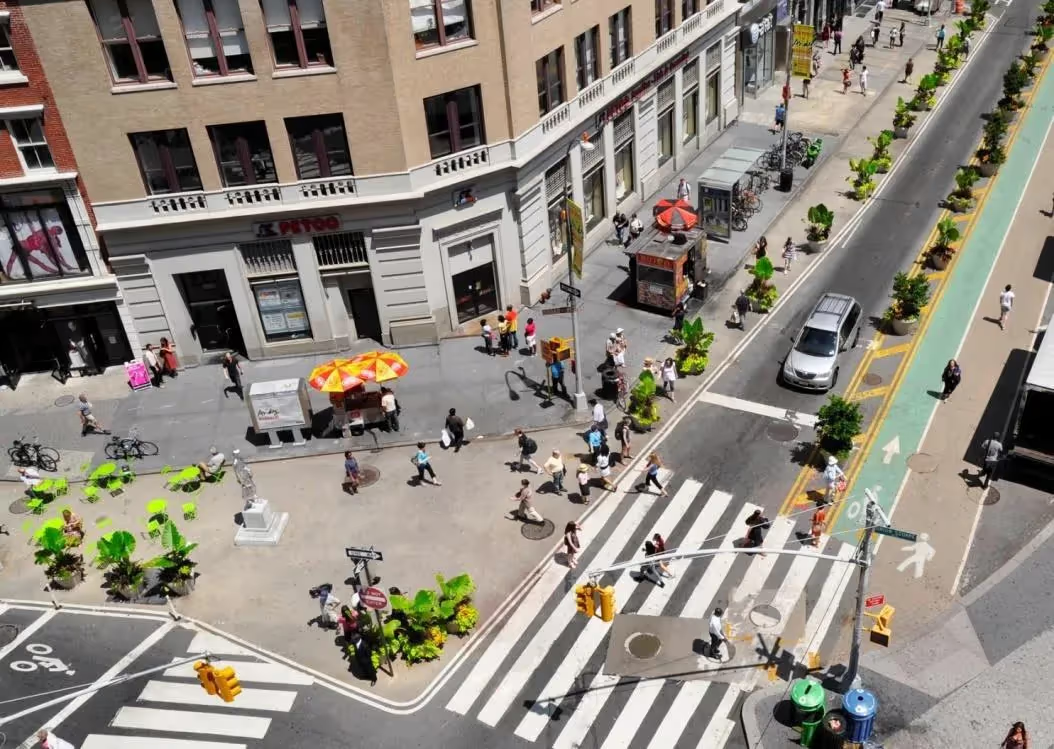
From 2009 NYC DOT converted stretches of Broadway, including Times Square and Herald Square, into pedestrian plazas under its Green Light for Midtown initiative, using temporary surface treatments and movable furniture, and collecting data to justify permanent change. The wider NYC Plaza Program invites local nonprofit partners to apply, who then manage and maintain plazas, and prioritises areas lacking open space, especially high-pedestrian or low-income neighbourhoods; 71 plazas were in some phase of planning, design, construction or completion and 49 were open by 2015.
Reported results on the Broadway corridor (about 2.3 miles) include 63% fewer motorist and passenger injuries and 35% fewer pedestrian injuries, 11% more pedestrians in Times Square and 6% in Herald Square, a 17% northbound travel-time improvement in West Midtown, vehicles exceeding 30 mph on one block falling from 28% to 12%, and weekday and weekend cycling up 16% and 33%. In surveys, 74% of respondents approved, 20% of business owners reported improved conditions and none reported adverse effects.
Caveats: results are largely NYC DOT's own pre/post analysis rather than independent evaluation, retail claims in secondary summaries are weakly evidenced, and plazas depend on nonprofit partners' ability to fund maintenance. It is a widely copied example of low-cost, data-led interim street redesign.
Read the full analysis: https://www.pps.org/article/broadway-boulevard-transforming-manhattans-most-famous-street-to-improve-mobility-increase-safety-and-enhance-economic-vitality
Implementation detail (cost, timeline, staffing, conditions for success) is not yet available for this practice.
Do you run this practice? Claim it — verified implementers get a public contact pathway and can propose corrections.
Where this practice's information was retrieved from, and when.
Colombia
Bogotá's first 'vital neighbourhood', San Felipe, reallocated 1,745 m² of street space to pedestrians and cut traffic accidents 46%; the …
United States of America
A 2009 trial closing Broadway to cars at Times Square and Herald Square cut pedestrian injuries by 35% and motorist …
Austria
Since 2015 Vienna's city-funded Local Agenda 21 has backed resident-run temporary 'urban oases' in parking spaces with grants up to …
Lithuania
In April 2020 Vilnius let cafés and bars use squares and streets free of charge for distanced outdoor seating so …
Open full copilot Grounded in cited practices — always check the sources.