Văcărești Natural Park — Bucharest's Abandoned Reservoir Reclaimed as an Urban Wetland Reserve (Romania)
Romania
A ~183 ha reservoir basin abandoned in 1989 rewilded on its own into Bucharest's richest habitat (reports of 140–175 bird …
Netherlands · Lelystad · See the Netherlands profile
Top 96% 20/100 · Ask Evidence Copilot about this practice
A 5,600 ha Dutch reserve left to non-intervention grazing by Konik ponies, Heck cattle and red deer; over 3,000 animals died in winter 2017–18, forcing the 2018 Van Geel covenant to end the hands-off approach — a cautionary case on rewilding without predators or space.
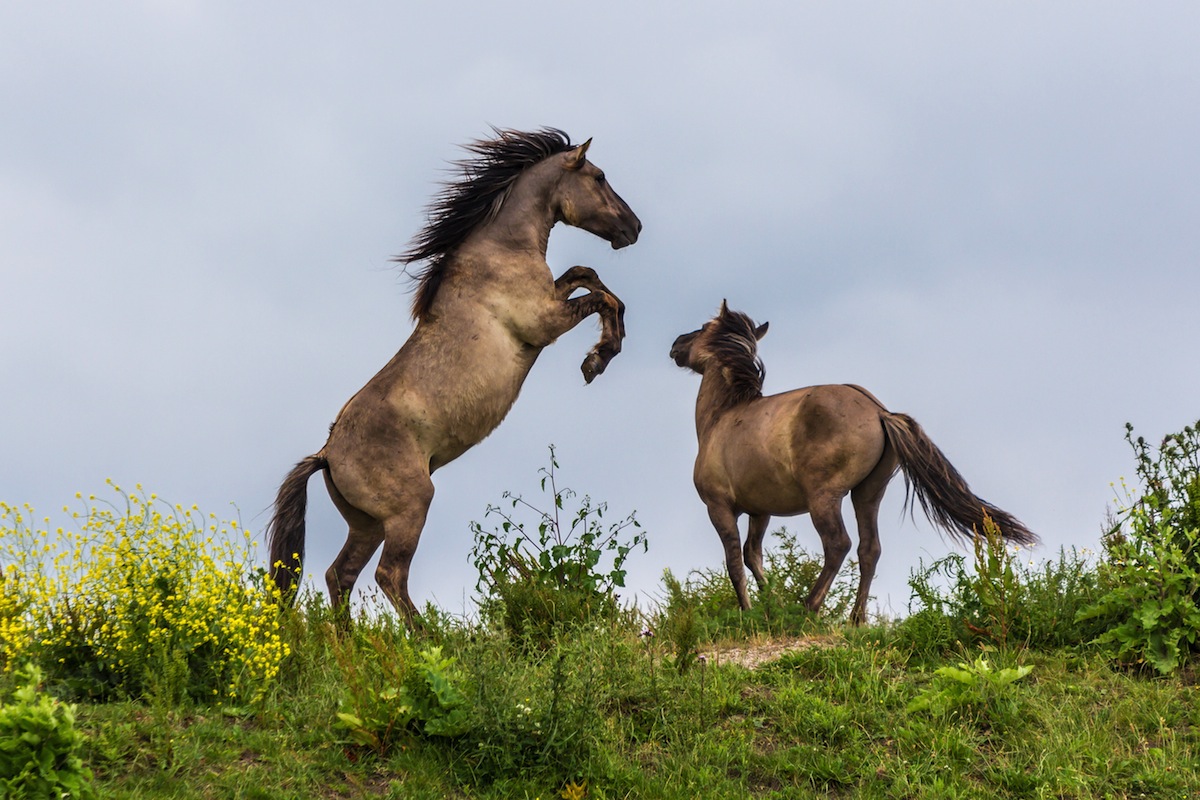
The Oostvaardersplassen (c. 5,600 ha, Flevoland, Netherlands; Ramsar-listed and a Special Protection Area) is a former polder left to nature. From the 1980s–90s Heck cattle, Konik horses and red deer were introduced under a non-intervention policy intended to mimic wild grazing. Populations grew, e.g. in 2011 about 3,300 red deer, 1,150 Koniks and 350 Heck cattle, with no large predators, fenced boundaries and planned wildlife corridors (e.g. towards the Veluwe) never realised.
After the harsh winter of 2017–18, press and academic accounts report that more than 3,000 large herbivores died (WHYY puts this at about 60% of the large grazers), triggering public protests, arrests of people feeding animals and a political crisis. The Van Geel commission advised moving from rewilding to active management, and the 2018 covenant between the Province of Flevoland and Staatsbosbeheer replaced non-intervention with population limits (WHYY cites a ceiling of about 1,100 large grazers), culling, relocation of horses and supplementary feeding.
Outcomes were mixed: the reserve created open grassland and supported spoonbills, white-tailed eagles (first breeding in 2006) and other waterbirds, but vegetation diversity declined and small grazer populations disappeared. Exact mortality figures differ between sources and should be treated as approximate. The case shows the welfare, governance and ecological risks of closed-system rewilding without natural population regulation.
Read the full analysis: https://whyy.org/segments/the-netherlands-grand-rewilding-experiment-gone-haywire/
Implementation detail (cost, timeline, staffing, conditions for success) is not yet available for this practice.
Do you run this practice? Claim it — verified implementers get a public contact pathway and can propose corrections.
Where this practice's information was retrieved from, and when.
Romania
A ~183 ha reservoir basin abandoned in 1989 rewilded on its own into Bucharest's richest habitat (reports of 140–175 bird …
United Kingdom
Since 2000 the Knepp Estate has replaced intensive farming on 1,400 ha with free-roaming grazers and natural regeneration; surveys report …
United Kingdom
United Kingdom
Open full copilot Grounded in cited practices — always check the sources.