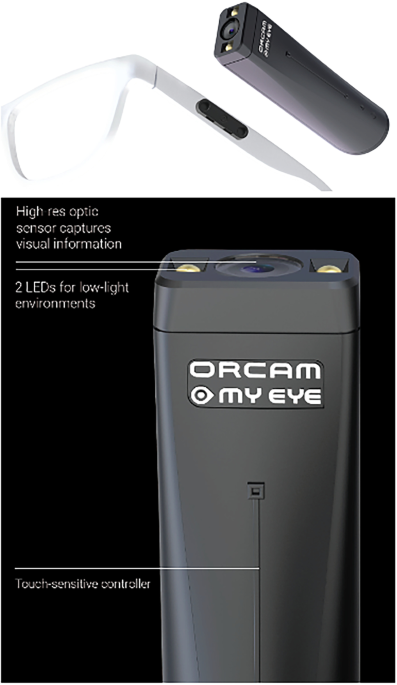
A clip-on AI camera read text, faces and objects aloud for blind and low-vision users. Peer-reviewed clinical studies showed real functional gains, but Israel-based OrCam shut down the entire vision-device line in 2024 after repeated layoffs, illustrating how smartphone-based gen
100 participants
Multicentre clinical study sample (2023)
58% of subjects (QUEST 2.0)
Ease of use rated most positive attribute (2023)
20 patients
Retinal-dystrophy study sample (2021)
15% (3 of 20)
Patients still using device after study ended (2021)
~50%
Workforce cut in single 2024 layoff round (June 2024)
OrCam MyEye is a clip-on AI wearable, launched in 2013 (commercial sales from 2015) by Israel's OrCam Technologies, that uses a camera and on-device AI to read text, recognise faces and describe objects aloud for blind and low-vision users without needing an internet connection.
Results
A 2023 multicentre study of 100 participants found OrCam MyEye improved daily tasks such as reading and face recognition, and a 2021 study of 20 patients with advanced retinal disease recorded statistically significant gains on three validated assessments (p<0.001, p=0.005, p<0.001) after about five weeks of use; however, only 3 of the 20 patients (15%) kept using the device once the study ended, citing cost and free smartphone alternatives.
Conclusions
The practice is presented as an evidence-backed but cautionary case: rigorous clinical trials confirmed genuine functional benefit, yet that evidence was not sufficient to keep the product commercially viable — OrCam closed its entire vision-device division in 2024 after repeated layoffs and pivoted to hearing technology, citing competition from smartphone-based generative AI.
Implementation
Implementation detail (cost, timeline, staffing, conditions for success) is not yet available for this practice.
Commonly funded by
Own resources / municipal budget
Indicative funding routes for practices of this type — always check each programme's current calls and eligibility rules.
Do you run this practice?
Claim it —
verified implementers get a public contact pathway and can propose corrections.
Data sources
Where this practice's information was retrieved from, and when.
Bengaluru-based Thinkerbell Labs built Annie, an audio-guided, self-correcting braille teaching device that lets blind and low-vision students learn independently. Deployed …
Seoul-based Dot Incorporation built the first commercialised electromagnetic tactile display, letting blind and low-vision users feel braille text and graphics …