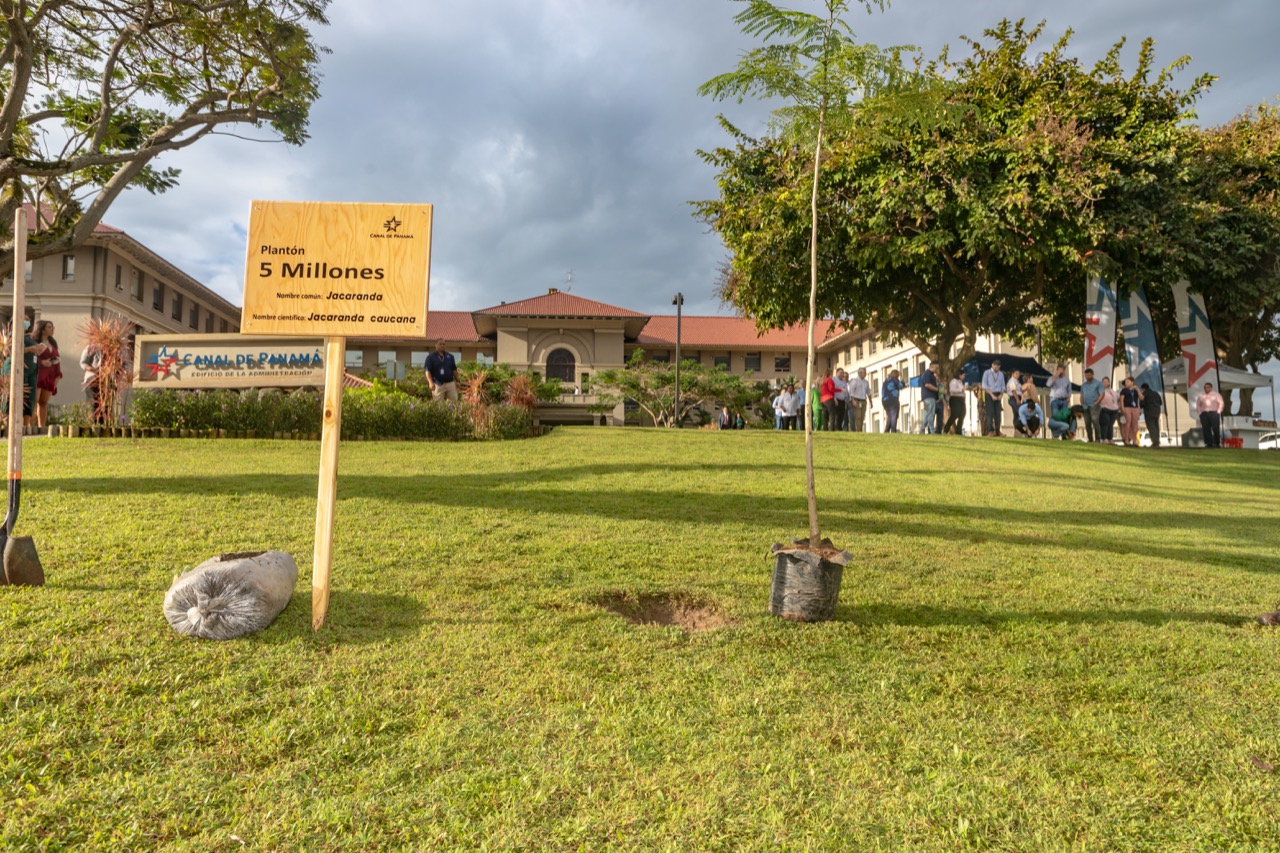
Panama Canal Authority pays landowners flat annual fees to restore forest in the 342,000-ha Canal watershed: 10,846 ha reforested (3,650 ha agroforestry, 4,776 ha silvopastoral). Secures Canal lock-water and drinking water for 1.3 million people.
342,000 hectares
Watershed area covered
10,846 hectares
Total area reforested (by 2023)
3,650 hectares
Agroforestry area (by 2023)
4,776 hectares
Silvopastoral area (by 2023)
2,420 hectares
Conservation/enrichment plantings (by 2023)
1.3 million people
Population served by watershed drinking water
700+
Landowners surveyed by STRI
21+ years
Programme duration (since ~2002)
Details
Maturity
Established
Promoter
Autoridad del Canal de Panamá (ACP)
Period
2002-present
Keywords
Watershed, agroforestry, silvopastoral, water security
Context
The Panama Canal Authority (ACP) operates a Reforestation Incentive Programme, making direct flat-rate annual payments to private landowners who restore forest cover in the 342,000-hectare Panama Canal watershed. The watershed regulates dry-season water levels in Gatun Lake that power the canal's locks, and supplies drinking water to more than 1.3 million people in Panama City and Colon.
Activities
The programme has run for over 21 years, since approximately 2002. Contracted landowners maintain planted areas under ACP-approved management plans covering agroforestry, silvopastoral systems, and conservation/enrichment plantings around national parks, river corridors, and strategic canal zones.
Results
By 2023 the programme had reforested 10,846 hectares, comprising 3,650 hectares of agroforestry, 4,776 hectares of silvopastoral systems, and 2,420 hectares of conservation/enrichment plantings. The Smithsonian Tropical Research Institute (STRI) conducted an independent economic analysis surveying over 700 watershed landowners, confirming that flat-payment PES structures maximise landowner uptake and retention, and a peer-reviewed PNAS study modelled trade-offs between water regulation, carbon sequestration, and timber production across the watershed to inform ACP payment targeting.
Conclusions
The programme is a textbook corporate watershed PES: a statutory infrastructure authority funding upstream forest restoration to protect the services its own operations depend on.
Implementation
Indicative cost
Medium (€50k–€500k) — Flat-rate annual payments to landowners; no aggregate programme budget disclosed in source.
Time to results
Long (> 3 years) — Running since approximately 2002, over 21 years as of the 2023 reporting point.
Staffing & skills
Panama Canal Authority (ACP) — statutory infrastructure authority, Smithsonian Tropical Research Institute (STRI), independent monitoring/economic analysis, Contracted private landowners under ACP-approved management plans
Conditions for success
Flat-rate annual payment structure shown by STRI survey to maximise landowner uptake and retention
Peer-reviewed PNAS modelling informs targeting of payments across water regulation, carbon and timber trade-offs
Long-term institutional funding from a statutory infrastructure authority with a direct stake in the outcome
Where it fits
Governance type
statutory infrastructure authority-run PES
Scale
watershed (342,000 ha)
Income level
upper-middle-income
Data sources
Where this practice's information was retrieved from, and when.
Asia's first national PFES law (Decree 99/2010) requires hydropower, water-supply and eco-tourism companies to pay into Vietnam's Forest Fund; 355,000 …