Bogotá Cómo Vamos — Citizen-Led Quality-of-Life Monitoring Network
Colombia
Since 1997, a business–media–academia coalition has tracked Bogotá's quality of life through annual citizen perception surveys and an open indicators …
Indonesia · Jakarta · See the Indonesia profile · See the Jakarta profile
Top 17% 81/100 · Ask Evidence Copilot about this practice
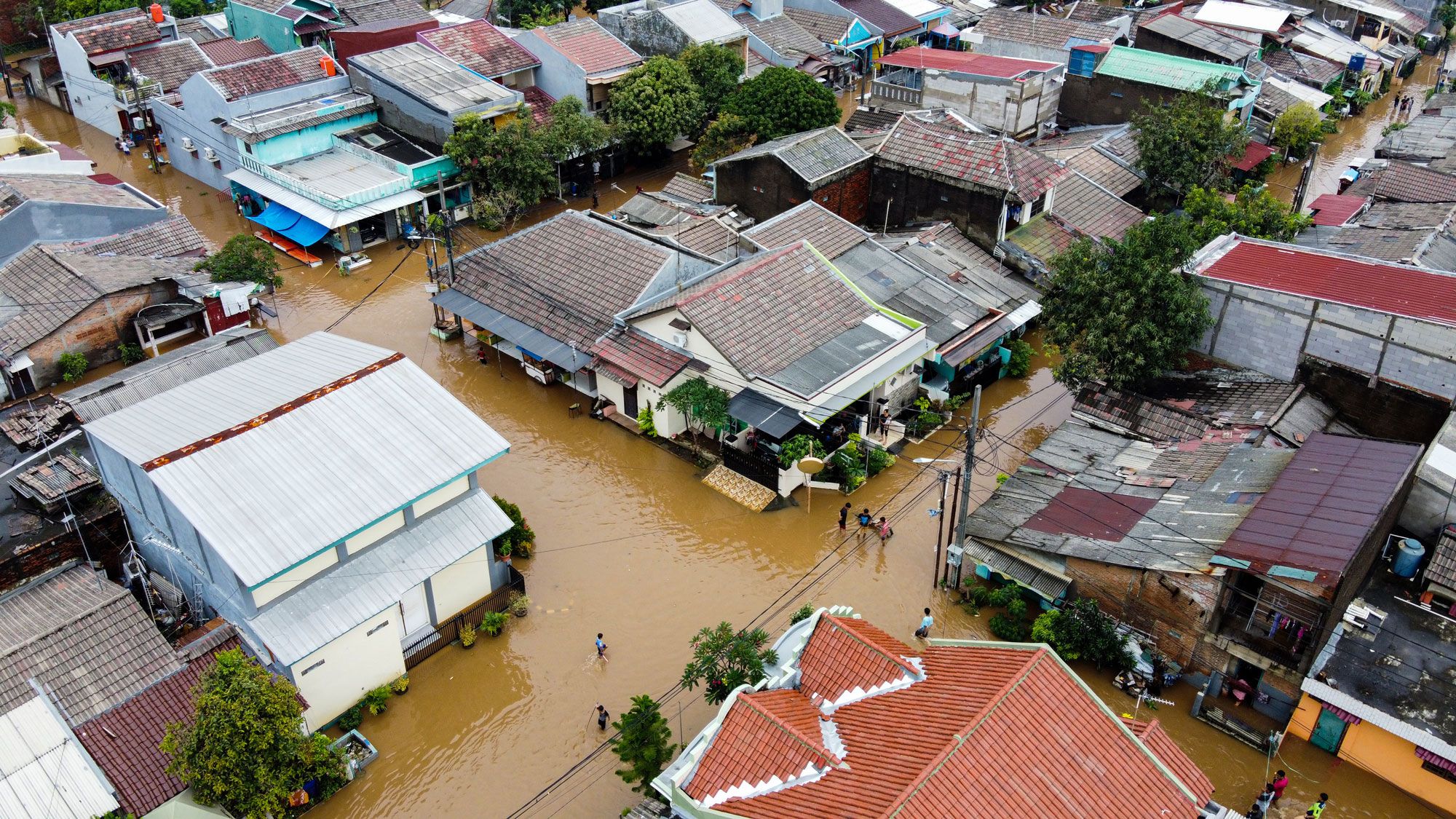
Born as a 2013 University of Wollongong pilot, PetaBencana.id turns citizens' flood reports into a government-validated hazard map — consulted 259,000+ times in Jakarta's January 2020 floods and run by Indonesia's disaster agency since 2017.
PetaBencana.id began in 2013 as PetaJakarta, a pilot study led by a University of Wollongong research
group. Architect Nashin Mahtani joined in 2016, and the initiative was formalised as the PetaBencana.id
foundation in 2017.
The platform, built on the open-source CogniCity software, lets residents report floods, water depth and
visible damage through a social-media and chatbot interface. Government agencies then validate these
crowdsourced reports in real time to produce a public hazard map — a hybrid of citizen reporting and
official verification rather than either alone.
Indonesia's National Disaster Management Agency (BNPB) integrated the platform into its operations in
2017; its then-head, Bambang Surya Putra, said it helps the government "monitor real-time disaster
situations." During the severe Jakarta floods of January 2020, the resulting map was consulted more than
259,000 times at the peak of the event, according to Twitter-referral data reported by the ITU. The
platform has since expanded beyond flooding to cover earthquakes, forest fires, smog and volcanic
activity.
With USAID support, the underlying CogniCity software has been adapted for other Indonesian cities —
Bandung, Surabaya and Semarang — and piloted abroad as MapaKalmidad in the Philippines (Pampanga and
Quezon City) and as SmartSaigon in Vietnam. The project has been recognised by the US Federal
Communications Commission and the International Federation of Red Cross and Red Crescent Societies.
Honestly noted: public sources do not disclose an aggregate count of citizen reports or a measured
reduction in flood casualties or property damage attributable to the platform. TRT World reports the
core operating team at only four people — an explicit, self-acknowledged constraint on further scaling.
Read the full analysis: https://www.itu.int/hub/2022/08/crowdsourcing-helps-mitigate-disasters/
Implementation detail (cost, timeline, staffing, conditions for success) is not yet available for this practice.
Do you run this practice? Claim it — verified implementers get a public contact pathway and can propose corrections.
Where this practice's information was retrieved from, and when.
Colombia
Since 1997, a business–media–academia coalition has tracked Bogotá's quality of life through annual citizen perception surveys and an open indicators …
Indonesia
Jakarta Smart City (2014–) pairs a command centre with citizen-reporting apps (Qlue, then JAKI from 2019) and open data; an …
Côte d'Ivoire
Abidjan data company data354 and an inter-institutional task force have installed 18-20 open PM2.5 monitors at pharmacies, chosen for reliable …
Cambodia
A Phnom Penh non-profit maps scattered land-concession, mining and hydropower data on one open platform. A GovLab case study links …
Open full copilot Grounded in cited practices — always check the sources.