Medellín's Green Corridors: 30 Urban Corridors Cut Street-Level Heat by 3.5°C
Colombia
Medellín turned 18 roads and 12 waterways into 30 shaded 'Corredores Verdes,' planting ~880,000 trees and 2.5 million smaller plants …
United States of America · Philadelphia · See the United States of America profile
Top 89% 27/100 · Ask Evidence Copilot about this practice
A cluster randomised trial of 541 Philadelphia vacant lots (cleaned-and-greened vs. trash clean-up vs. untouched) found reduced gun violence and burglary nearby and less resident depression; it measured safety and health, not carbon or biodiversity.
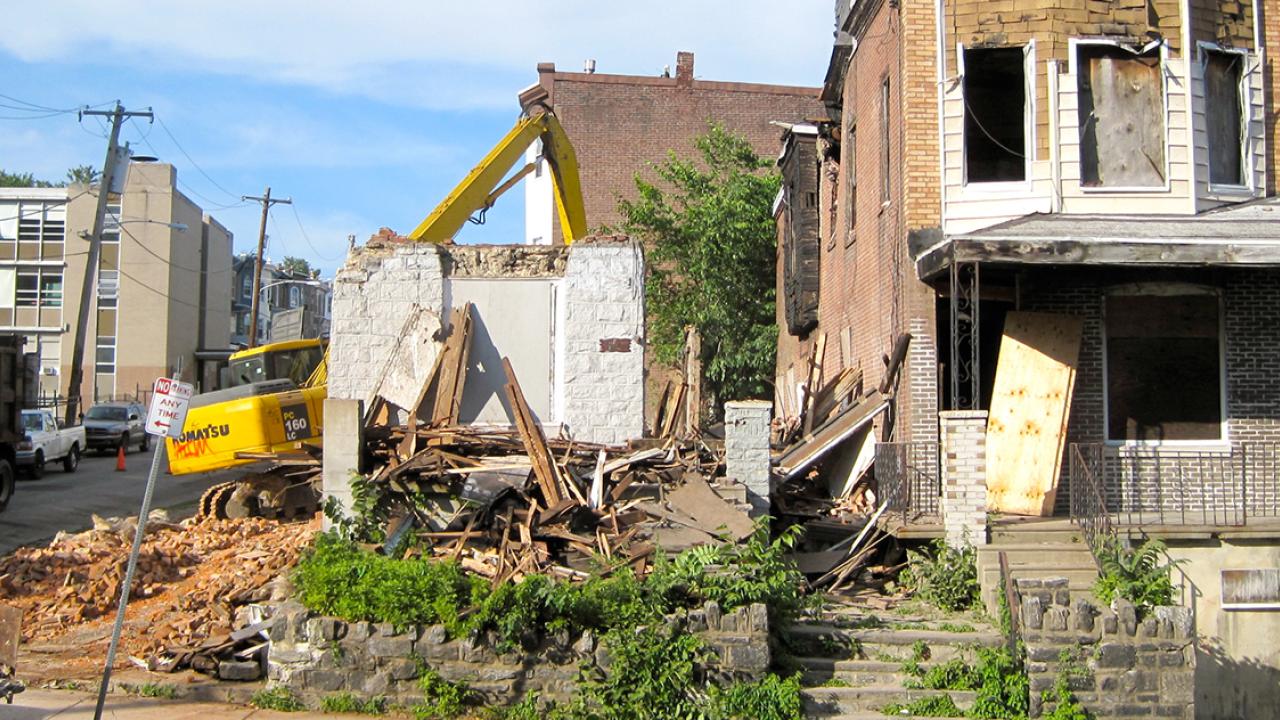
Philadelphia holds thousands of vacant lots. In a cluster randomised controlled trial led by the University of Pennsylvania, 541 lots were randomly assigned to 'cleaning and greening' (debris removal, grading, grass and a few trees, low perimeter fence, ongoing maintenance), a trash-only clean-up, or no intervention.
Published in PNAS (2018), the study found significant reductions in gun violence, burglary and nuisance offences near greened lots, with up to a 29% reduction in gun violence in neighbourhoods below the poverty line, and large falls in residents' perceived crime and safety concerns. A companion JAMA Network Open trial (2018) reported 41.5% less self-reported depression among residents living near greened lots (more than 68% in neighbourhoods below the poverty line); the overall mental-health measure was significant only for specific items.
Scientific American reports a typical cost of about US$9,300 per 1,000 sq ft lot and roughly US$50 per year upkeep.
Caveats: the evidence concerns social and health co-benefits. The trial did not measure carbon storage, biodiversity or stormwater, and effects depend on continued maintenance. Reported effect sizes differ between summaries (e.g. 9.1% overall vs. 29% in sub-analyses), so treat headline figures as indicative.
Read the full analysis: https://www.publichealth.columbia.edu/news/how-reduce-crime-gun-violence-stabilize-neighborhoods-randomized-controlled-study
Implementation detail (cost, timeline, staffing, conditions for success) is not yet available for this practice.
Do you run this practice? Claim it — verified implementers get a public contact pathway and can propose corrections.
Where this practice's information was retrieved from, and when.
Colombia
Medellín turned 18 roads and 12 waterways into 30 shaded 'Corredores Verdes,' planting ~880,000 trees and 2.5 million smaller plants …
United States of America
DWSD and the Detroit Land Bank Authority turned four Cody Rouge vacant lots into bioretention gardens in 2015, each capturing …
Colombia
Medellín's Green Corridors programme planted thousands of trees and shrubs along 30 roads and waterways from 2016, cutting monitored air …
United Kingdom
Sheffield turned a redundant dual carriageway into the UK's largest retrofit SuDS scheme (2014-2022): swales cut peak flow up to …
Open full copilot Grounded in cited practices — always check the sources.