Botswana Innovation Hub — Gaborone's Government-Backed Science & Technology Park
Botswana
Botswana's first government-backed science & technology park pairs a National Technology Transfer Office and start-up incubator with tenant leasing in …
Brazil · Recife · See the Brazil profile · See the Recife profile
Evidence: Descriptive / self-reported Top 27% 76/100 · Ask Evidence Copilot about this practice
A technology and creative-economy district in Recife's historic port quarter, growing from a 2000 founding to 340+ companies, 21,551 jobs and R$6.2 billion (~US$1.1bn) in aggregate 2024 revenue, up 14% year-on-year.
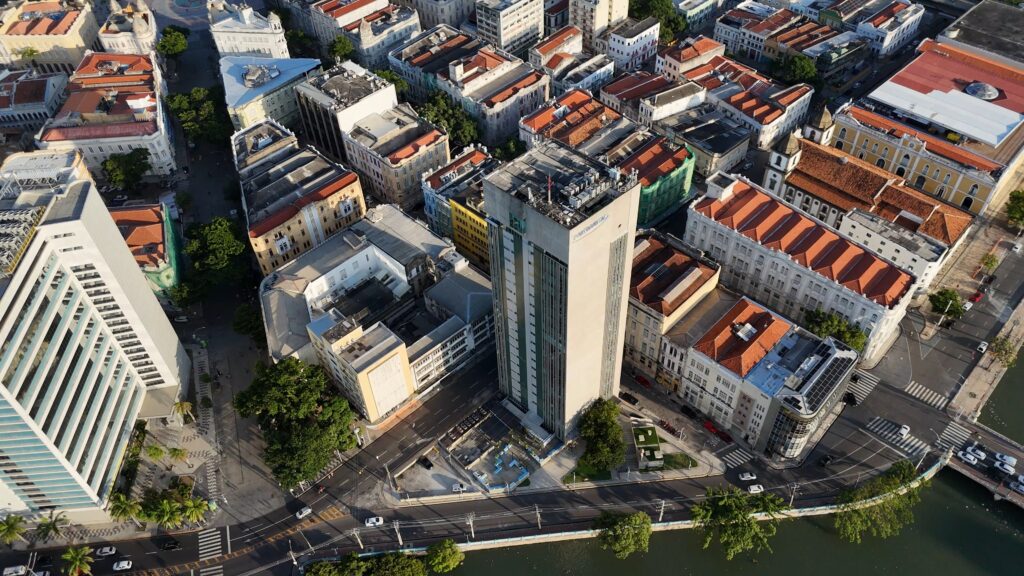
Porto Digital was founded in July 2000 in Recife Antigo, the historic port district of Recife, Brazil, funded through the privatisation of the state electricity company CELPE together with the Pernambuco state government, private investors and the Inter-American Development Bank. Its anchor institution, CESAR, was already active in software R&D before the park's creation.
Blends ICT/software services with a creative-economy cluster (gaming, animation, design, film) under a non-profit management body co-funded by state government and privatised-utility proceeds.
Evaluated as Brazil's largest science park by AT Kearney (2005) and won Brazil's Best Science Park award (2007, 2011, 2015). By 2020 it had over 330 companies employing 11,000+ people; by 2024, 340+ companies and institutions generated R$6.2B (~US$1.1B) in combined revenue — up 14% on 2023 — and 21,551 jobs.
The governance model — a non-profit body co-funded by state government and privatised-utility proceeds — has been studied and referenced by other cities planning similar districts. The main caveat is that revenue and job figures are self-reported and aggregated rather than independently audited.
National / regional programmes
Indicative funding routes for practices of this type — always check each programme's current calls and eligibility rules.
Do you run this practice? Claim it — verified implementers get a public contact pathway and can propose corrections.
Where this practice's information was retrieved from, and when.
Botswana
Botswana's first government-backed science & technology park pairs a National Technology Transfer Office and start-up incubator with tenant leasing in …
Slovakia
Slovakia's SIEA gave SMEs €1,000–€5,000 vouchers for creative-industry services. A matched study of 72 supported firms found sales grew 2.64x …
Hungary
Central and Eastern Europe's first innovation and technology park, launched in 1996 by two Budapest universities and the Hungarian government, …
Poland
Poland's first market-based science park (est. 1995), run by the Adam Mickiewicz University Foundation: around 80 tenant companies, 60 research …
Open full copilot Grounded in cited practices — always check the sources.