TIST — Small-Group Tree Planting & Carbon Program (Soroti District, Uganda)
Uganda
Since 1999, TIST has organised smallholder farmers into self-governing 'small groups' across Kenya, Uganda (incl. Soroti), Tanzania and India. Verra's …
New Zealand · Tuatapere · See the New Zealand profile
Since 2008, the Rowallan Alton Māori Incorporation has kept 738 ha of temperate rainforest near Fiordland National Park standing, financed by Plan Vivo carbon credits sold via NZ developer Ekos — a rare indigenous-led REDD+ deal outside the tropics; 16,589 tCO2e issued to date.
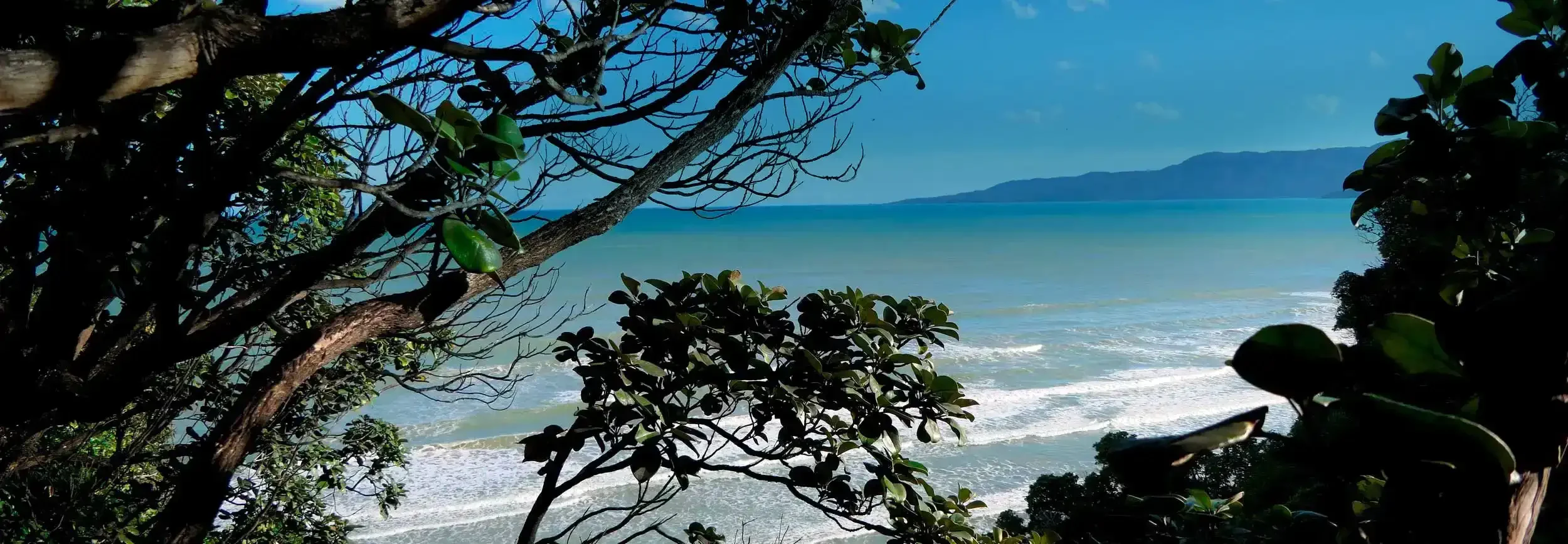
In 2008, the Rowallan Alton (Māori) Incorporation — landowners in western Southland at the southern tip of New Zealand's South Island — began working with carbon-finance developer Ekos to keep 738 hectares of tall indigenous rainforest standing rather than logging it. The land sits on cliffs above Te Waewae Bay and Bluecliffs Beach, directly adjoining Fiordland National Park, in a region where roughly 73% of New Zealand's original indigenous forest cover has already been cleared.
Project development ran from 2008 to 2013, with Te Puni Kōkiri (the Ministry for Māori Development) co-funding the initial design alongside Ekos. The forest was certified to the Plan Vivo Standard and listed on the IHS Markit Environmental Registry, with independent verifier Dr Misheck Kapambwe confirming avoided-deforestation carbon benefits; to date the project has issued 16,589 tCO2e in verified carbon credits.
Revenue from credit sales funds ongoing conservation management and monitoring, and — according to the landowners — habitat regeneration and tourism infrastructure linked to the nearby Hump Ridge Track. Rarakau remains one of the few indigenous-led forest-carbon deals outside the tropics; researchers studying it (Weaver, 2016, New Zealand Geographer) have flagged reliance on a single small voluntary-market buyer as a structural vulnerability for scaling the model to other Māori-owned forests.
Read the full analysis: https://www.ekos.co.nz/project-rarakau
Implementation detail (cost, timeline, staffing, conditions for success) is not yet available for this practice.
Where this practice's information was retrieved from, and when.
Uganda
Since 1999, TIST has organised smallholder farmers into self-governing 'small groups' across Kenya, Uganda (incl. Soroti), Tanzania and India. Verra's …
Tanzania
Plan Vivo-verified REDD+ project protecting 110,500 ha of Hadza and Datoga community land in northern Tanzania, avoiding a cumulative 652,082 …
Indonesia
KKI Warsi's Plan Vivo-certified village forest project protects 5,000+ ha of primary rainforest in Jambi with 5 communities; a verified …
Nepal
Nepal's first REDD+ pilot paid 112 community forest user groups across three watersheds (Dolakha, Chitwan, Gorkha) via new Forest Carbon …
Open full copilot Grounded in cited practices — always check the sources.