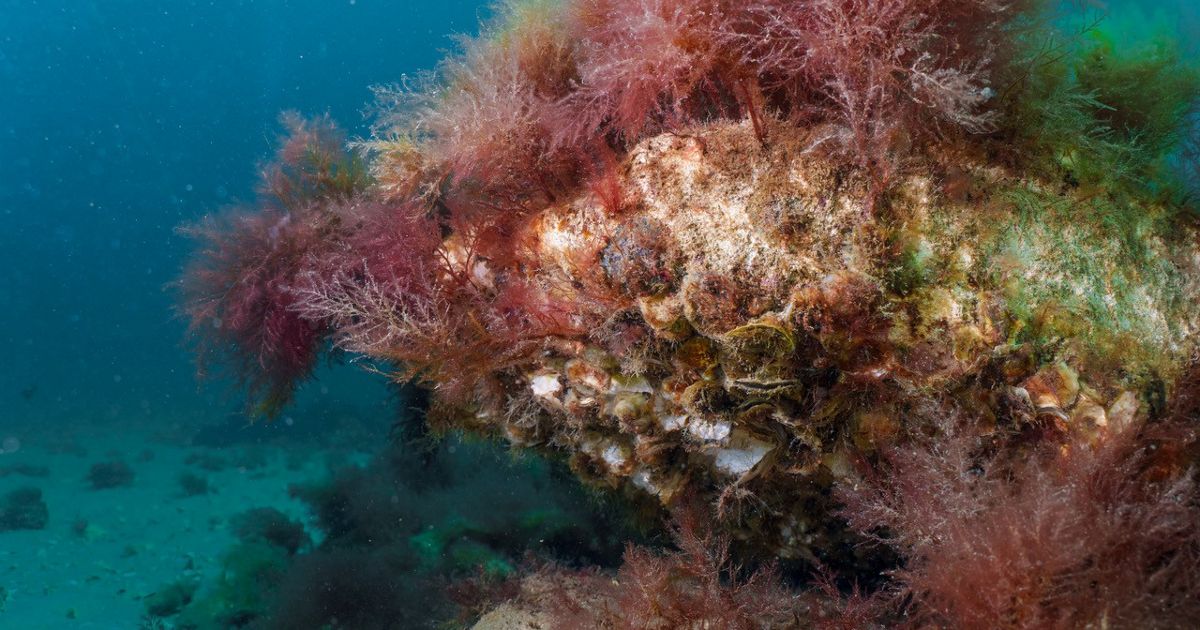
Australia's AU$20m Reef Builder programme rebuilt over 60 hectares of near-extinct shellfish reefs at 13 sites nationwide; a 2025 survey of its Gippsland Lakes site found mussels, oysters and fish thriving three years on, winning the country's first UN Restoration Flagship award.
Australia lost more than 95% of its native shellfish reefs to over-harvesting, dredging and disease over the past two centuries. Reef Builder, a AU$20 million, 2021-2023 partnership between The Nature Conservancy and the Australian Government (with state agencies, First Nations groups, universities and community groups), set out to rebuild them.
Objectives
Restore shellfish reef habitat nationally while creating jobs and engaging community volunteers, using recycled shell material and native oyster/mussel seeding.
Activities
Reefs were rebuilt at 13 project sites across WA, SA, Victoria, Tasmania, NSW and Queensland, seeding around 30 million native oysters/mussels onto 98 tonnes of recycled shell base material. At Gippsland Lakes (Nyerimilang, Victoria), 2.5 hectares across 17 patches were restored in 2022.
Results
The national programme restored more than 40 hectares of reef (since expanded to over 60 hectares), created 425 jobs (2.5x the target), and engaged over 5,200 community members and 305 volunteers. A 2025 survey at Gippsland Lakes, three years on, recorded mature mussel beds, flat oysters, fish, sea stars, crabs and nudibranchs, with reefs filtering millions of litres of water daily. In December 2025 the UN designated Reef Builder a World Restoration Flagship, the first Australian project so recognised.
Conclusions
Independent ecological monitoring beyond citizen-science surveys is limited to a subset of sites, and the programme's AU$14 million/year benefit estimate is explicitly a projected economic figure from delivery partners rather than an independently audited valuation.
Implementation
Indicative cost
High (€500k–€5M) — AU$20 million total programme (2021-2023) across 13 sites; Gippsland Lakes sub-project restored 2.5 ha across 17 patches.
Time to results
Medium (1–3 years) — Core delivery 2021-2023; Gippsland Lakes monitored through a 2025 three-year post-restoration survey; UN Flagship recognition December 2025.
Staffing & skills
The Nature Conservancy Australia programme staff, state government agency partners, First Nations groups, university researchers, 305 community volunteers
Conditions for success
multi-agency, multi-state funding and delivery structure
recycled shell base material supply for reef substrate
community/volunteer engagement pipeline
Common failure modes
independent ecological monitoring beyond citizen science is limited to a subset of sites
AU$14M/year benefit estimate is a delivery-partner projection, not independently audited
Where it fits
Governance type
national government + NGO (TNC) partnership with state agencies
Scale
national (13 sites across 6 states/territories)
Income level
high-income (Australia)
Do you run this practice?
Claim it —
verified implementers get a public contact pathway and can propose corrections.
Data sources
Where this practice's information was retrieved from, and when.
A decade-long Iran–UNDP programme cutting agricultural water use 25% and raising irrigation efficiency ~42% around Ramsar-listed Lake Urmia; independent monitoring …
Since 1972, Trust for Nature has placed permanently binding conservation covenants on private land titles across Victoria, Australia, protecting over …