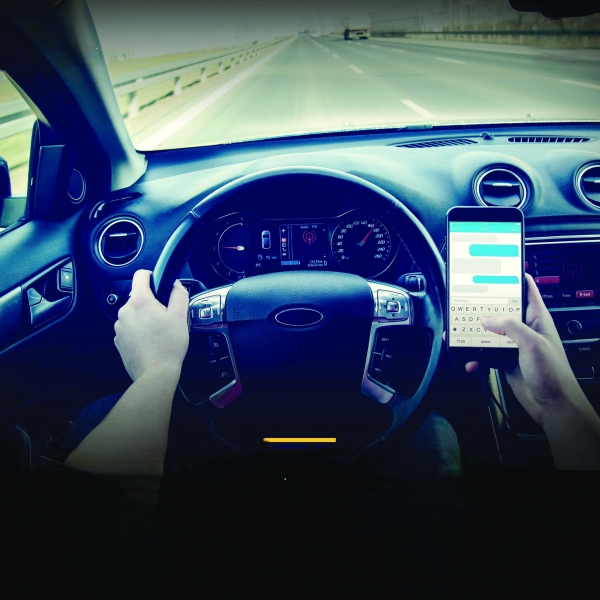
Royal Oman Police deployed AI-4D-radar cameras across highways and intersections since 2023, detecting speeding, mobile-phone use and seat-belt violations. Road accidents fell 24%: 2,040 (2023) to 1,545 (2025). ROP won IRF Global Awards 2025 for AI traffic safety.
2,040 accidents
Total traffic accidents, 2023 (2023)
1,854 accidents
Total traffic accidents, 2024 (2024)
1,545 accidents
Total traffic accidents, 2025 (2025)
24 %
Cumulative reduction in traffic accidents (2023–2025)
1,009 to 674 incidents
Speeding-related incidents, 2023 to 2025 (2023–2025)
33 %
Reduction in speeding-related incidents (2023–2025)
Details
Maturity
Scaling
Promoter
Royal Oman Police
Period
2023–present
Keywords
traffic enforcement, road safety, public safety
Context
The Royal Oman Police (ROP) began deploying AI-powered smart traffic cameras combining computer vision with 4D radar across major highways and signalised intersections from 2023, aiming for continuous, multi-violation detection without human intervention.
Objectives
The system targets simultaneous detection of speeding, mobile-phone use while driving, seat-belt non-compliance, tailgating and erratic lane changes, automatically transmitting violation data to ROP control centres and issuing real-time fine notifications, including against repeat offenders in the delivery sector.
Activities
Cameras operate 24/7 with low-light capability and maintain violation histories by vehicle and driver. The rollout ran through trial periods in 2023–2024, entered formal phased installation in February 2026, with plans to extend coverage to all previously unmonitored intersections across Oman. A standard 20 km/h tolerance buffer applies before fines are triggered.
Results
Official ROP statistics show total traffic accidents falling from 2,040 (2023) to 1,854 (2024) to 1,545 (2025) — a 24% cumulative reduction — while speeding-related incidents fell from 1,009 (2023) to 674 (2025), a 33% drop. ROP won first place at the International Road Federation (IRF) Global Awards 2025 for AI and data analytics in traffic management, and was selected by WHO to represent the Eastern Mediterranean Region on the Global Technical Committee for Road Safety Legislation.
Conclusions
Authorities attribute the accident decline to a combination of stricter enforcement, public awareness campaigns, infrastructure improvements and AI-assisted monitoring together — the reduction is explicitly multi-causal, not an isolated AI effect.
Implementation
Indicative cost
High (€500k–€5M) — National-scale AI camera and 4D-radar infrastructure across highways and intersections, in phased multi-year installation; no public cost figures found in source.
Time to results
Long (> 3 years) — Trial periods 2023–2024, formal phased installation from February 2026, with plans to extend to all unmonitored intersections.
Staffing & skills
Royal Oman Police control centres monitoring automated violation data and issuing fine notifications, Phased installation programme extending to previously unmonitored intersections
Conditions for success
Combination of computer vision and 4D radar for multi-violation detection without human intervention
24/7 low-light-capable operation and vehicle/driver violation-history tracking
Standard 20 km/h tolerance buffer to structure fair enforcement thresholds
Complementary measures: public awareness campaigns and infrastructure improvements alongside AI monitoring
Common failure modes
Accident reduction is multi-causal; AI's isolated contribution is not separately quantified
Detection algorithm itself is not publicly disclosed
Where it fits
Governance type
national police force
Scale
national (phased highway and intersection rollout)
Income level
high-income (Oman)
Data sources
Where this practice's information was retrieved from, and when.
Since 2011, Ireland's Revenue Commissioners have used AI risk scoring (REAP) to target tax-compliance interventions; 290,000 data-analytics-driven interventions in 2023 …