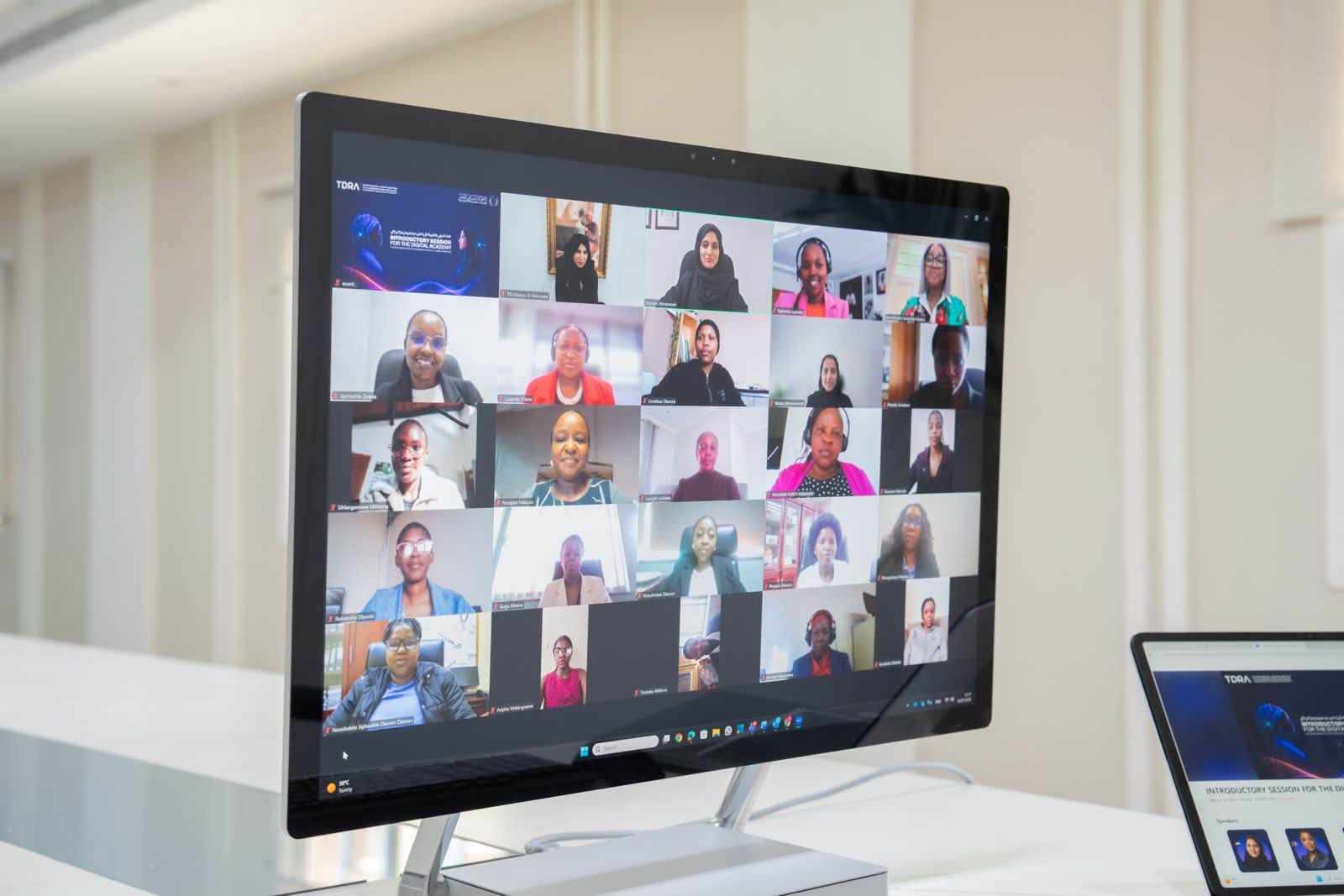
Eswatini's government and the UAE's General Women's Union launched a pilot digital academy in Mbabane (July 2026), training an initial 50 women from government institutions in AI, cybersecurity, data science, software development and IT operations.
50 women
Women in first academy intake (July 2026)
Details
Maturity
Pilot
Promoter
Eswatini Telecommunications and Digital Government Regulatory Authority & UAE General Women's Union
Period
MOU signed Sep 2025; pilot launched Jul 2026
Keywords
artificial intelligence, cybersecurity, data science, public sector workforce, gender equality
Context
Following a memorandum of understanding signed at the UN General Assembly in September 2025, Eswatini's Telecommunications and Digital Government Regulatory Authority and the UAE's General Women's Union / Digital Government Academy launched the 'She Powers Africa' Digital Academy in Mbabane in July 2026, with Eswatini as the pilot African country.
Objectives
The academy aims to train women from government and government-linked institutions in artificial intelligence, cybersecurity, data science, software development and IT operations, as a first step toward national and then pan-African expansion.
Activities
The first intake trains 50 women drawn from government and government-linked institutions across the five named skill areas. Organisers position the academy alongside Eswatini's separate Coders Eswatini partnership and the World Bank-supported Digital Eswatini Project.
Results
The pilot's first cohort comprises 50 women; organisers state plans to expand training nationally and then to other African countries.
Conclusions
Because the academy only launched in mid-2026, no completion, skills-assessment or job-placement data exists yet; the practice is evidenced by its institutional backing and stated targets rather than measured learning outcomes, and its narrow initial cohort of civil servants (not students in formal education) is a scope limitation for an education catalogue.
Implementation
Indicative cost
Low (< €50k)
Time to results
Short (< 1 year)
Staffing & skills
Eswatini Telecommunications and Digital Government Regulatory Authority, UAE General Women's Union / Digital Government Academy
Conditions for success
Memorandum of understanding signed at the UN General Assembly (September 2025)
Positioning alongside the Coders Eswatini partnership and the World Bank-supported Digital Eswatini Project
Ministerial backing (Minister Savannah Maziya)
Common failure modes
Initial cohort limited to 50 civil servants rather than students in formal education
No completion, skills-assessment or job-placement data published yet
Do you run this practice?
Claim it —
verified implementers get a public contact pathway and can propose corrections.
Data sources
Where this practice's information was retrieved from, and when.