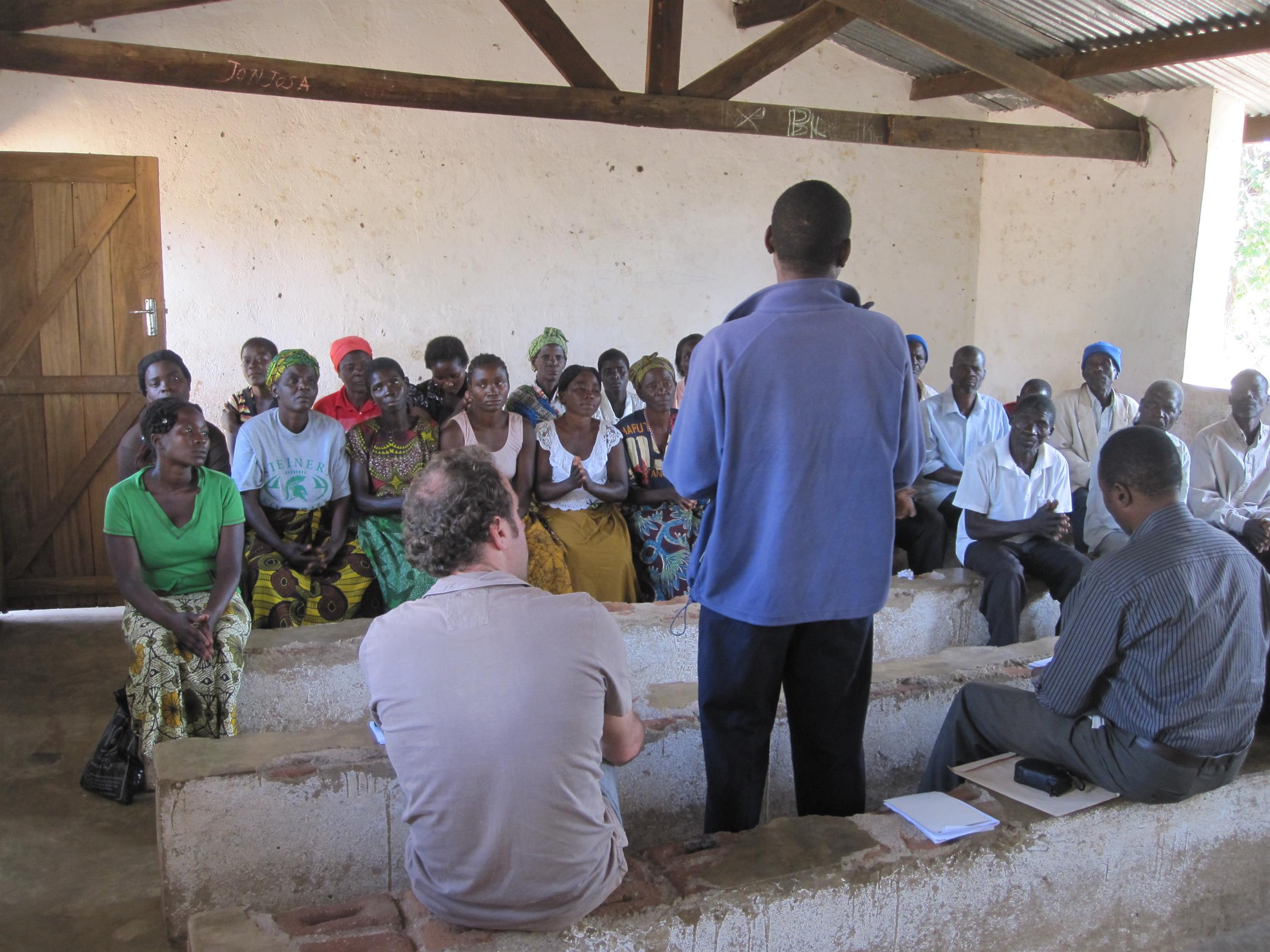
Malawi's Phase-I Shire River Basin Management Program (2012–2019) paid roughly 185 communities $1,500 each through a Community Environmental Conservation Fund to rehabilitate over 35,000 hectares of watershed and 4,000+ km of streambanks, though an independent evaluation flagged
185
Community Environmental Conservation Funds formed (2016-2018)
25,000+ hectares
Soil-and-water conservation area
~10,000 hectares
Forestry restoration area
35,000+ hectares
Degraded watershed rehabilitated (overall)
~350,000
Estimated beneficiaries
Details
Maturity
Discontinued
Promoter
Malawi Ministry of Agriculture, Irrigation and Water Development, with World Bank financing and Mott MacDonald technical support
Period
2012–2019 (Phase I)
Keywords
watershed management, soil and water conservation, community payments, hydropower protection, agriculture
Context
The Shire River drains Lake Malawi and supplies roughly 90% of Malawi's hydropower plus water for over 350,000 people downstream, but upstream deforestation and poor farming practices were causing severe erosion. Financed by the World Bank and implemented by Malawi's Ministry of Agriculture, Irrigation and Water Development with technical support from Mott MacDonald, Phase I of the Shire River Basin Management Program (2012-2019) ran a Community Environmental Conservation Fund (CECF) from 2016 to 2018, forming 185 CECFs and paying communities a fixed $1,500 grant for gully rehabilitation, riverbank protection, forest restoration and improved farming.
Results
Mott MacDonald independently confirms the programme delivered over 25,000 hectares of soil-and-water conservation work plus nearly 10,000 hectares of forestry restoration and more than 4,000 kilometres of stream and riverbank rehabilitation -- consistent with the World Bank's overall figure of more than 35,000 hectares of degraded watershed rehabilitated, reaching an estimated 350,000 beneficiaries.
Conclusions
An independent evaluation brief found early indications positive, with the CECF successfully motivating communities to act on their land-use plans, but noted candidly that the project has since closed and technical support ended, recommending a follow-up assessment to check whether rehabilitated land and community funds have persisted without that support.
Implementation
Indicative cost
High (€500k–€5M)
Time to results
Medium (1–3 years)
Staffing & skills
Malawi Ministry of Agriculture, Irrigation and Water Development, Mott MacDonald (technical support), World Bank (financing), 185 Community Environmental Conservation Funds
Conditions for success
fixed $1,500 grant tied to communities' own village land-use plans
revolving fund with repayments recycled to sustain activity
Common failure modes
project has since closed and technical support ended; independent evaluation recommends follow-up assessment to check whether rehabilitated land and community funds persisted without support
Commonly funded by
National / regional programmes
Indicative funding routes for practices of this type — always check each programme's current calls and eligibility rules.
Do you run this practice?
Claim it —
verified implementers get a public contact pathway and can propose corrections.
Data sources
Where this practice's information was retrieved from, and when.
France's 2021–2024 national PES pilot paid nearly 3,500 farmers across 130 territories for water-quality, soil and biodiversity outcomes, contracting up …