Nepal Wireless Networking Project — Mahabir Pun's Himalayan Village-to-Village Internet
Nepal
Starting from a single WiFi link to Pokhara in 2002, teacher Mahabir Pun and volunteer engineers built the Nepal Wireless …
South Korea · Seoul · See the South Korea profile · See the Seoul profile
Evidence: Observational / pre–post Top 10% 96/100 · Ask Evidence Copilot about this practice
SK Telecom's AI Care places a voice-activated Nugu speaker in the homes of seniors living alone, flagging distress and looping in a 24-hour call centre. In its first year it logged 328 help calls, 23 confirmed as medical emergencies referred to Korea's 119 rescue service.
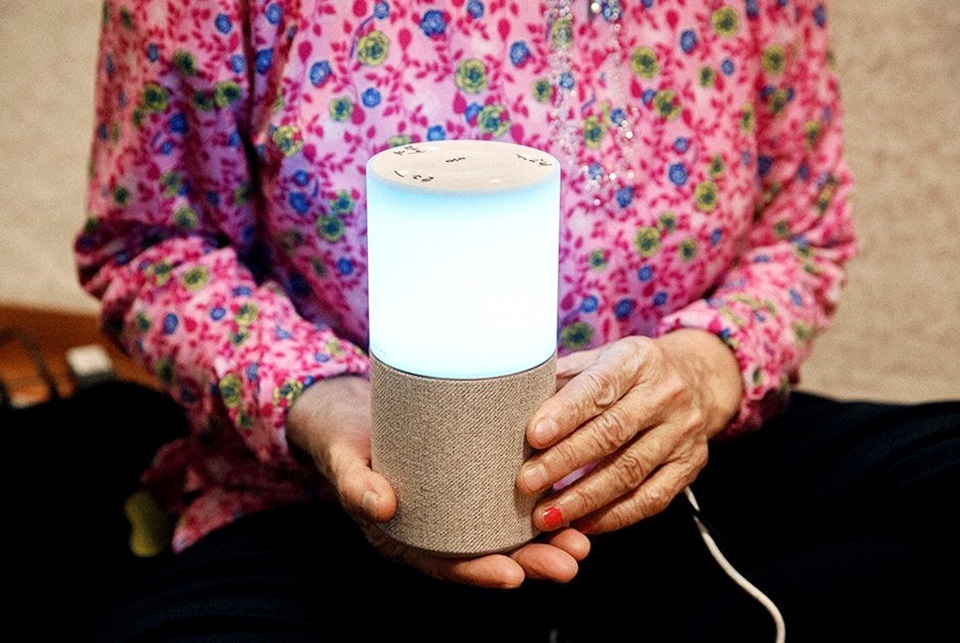
South Korea has one of the world's fastest-ageing populations, and hundreds of thousands of older people live alone with no one nearby to notice a fall or a medical emergency. SK Telecom adapted its consumer Nugu voice-AI speaker into a monitoring device: it makes daily conversation, plays music, and lets a resident call for help by voice, or flags unusual silence, routing an alert to a 24-hour care centre that can escalate to Korea's 119 emergency service.
SK Telecom launched the service in May 2019, reaching low-income seniors through local-government subsidy partnerships. As of the most recent public figures it covered roughly 3,600 households, with 2,800 more planned through municipal cooperation.
By April 2020, the service had received 328 help calls; 23 were confirmed medical emergencies (breathing difficulty, chest pain, injury) that received immediate rescue dispatch. Independent usage research by the Barun ICT Research Center, surveying 670 users, found seven in ten seniors used the speaker daily and 95% used it at least three times a week, with music, voice search and conversation the most-used features.
The service remains a private telco offering reliant on local-government subsidy partnerships, covering a modest slice of the more than one million Koreans over 65 living alone. The available evidence is operational and survey-based rather than a controlled trial, so the health impact of the 23 confirmed rescues — versus what would have happened without the service — is not independently verified.
Do you run this practice? Claim it — verified implementers get a public contact pathway and can propose corrections.
Where this practice's information was retrieved from, and when.
Nepal
Starting from a single WiFi link to Pokhara in 2002, teacher Mahabir Pun and volunteer engineers built the Nepal Wireless …
Kenya
Safaricom's M-Pesa turned basic phones into bank accounts across Kenya. A landmark Science study found it lifted 194,000 households out …
Mexico
TIC A.C. operates the world's largest community-owned mobile network, covering 63 indigenous localities across five Mexican states; its 2016 Social …
India
Google's offline, speech-recognition reading tutor, launched in India as Bolo in 2019, gives children real-time voice feedback as they read …
Open full copilot Grounded in cited practices — always check the sources.