Malaysia SiPKPM — AI-enhanced national early-warning system for school dropout prevention
Malaysia
Malaysia's Ministry of Education (KPM) and UNICEF deploy SiPKPM, an AI early-warning system tracking 5 million learners on 7 risk …
Sweden · Stockholm · See the Sweden profile · See the Stockholm profile
Evidence: Observational / pre–post Top 89% 27/100 · Ask Evidence Copilot about this practice
SISAB, Stockholm's municipal school-property company, ran Schneider Electric's SOLIDA AI system across 87 school buildings for four years, cutting electricity use 8.9% and district heating 3.1%, a net 250-tonne CO2 reduction, now scaled to about 125 schools.
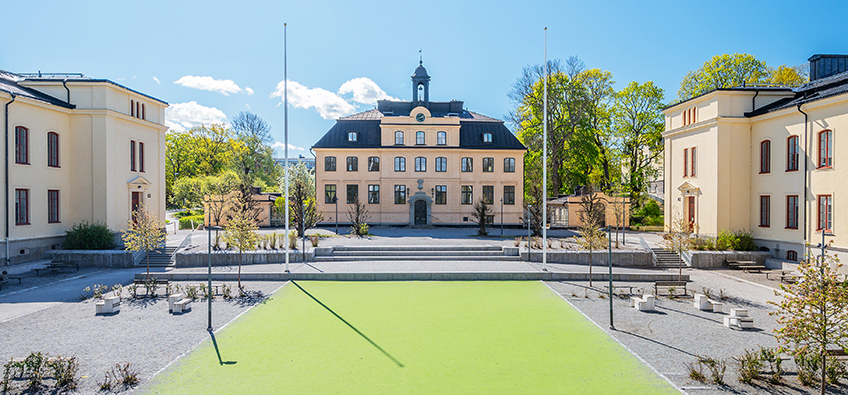
SE11SISAB (Skolfastigheter i Stockholm AB), Stockholm's municipal school-property company managing roughly 600 school and preschool buildings on a 340-million-Swedish-krona annual energy budget covering about 250 GWh of demand, partnered with Schneider Electric and Swedish AI firm Myrspoven to test whether machine-learning HVAC control could cut energy use without harming indoor comfort.
Built on Schneider Electric's EcoStruxure Building Operation platform and marketed as SOLIDA, the system used more than 9,900 sensors to continuously adjust heating, ventilation and airflow across 87 school properties over a four-year evaluation period, with a predictive layer forecasting demand up to 48 hours ahead.
Across the 87 properties, electricity consumption fell 8.9% overall (8.7% average per building) and district heating fell 3.1% (2.8% average per building), for a net reduction of about 250 tonnes of CO2-equivalent once infrastructure emissions were subtracted. Following the pilot, SISAB extended the system to roughly 125 schools and preschools, reporting close to 3 GWh in annual energy savings.
The results come from a joint SISAB-Schneider Electric report rather than an independent third-party audit, and carbon savings would be substantially higher in grids more carbon-intensive than Sweden's, meaning the CO2 figures are specific to Sweden's largely fossil-free power mix and don't directly generalise to other countries.
Own resources / municipal budget
Indicative funding routes for practices of this type — always check each programme's current calls and eligibility rules.
Do you run this practice? Claim it — verified implementers get a public contact pathway and can propose corrections.
Where this practice's information was retrieved from, and when.
Malaysia
Malaysia's Ministry of Education (KPM) and UNICEF deploy SiPKPM, an AI early-warning system tracking 5 million learners on 7 risk …
Peru
A pre-registered World Bank RCT of an Anthropic Claude-powered AI career coach and math tutor across up to 110 Lima …
Kenya
Announced 19 May 2026 alongside Pakistan, Brazil and India, this Google.org-funded, UNICEF-implemented partnership works with Kenya's national Government on three …
Peru
The World Bank, Peru's DRELM, Anthropic and Microsoft launched an AI maths tutor and career-guidance coach across 110 Lima public …
Open full copilot Grounded in cited practices — always check the sources.