Gewog Community Centres (CCs)
Bhutan
Bhutan built 182 of a planned 205 rural gewog Community Centres offering broadband, e-government and basic computer services, but 2014 …
Philippines · Quezon City · See the Philippines profile
The Philippines' Tech4ED places community ICT centers in schools, libraries and local-government offices nationwide, teaching digital literacy, e-government access and entrepreneurship. Grew from 89 centers in 2015 to over 2,200 by 2018, though independent outcome data is thin.
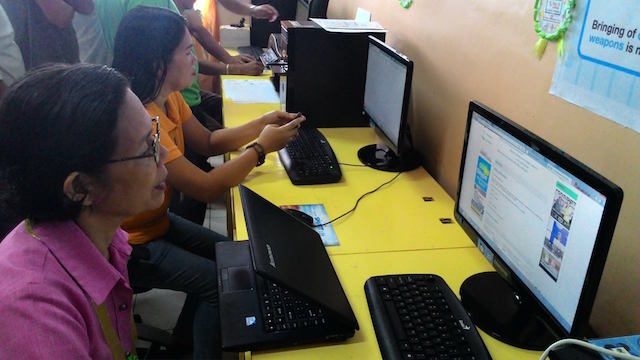
Tech4ED (Technology for Education, Employment, Entrepreneurship, and Economic Development) is the Philippine Department of Information and Communications Technology's national network of community ICT centers, hosted in schools, public libraries, local-government offices and partner NGOs, especially in unserved and underserved municipalities. Each center pairs shared computers and internet access with a standardised online curriculum covering basic digital literacy, government e-services, freelancing and entrepreneurship, targeting ten priority groups including out-of-school youth, women, persons with disabilities, indigenous peoples, and overseas workers' families.
According to a DICT presentation archived by the NGO Foundation for Media Alternatives, centers grew from 89 in 2015 to 863 in 2016, 2,121 in 2017 and 2,253 by July 2018, reaching 100% of provinces, 79% of cities and 35% of municipalities, with 69% of centers in rural areas. Independent reporting by Rappler in 2017 documented 1,316 centers and 54,435 enrolled learners nationally, 57.8% of them women. The programme remains active into 2024-2025, with new centers opened in Palawan in February 2024 (equipped partly through donated hardware from Latter-Day Saint Charities and Metro Pacific Health Tech) and a national awards event and further center launches reported in 2025 under an ongoing rebrand to "Digital Transformation Centers."
No independent impact evaluation of learning, employment or income outcomes was found — the strongest available figures are DICT's own center and enrollment counts, only partly corroborated by independent journalism, and no verified nationwide total exists for 2024-2025. DICT as an agency has faced public criticism for budget underutilisation (obligating roughly 25% of its 2023 budget per Senate hearings), and individual centers depend substantially on ad hoc equipment donations and local-government cooperation rather than a guaranteed uniform capital budget.
Read the full analysis: https://www.rappler.com/newsbreak/in-depth/167495-bridging-digital-divide-ict-tech4ed/
Implementation detail (cost, timeline, staffing, conditions for success) is not yet available for this practice.
Where this practice's information was retrieved from, and when.
Bhutan
Bhutan built 182 of a planned 205 rural gewog Community Centres offering broadband, e-government and basic computer services, but 2014 …
Ghana
Farmerline's voice-first Mergdata platform delivers weather, market-price and agronomic advice plus digital credit to over 2 million smallholder farmers in …
Vanuatu
ITU-led Smart Island programme brought VSAT/solar-powered connectivity and digital-skills training to six villages on Vanuatu's Malekula island, training over 1,000 …
Namibia
A Windhoek non-profit connected up to 500 Namibian schools to the internet via open-source Edubuntu labs, refurbished PCs and even …
Open full copilot Grounded in cited practices — always check the sources.