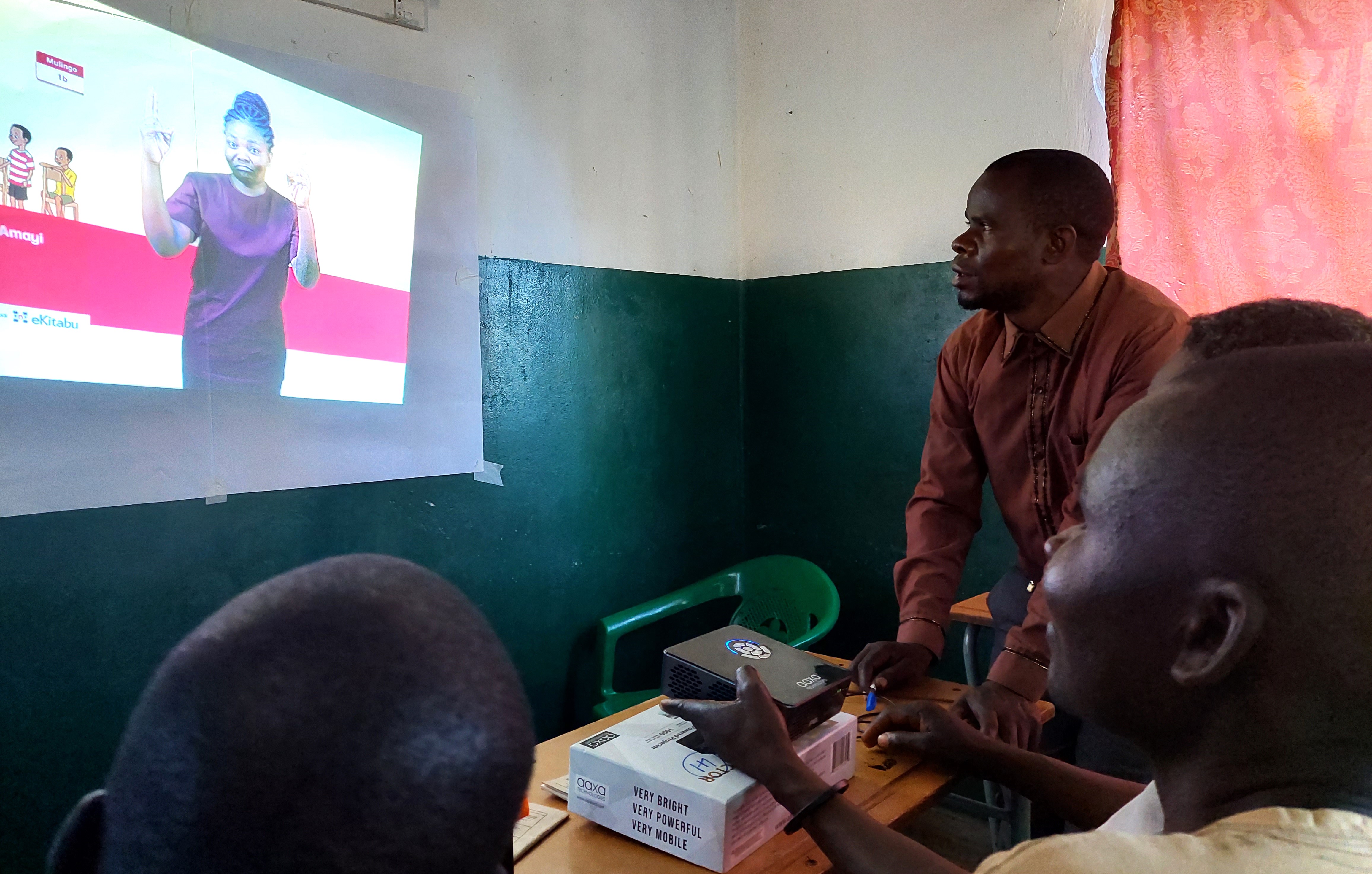
World Vision Malawi's Tiwerenge 365 gives rural reading clubs solar-powered tablet kits with sign-language and narrated digital books, reaching 3,500 children including 90+ with disabilities, now extending to seven schools for the deaf.
Tiwerenge 365 puts accessible digital books into rural Malawian reading clubs using solar-powered tablet kits, serving areas without reliable electricity or connectivity.
Activities
Since starting in 2021 with $78,000 in World Vision funding, kits pair a microSD digital library, solar panel, micro-projector and speakers; 60 books include Malawian Sign Language video alongside narrated audio, adjustable zoom and text highlighting.
Results
The programme has reached 3,500 children through 60 reading clubs, including 90+ children with identified print, learning or hearing disabilities; in 2023 it partnered with MANAD to extend into seven schools for the deaf. It won a 2024 Zero Project Award.
Conclusions
Mid-term monitoring found high satisfaction and increased club attendance, but the evidence base is still largely self-reported by the implementing organisation, and independent third-party evaluation of learning outcomes was not found.
Implementation
Indicative cost
Low (< €50k)
Time to results
Medium (1–3 years)
Staffing & skills
World Vision Malawi, Malawi National Association of the Deaf (MANAD)
Conditions for success
solar-powered kits usable without reliable electricity or connectivity
partnership with a deaf-led organisation for sign-language content
Common failure modes
evidence base is self-reported by the implementing organisation, without independent evaluation
Commonly funded by
Philanthropic / foundation funding
Indicative funding routes for practices of this type — always check each programme's current calls and eligibility rules.
Do you run this practice?
Claim it —
verified implementers get a public contact pathway and can propose corrections.
Data sources
Where this practice's information was retrieved from, and when.
UNICEF, Paraguay's Ministry of Education and Paraguay Educa adapted school textbooks into accessible digital formats — audio narration, sign-language video, …
Government-backed Indian digital library giving people with print disabilities free access to accessible-format books. Launched 2016 with 200,000+ titles; by …
eKitabu, a Nairobi edtech nonprofit, builds born-accessible e-books for blind/low-vision learners and Kenyan Sign Language video storybooks for deaf learners …