Niger's Farmer-Managed Natural Regeneration — State Tree-Tenure Reform (Code Rural)
Niger
Niger's 1993 Rural Code, reinforced by a 2004 forestry law and a 2020 presidential decree, gave farmers ownership of on-farm …
Türkiye · Ankara · See the Türkiye profile
Turkey's forestry ministry, with World Bank/GEF financing, has supported watershed communities since 2004 with saplings, irrigation tech and solar heaters; the first phase raised vegetation cover 77% and incomes 53%, and a $135M second phase (TULIP) now covers over 1M hectares.
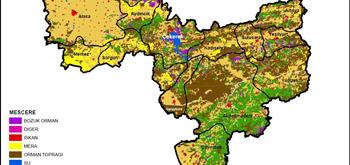
Turkey's Ministry of Agriculture and Forestry, through its General Directorate of Forestry (OGM), has run watershed rehabilitation support to rural communities since 2004 under the World Bank/GEF-financed Anatolia Watershed Rehabilitation Project (AWRP, 2004-2012/13, following an earlier 1993-2001 Eastern Anatolia precursor), and continues today under the Turkey Resilient Landscape Integration Project (TULIP, 2021-present). Rather than cash-per-hectare payments, the program delivers in-kind and technical support — tree saplings, irrigation and cultivation technology, solar water heaters to reduce fuelwood demand, and financing for community-designed 'micro-catchment investment plans' — to farming households in erosion-prone Black Sea and Central Anatolian catchments.
AWRP combined a US$15.7 million World Bank loan with a US$7 million GEF grant (about US$45.4 million total with co-financing) across roughly 28 microcatchments. World Bank results reporting attributes to the project a 77% increase in vegetation cover above baseline, soil fertility gains of over 20% on sloping land, average household income increases of 53% in target areas, and adoption of improved practices by over 30% of farmers (60% for manure management), alongside measurable nutrient-load reductions into Black Sea tributaries. TULIP, a $135 million World Bank credit signed in 2021, extends the model to the Bolaman river basin (158,000 ha) and Çekerek river basin (876,000 ha), targeting roughly 90,000 direct beneficiaries including 13,000 forest-village households and 20,000 farmers receiving support for sustainable agriculture, afforestation and erosion control.
The evidence base has real limits. No independent, peer-reviewed evaluation of either project phase was located — the quantitative outcome figures come from World Bank/GEF self-reporting rather than third-party academic assessment, a bias worth noting explicitly. The support model is also in-kind/technical rather than a strict output-based cash PES contract, so it sits at the looser end of what 'payment for ecosystem services' typically means, and exact per-household disbursement rules were not confirmed in available sources. The program's main documented strength is its participatory, community-level micro-catchment planning model, explicitly credited by Turkish officials as a 'key success factor' and carried forward from AWRP into the newer TULIP phase — a genuine institutional-replication signal even without independent outcome verification.
Read the full analysis: https://www.ogm.gov.tr/tr/haberler/bolaman-ve-cekerek-havzasi-projeleri
Implementation detail (cost, timeline, staffing, conditions for success) is not yet available for this practice.
Where this practice's information was retrieved from, and when.
Niger
Niger's 1993 Rural Code, reinforced by a 2004 forestry law and a 2020 presidential decree, gave farmers ownership of on-farm …
Cuba
Cuba's 1959 Forestry Law and Plan Turquino-Manati raised forest cover from ~14% (1959) to 31.2% (2020, World Bank), though the …
Iceland
Iceland's 'Bændur græða landið' scheme pays farmers fertiliser, seed and cash to revegetate eroded land, run by the state Soil …
Algeria
Algeria's Barrage Vert (1971-) afforestation belt reports conflicting outcomes: FAO cites ~75% survival, an independent study found ~42%, and a …
Open full copilot Grounded in cited practices — always check the sources.