MentorIA Perú — NGO-Led AI Teacher Capacity-Building with Measured Knowledge Gains
Peru
MentorIA Perú, run by Empresarios por la Educación and Fundación Kodea with Google.org funding and MINEDU support, trained 1,300+ teachers …
Ghana · Accra · See the Ghana profile · See the Accra profile
Evidence: Descriptive / self-reported Top 81% 33/100 · Ask Evidence Copilot about this practice
Under Ghana's national One Million Coders Programme, the University of Ghana is embedding four Google career certificates — Prompting Essentials, AI Essentials, AI Professional and Digital Literacy — into a mandatory new Level 100 course, backed by 2,500 donated laptops.
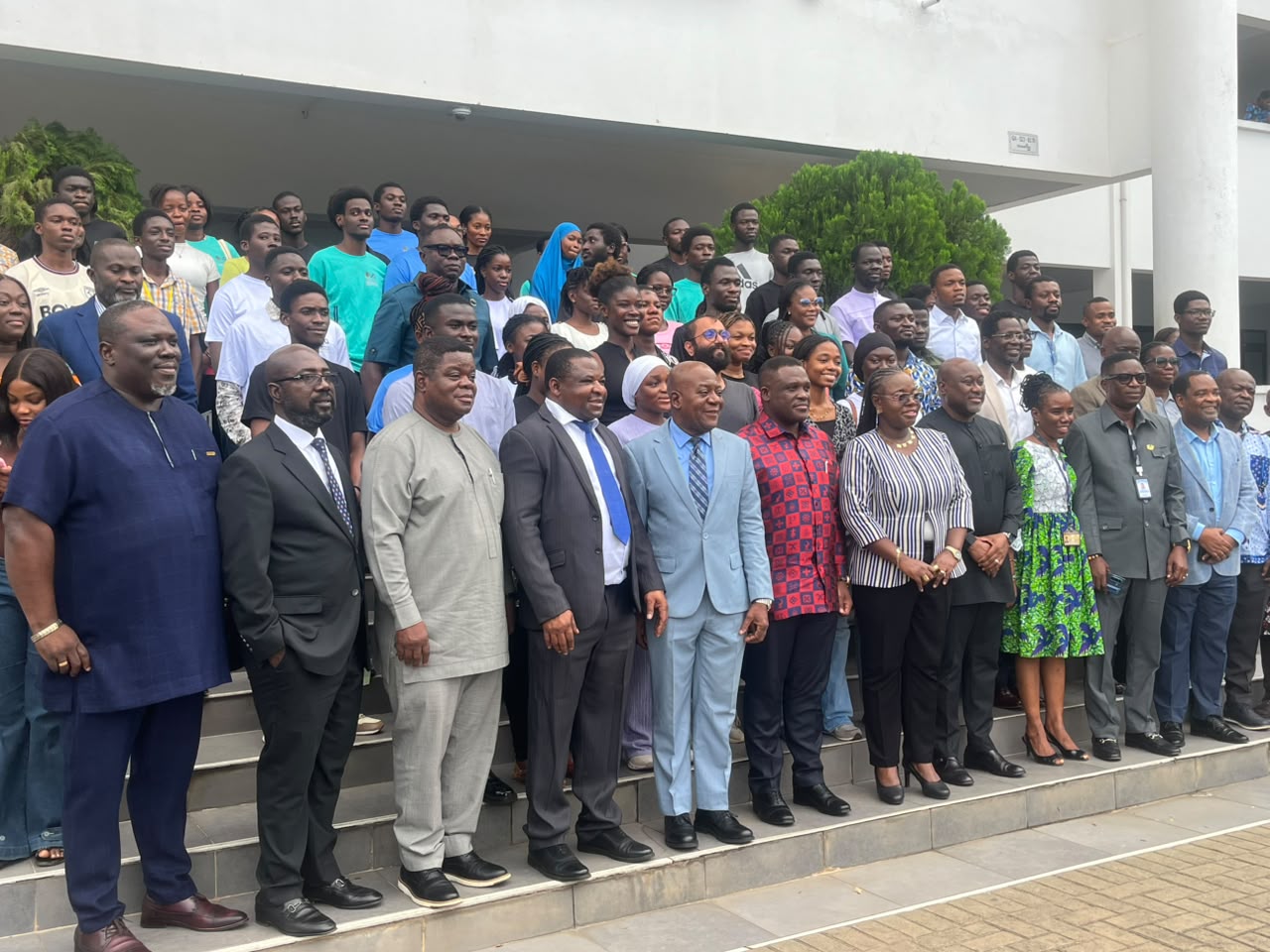
Ghana's One Million Coders Programme (OMCP), led by the Ministry of Communication, Digital Technology and Innovations and championed by President John Dramani Mahama, aims to train one million Ghanaians in digital skills, with Google opening 100,000 free Career Certificate scholarships across seven tracks delivered through the government's onemillioncoders.gov.gh platform.
The initiative aims to make AI and digital literacy compulsory for every incoming University of Ghana student by folding four Google certifications — Prompting Essentials, AI Essentials, AI Professional and Digital Literacy — into a new mandatory Level 100 course, "Digital Literacy and Applied AI".
In July 2026, University of Ghana Vice-Chancellor Prof. Nana Aba Appiah Amfo announced the mandatory course, and Minister Samuel Nartey George presented 2,000 laptops to support the rollout, in addition to 500 donated earlier, while the university's Computer Science department began incorporating the certifications into existing courses.
As of the announcement, the compulsory course had not yet started, so no completion, pass-rate or learning-outcome data exists yet; other Ghanaian public universities have reportedly expressed interest in replicating the model.
The evidence documents a funded, named, dated policy commitment and infrastructure rollout — laptops, platform, named officials — rather than a proven learning-impact result, so outcomes should be tracked once the course begins.
National / regional programmes Philanthropic / foundation funding
Indicative funding routes for practices of this type — always check each programme's current calls and eligibility rules.
Do you run this practice? Claim it — verified implementers get a public contact pathway and can propose corrections.
Where this practice's information was retrieved from, and when.
Peru
MentorIA Perú, run by Empresarios por la Educación and Fundación Kodea with Google.org funding and MINEDU support, trained 1,300+ teachers …
Iraq
Iraq's Ministry of Higher Education partnered with Google to give every university student nationwide one year of free Gemini Pro …
Kazakhstan
A 5-week AI-literacy module for pre-service physics teachers across nine Kazakhstani universities, led by Zhetysu University, raised literacy scores far …
Finland
A free 30-hour course by the University of Helsinki and MinnaLearn has taught AI basics to over a million learners …
Open full copilot Grounded in cited practices — always check the sources.