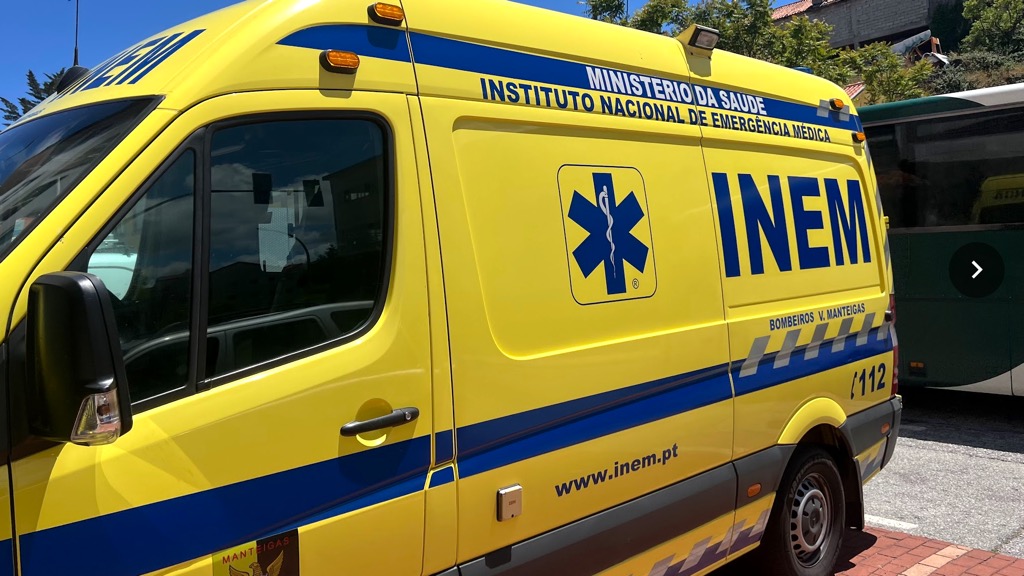
Portugal committed EUR 11.5M (2023-2027) to a ChatGPT-based 'Voicebot 112' meant to triage overloaded emergency calls, but contractor Sword Health abandoned the project in Feb 2025, citing INEM's fragile legacy IT as incompatible with AI call-routing.
11.5 EUR million
Committed budget (2023-2027)
~9 million
Annual emergency calls handled by 112
5-6 minutes
Peak wait times (2021)
16%
Calls abandoned before being answered (2021)
2nd
Portugal's European rank for false emergency calls (2021)
Details
Maturity
Discontinued
Promoter
INEM (Instituto Nacional de Emergência Médica) / Sword Health
Period
2023-2025
Region (NUTS)
PT17
Keywords
emergency medical services, telecommunications, health
Context
Portugal's 112 emergency line handles roughly nine million calls a year. In 2021, peak-demand wait times reached five to six minutes, 16% of calls were abandoned before being answered, and Portugal ranked second in Europe for false emergency calls.
Objectives
In 2023 the government committed EUR 11.5 million (2023-2027) for INEM, the National Institute of Medical Emergency, to deploy an OpenAI ChatGPT-based 'Voicebot 112' that would detect language, screen out false calls, and route genuine emergencies to police, fire or medical services, with human operators always handling the substantive part of any call.
Activities
By November 2024 the project was presented publicly as advancing toward a 2025 rollout. In early February 2025, however, contractor Sword Health withdrew, with its founder stating that INEM's system was 'obsolete, fragile' and that routing calls between a human operator and an AI system was not achievable on the existing infrastructure.
Results
INEM's worker commission publicly disputed this characterisation as 'absolutely false' and insisted that only trained health professionals answer emergency calls. As of the cancellation, no AI is used to answer or triage calls to Portugal's 112; all calls are handled by human operators.
Conclusions
The case is a reminder that well-funded public-sector AI pilots can stall on outdated backend infrastructure rather than on model quality, and that public disagreement over what actually failed can itself become a transparency problem.
Implementation
Indicative cost
Medium (€50k–€500k) — EUR 11.5 million committed for 2023-2027; the project was cancelled before delivering a working system.
Time to results
Medium (1–3 years)
Staffing & skills
INEM (Instituto Nacional de Emergência Médica) as implementing agency, Sword Health as AI contractor (withdrew)
Conditions for success
Original design retained human operators for all substantive parts of every call as a safeguard
A formal multi-year budget and a named accountable agency provided programme governance structure
Common failure modes
Legacy backend IT infrastructure at INEM was reportedly incompatible with AI-based call routing between human operators and an AI system
Public disagreement between contractor and agency over the root cause, with no independent inquiry reconciling the accounts
Model/vendor selection proceeded before verifying legacy infrastructure compatibility