Oslo's Car-Free Livability Programme — About 760 Parking Spaces Removed, Car Traffic Down 28% in the Centre
Norway
Oslo removed roughly 760–800 on-street parking spaces from its city centre in 2016–19 and replaced them with seating, cycling and …
United Kingdom · London (Waltham Forest) · See the United Kingdom profile
Top 63% 62/100 · Ask Evidence Copilot about this practice
Funded with £30m, Waltham Forest built low-traffic neighbourhoods and ~22 km of segregated lanes. A 2016–19 natural experiment found ~22% less car use and more walking and cycling, but on small samples with wide confidence intervals and local opposition.
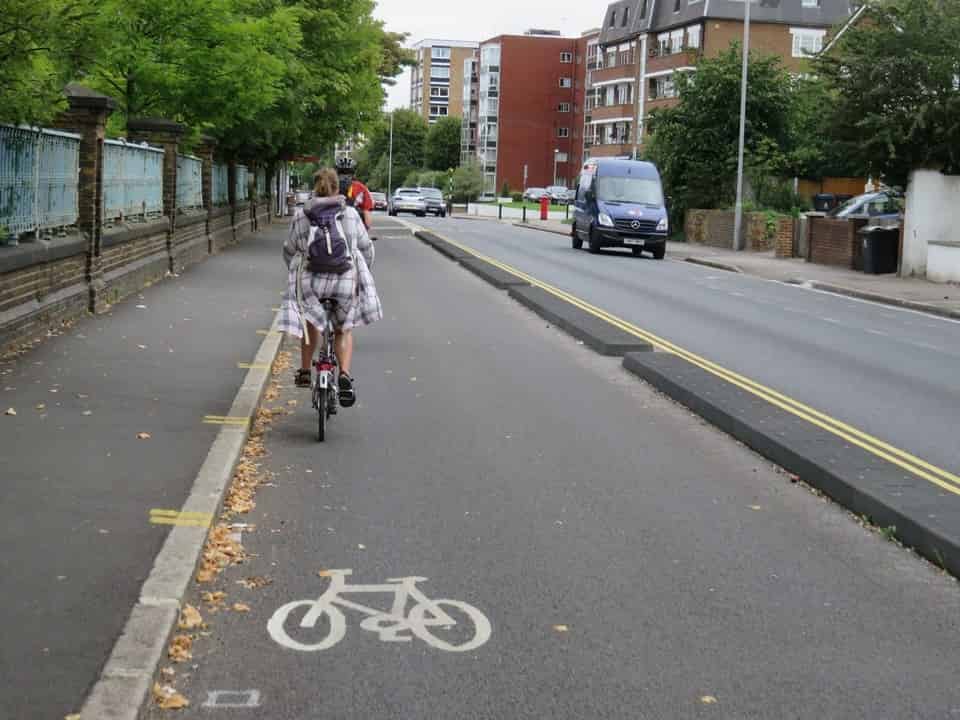
Waltham Forest was one of three outer-London boroughs awarded about £30 million under the Mini-Holland programme (from 2014). Measures included traffic calming and low-traffic neighbourhoods (LTNs) in Walthamstow Village, Leyton and Leytonstone, dozens of 'Copenhagen' crossings with continuous footways, and about 22 km of segregated cycle lanes, including 4 km on Lea Bridge Road.
Evidence: a longitudinal natural experiment (annual surveys 2016–19) of residents who lived in the same area throughout found, for LTN residents, a 22% reduction in past-week car use and 43 fewer minutes of car use per week (wave 2), a 20% lower probability of owning a car (wave 3), and increases in walking (+115 minutes per week) and cycling participation (+68%) by wave 3. Earlier one-year findings by the same team reported about 41 extra minutes of active travel per week, and no evidence that cycling gains came at the expense of other active modes. A 2021 health-economic study reported £724m benefits against £80m costs.
Caveats: only 49–66 LTN residents per analysis, so confidence intervals are wide and the authors acknowledge uncertainty about effect size; Waltham Forest was the only borough with LTNs during the study. Reporting in 2018 identified flaws in public consultation and opposition from some residents, so the case is useful for both its measured gains and its engagement lessons.
Read the full analysis: https://findingspress.org/article/17128-low-traffic-neighbourhoods-car-use-and-active-travel-evidence-from-the-people-and-places-survey-of-outer-london-active-travel-interventions
Implementation detail (cost, timeline, staffing, conditions for success) is not yet available for this practice.
Do you run this practice? Claim it — verified implementers get a public contact pathway and can propose corrections.
Where this practice's information was retrieved from, and when.
Norway
Oslo removed roughly 760–800 on-street parking spaces from its city centre in 2016–19 and replaced them with seating, cycling and …
Colombia
Medellín integrated cable-car lines and hillside escalators with neighbourhood upgrading to connect its poorest comunas to the city, cutting homicide …
Colombia
Bogotá's first 'vital neighbourhood', San Felipe, reallocated 1,745 m² of street space to pedestrians and cut traffic accidents 46%; the …
Sweden
Stockholm trialled a cordon congestion charge from January to July 2006 alongside new bus services, cut inner-city rush-hour traffic by …
Open full copilot Grounded in cited practices — always check the sources.