Los Bosques de Sanación Certificados de Corea del Sur — De 5 a 64 Sitios de Salud Pública Basada en Bosques
Corea del Sur
Desde la apertura de su primer bosque terapéutico en 2009, el Servicio Forestal de Corea ha certificado 64 'Bosques de …
España · Ver el perfil de España
Evidencia: Observacional / pre-post · Pregunte a Evidence Copilot sobre esta práctica
ES70Ciguatera poisoning (CP) is caused by eating fish that have accumulated ciguatoxins through the food chain due to the presence of certain toxic microalgae ( Gambierdiscus spp. and Fukuyoa spp.). Traditional endemic regions for ciguatoxic fish include areas in the Caribbean Sea and the Pacific and Indian Oceans. The fish species most frequently associated with cases of ciguatera include barracuda, grouper, amberjack, red snapper, moray eel, hogfish, mackerel, surgeonfish, and parrotfish. In Europe, Gambierdiscus and Fukuyoa spp are found in the Spanish and Portuguese Atlantic islands as well as in several Mediterranean islands including Crete, Cyprus and the Balearics, according to the Eurocigua project (2016-2021), co-funded by the European Food Safety Authority and the Spanish Food Safety Authority (AESAN). In the framework of the CTX protocol developed by the Canary Islands Directorate-General for Fisheries, 13% of 8,828 certain fish caught in Canary Islands by the professional fishing sector tested positive for CTXs and were disposed of by authorised processors (DG Fisheries, unpublished data). Ciguatoxins are not destroyed by cooking or freezing the fish. Furthermore, the toxins are colourless, odourless and flavourless, which make it impossible to detect them during eating. Symptoms of CP may include nausea, vomiting, diarrhoea, abdominal cramps, burning sensation of lips, tongue and extremities (also as a response to cold stimulus), a metallic taste in the mouth, joint and muscle pain, skin itching, muscle weakness, blurred vision, painful intercourse, low blood pressure and slow heart rate. Neurological symptoms usually resolve within weeks, although some symptoms can last for months. While CP is rarely fatal, severe cases may result in death ( ECDC, 2021 ). While outbreaks of ciguatera poisoning in mainland European countries have been associated with the consumption of imported fish, autochthonous outbreaks been reported in the Canary Islands and Madeira. In the Canary Islands, 22 autochthonous outbreaks occurred between 2008-2023, with 129 people affected. Under the changing climate, the sea surface temperatures are projected to rise by 0.4 – 1.4 degrees Celsius by mid twenty-first century. This is likely to increase the toxic microalgae growth rates, resulting in higher population densities. Range extensions of several degrees of latitude also are anticipated, where species-specific habitat requirements are met (e.g., temperature, suitable substrate, low turbulence, light, salinity, pH) ( Tester et al., 2020 ). In 2017, Gambierdiscus was identified for the first time in the Balearic Islands confirming the presence of this toxic microalgae in the western Mediterranean Sea ( Diogène et al., 2021 ). The increasing densities and range of the toxic microalgae may mean that CP is more widespread in Europe in the future.
The aim of the initiatives implemented in Canary Islands are to reduce the number of ciguatera poisoning cases and to limit the risk of outbreaks.
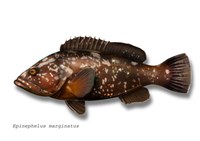
Two main actions were implemented to limit the risk of ciguatera poisoning in the Canary Islands: monitoring the presence of ciguatoxins in certain fish and including ciguatera poisoning as a notifiable disease. 1) Controlling the fish catch for ciguatoxins in fisheries Since June 2009, the General Directorate of Fisheries of the Canary Island Government has applied a protocol to determine the presence or absence of ciguatoxin in certain species that exceed a given weight, before being sold. This protocol, attached, is mandatory to the small scale (fresh fish) professional fishing sector of the Canary Islands. Recreational fishermen are informed about CP and the existence of this protocol (species and weights). They are encouraged but not obliged to apply the Protocol to the caught species before consuming them (see attached brochure). The target species and threshold weights have been selected by a group of experts (veterinarians, toxicologists, marine biologists, professionals in fisheries and public health). Currently the species (and weights) monitored are: amberjacks ( Seriola spp.) – 12 kg; dusky grouper ( Epinephelus marginatus ) – 12 kg; bluefish ( Pomatomus saltatrix ) – 9 kg; island grouper ( Mycteroperca fusca ) – 7kg; and wahoo ( Acanthocybium solandri ) - 35 kg. In 2022, criteria for introducing changes to species and weight monitored were established. A new species may be included only if it was the source of a confirmed autochthonous CP case and the fish had been captured in Canary waters. Furthermore, the weight limit of species currently included can be lowered in one of these two situations: (i) if a fish submitted to ciguatoxin detection tested positive exceeds the weight limit by up to 500 gr and shows high toxicity, or (ii) if a fish captured in Canary waters that weighed below the weight limit was the source of confirmed autochthonous ciguatera case, in which case the new weight limit would be set at the weight of that particular fish. 2) Including ciguatera poisoning as a notifiable disease. Since 2015 ciguatera poisoning is a mandatory notifiable disease in the Canary Islands. It is the only place within the EU, and one of the few around the world (including Florida, Hawaii, and Hongkong) where the physicians diagnosing the poisoning need to report the disease. The physicians, entering the ciguatera as a cause of poisoning into a patient’s clinical record within the public health system, automatically receive a notification to complete the notification form. Therefore, public health authorities can further investigate and confirm the case. Private physicians can download the same form and send it to public health authorities by email. In recent years, the number of ciguatera poisoning cases have decreased in the Canary Islands. Whilst this could be a result of the control measures implemented, this decline could also be associated with the Covid-19 pandemic or low awareness of the healthcare practitioners not reporting the disease.
During the EuroCigua project (2016-2021), the IUSA- ULPGC laboratory received scientific and technical support for the analyses from the European Reference Laboratory for Marine Toxins (Vigo) and Institute of Agrifood Research and Technology (IRTA). This led to harmonisation of different protocols. Therefore, the participation in the research project had a direct impact on the improvement of the daily activity carried out for the official control programme. The project also allowed direct and indirect contact with the trophic web, analyzing the situation of different fish species, regarding their contribution to the maintenance of ciguatoxins in the marine environment. In addition, thanks to the EuroCigua project and the collaboration with Canary Government DG Fisheries, 46 ciguatoxic fish from the CP official control were available for laboratory work. The fish were necropsied in IUSA facilities and 660 kg of muscle and livers were delivered to the university of Vigo to prepare Ciguatoxin Reference Materials ( Castro et al., 2022 ), whose future availability will be of benefit to laboratories worldwide working on ciguatoxin detection. The EuroCigua project led to the establishment of a collaboration network of different prestigious international institutions involved in developing knowledge on the ciguatera toxins environmental conditions. DGP-GMR activities are financed by the European Maritime and Fisheries Fund (EMFF 2014-2020) and European Maritime, Fisheries and Aquaculture Fund (EMFAF 2021-2027). Also, a study on the economic impact on the fishing sector is currently being carried out (financed by European Regional Development Fund (EDRF) and INTERREG V-A Spain-Portugal MAC 2014-2020). The cost of the actions taken by the General Directorate of Public Health are included in the General Budget for 2023. The main benefit of the control measures is increased food safety. The benefit for the local fisheries is that under ciguatera toxin testing protocol 7,717 (87%) large fishes reached the commercial chain with confirmed food security. The ciguatera control measures in place allowed avoiding fish capture bans.
To better understand the risks of CP in Europe, the European Food Safety Authority (EFSA) and the Spanish Food Safety Authority (AESAN) jointly funded the EuroCigua project between June 2016 and January 2021. The project aimed to determine the spread and main characteristics of ciguatera in Europe; measure biotoxin levels in microalgae and in fish; and develop analytical methods to characterise these toxins ( EFSA ). Despite an increasing body of scientific evidence and the interest of the media, the public awareness of the problem remains low. According to a survey from 2018, just over 10% of the population in the Canary Islands had some awareness of ciguatera and less than 4% knew about poisoning cases in the Canary Islands. Among the respondents, 82% wished to receive more information about ciguatera, mainly via television and social networks. Public information and monitoring plans are essential to improve the practice of vulnerability assessment for food security, and reducing the risk of CP. It is therefore necessary to design a program within the framework of risk communication to know if the audience receives, understands and responds appropriately ( Bilbao-Sieyro et al., 2019 ).
Los detalles de implementación (coste, plazo, personal, condiciones para el éxito) aún no están disponibles para esta práctica.
ERDF — European Regional Development Fund Interreg (European Territorial Cooperation) National / regional programmes
Vías de financiación indicativas para prácticas de este tipo: compruebe siempre las convocatorias vigentes y las reglas de elegibilidad de cada programa.
¿Usted implementa esta práctica? Reivindíquela — los implementadores verificados obtienen un contacto público en la página y pueden proponer correcciones.
De dónde se obtuvo la información de esta práctica, y cuándo.
Corea del Sur
Desde la apertura de su primer bosque terapéutico en 2009, el Servicio Forestal de Corea ha certificado 64 'Bosques de …
Reino Unido
Un programa de 12 semanas de senderismo/escalada al aire libre, derivado por médicos de cabecera, de The Outdoor Partnership en …
Reino Unido
Un proyecto piloto intergubernamental de 5,77 millones de libras derivó a 8.339 personas con necesidades de salud mental hacia actividades …
Alemania
None
Abrir el copiloto completo Basado en prácticas citadas: comprueba siempre las fuentes.