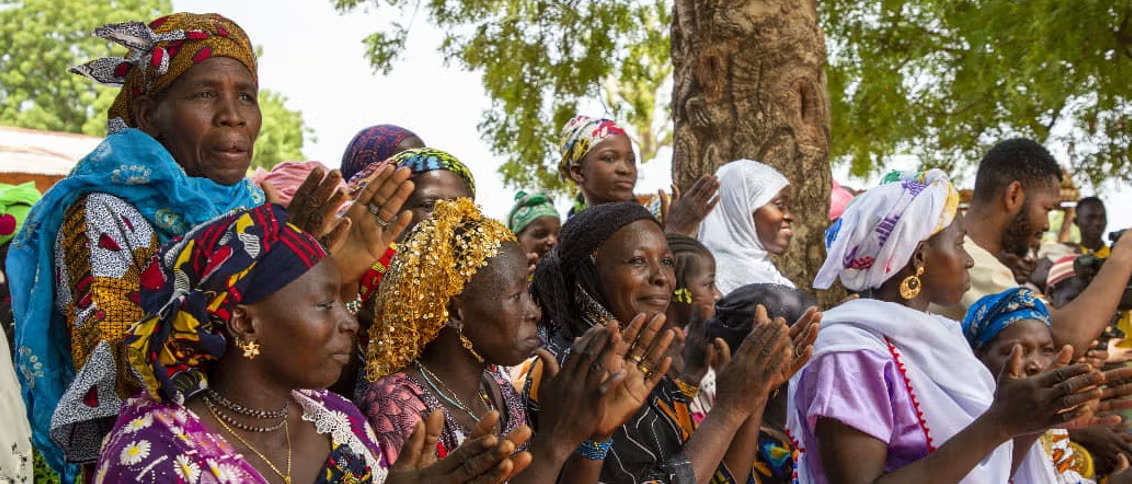
SWEDD (Banque mondiale/UNFPA) au Mali, depuis 2015 : espaces sûrs, sages-femmes rurales et clubs de maris. Abandon scolaire des filles passé de 53 % à 2 % (2016–19) ; revenu mensuel des femmes passé de 5 $ à 110 $ (2014–20) ; 15 cabinets de sages-femmes, 7 900 vélos.
53% → 2%
Taux d'abandon scolaire des filles dans les zones du projet (2016–2019)
US$5 → US$110
Revenu mensuel moyen des femmes issu des activités soutenues par le projet (2014–2020)
15
Cabinets privés de sages-femmes créés (since 2019)
Activité du cabinet phare de sage-femme de Banankoro (over four years)
€10 million
Cofinancement de l'AFD (Mali)
US$680 million
Budget du programme de la Banque mondiale (multipays) (2014–2024)
Détails
Maturité
En expansion
Promoteur
World Bank (IDA) / UNFPA WCARO / West African Health Organisation, Government of Mali, with AFD co-financing
Période
2014–ongoing (SWEDD+)
Mots-clés
girls' education, family planning, adolescent empowerment, demographic dividend, Sahel
Contexte
Le SWEDD est une initiative multipays financée par la Banque mondiale (IDA), avec l'appui technique de l'UNFPA et de l'Organisation Ouest Africaine de la Santé (OOAS). Le Mali était l'un des cinq pays d'origine lorsque le projet a été approuvé en décembre 2014 et lancé en novembre 2015 ; il reste actif aujourd'hui à travers des financements additionnels successifs et la phase SWEDD+.
Activités
Au Mali, les activités sont concentrées à Kayes, Koulikoro et Sikasso et combinent des 'espaces sûrs' pour les filles, un soutien au maintien scolaire, le déploiement de sages-femmes rurales, et des clubs communautaires de maris/futurs maris visant à faire évoluer les normes relatives au mariage des enfants et à la prise de décision au sein du foyer.
Résultats
Les rapports de la Banque mondiale montrent que le taux d'abandon scolaire des filles dans les zones du projet SWEDD au Mali est passé de 53% en 2016 à 2% en 2019, et que le revenu mensuel moyen des femmes issu des activités économiques soutenues par le projet est passé d'environ US$5 en 2014 à environ US$110 en 2020. Depuis 2019, le projet a contribué à la création de 15 cabinets privés de sages-femmes et a distribué des vélos à 7,900 filles ; un cabinet phare de sage-femme à Banankoro a assuré 4,400 consultations curatives, 2,100 consultations prénatales et 700 accouchements sur quatre ans.
Conclusions
Tous les chiffres rendus publics ne sont pas spécifiques au Mali ni vérifiés de manière indépendante — plusieurs totaux largement cités sont des agrégats régionaux portant sur l'ensemble des pays du SWEDD, et l'examen de mise en œuvre de la Banque mondiale elle-même relève des lacunes opérationnelles, notamment des kits d'hygiène menstruelle destinés aux écolières du Mali qui ne leur sont pas parvenus à temps ni en quantité suffisante. Les résultats doivent être considérés comme des réalisations rapportées par le programme, en attendant une évaluation d'impact indépendante.
Mise en œuvre
Les détails de mise en œuvre (coût, calendrier, personnel, conditions de réussite) ne sont pas encore disponibles pour cette pratique.
Habituellement financé par
National / regional programmes
Pistes de financement indicatives pour des pratiques de ce type — vérifiez toujours les appels en cours et les règles d'éligibilité de chaque programme.
Vous portez cette pratique ?
Revendiquez-la —
les porteurs vérifiés obtiennent un contact public sur la page et peuvent proposer des corrections.
Sources de données
D'où proviennent les informations de cette pratique, et quand.