The 16/6 Project — Port-au-Prince's Post-Earthquake Neighbourhood Return Programme
Haiti
A joint UN–World Bank programme rebuilt housing across 16 Port-au-Prince neighbourhoods and closed 6 displacement camps after the 2010 earthquake, …
United Kingdom · London · See the United Kingdom profile · See the London profile
Evidence: Observational / pre–post Top 74% 57/100 · Ask Evidence Copilot about this practice
England's Big Local gave 150 deprived neighbourhoods roughly £1 million each in resident-controlled endowments; a peer-reviewed NIHR evaluation found a real fall in burglary but no lasting wellbeing gain, with benefits unevenly distributed.
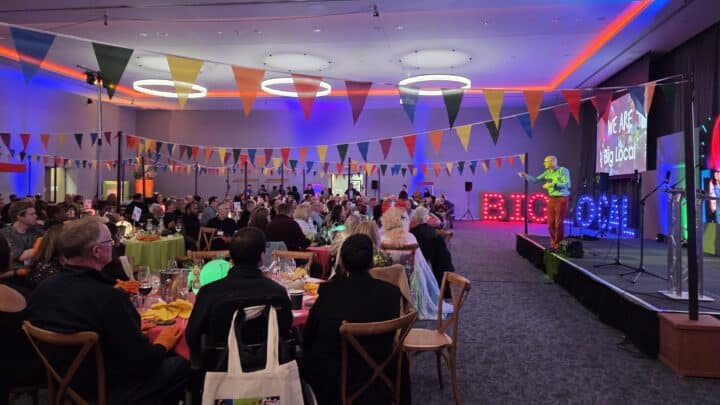
Big Local is run by Local Trust, an independent charity established in 2012 with an endowment from the National Lottery Community Fund (then the Big Lottery Fund). In each of 150 selected deprived English neighbourhoods, a resident-led partnership decides autonomously how to spend a long-term endowment.
The programme aims to give residents of deprived neighbourhoods full control over a long-term endowment to spend on locally chosen priorities, rather than channelling funding through competitive grant applications.
Each area received a nominal £1 million endowment, part of a total commitment of about £270 million across the programme, to spend over a 10–15 year period running from 2012 to 2026 on priorities such as jobs and skills, green space, community buildings and activities for young people. By spend, the 150 areas drew down £180.4 million through 1,524 individual grants, with community spaces (£21.9 million), local grant schemes (£7.4 million) and skills/employment projects (£5.9 million) among the largest categories.
A 2023 mixed-methods evaluation published in NIHR's Public Health Research journal, led by researchers at Lancaster University, found a statistically significant reduction in burglary (z-score change of -0.054) but no significant population-level improvement in anxiety overall; a modelled cost-benefit analysis produced a central estimate of £959 million in net benefit over four years, but a conservative scenario put it as low as £64 million.
The same evaluation found that wellbeing gains among the most engaged residents were not sustained by 2020, and that benefits were unevenly distributed — favouring more-educated and male residents. Local Trust's own legacy research has also documented governance strain within some resident partnerships, describing "personalities, power struggles" as undermining collective decision-making in a minority of areas.
Do you run this practice? Claim it — verified implementers get a public contact pathway and can propose corrections.
Where this practice's information was retrieved from, and when.
Haiti
A joint UN–World Bank programme rebuilt housing across 16 Port-au-Prince neighbourhoods and closed 6 displacement camps after the 2010 earthquake, …
New Zealand
After the 2010–11 earthquakes levelled much of central Christchurch, the community group Gap Filler turned vacant lots into temporary public …
Senegal
A 2013–2017 UK Aid-funded programme combined $2.5m drainage works, waste management and livelihoods support across 10 flood-prone Dakar suburbs; a …
Bangladesh
Running from 2008 to 2015, Bangladesh's UPPR programme funded community-led settlement improvements and livelihood support across 23 towns and cities, …
Open full copilot Grounded in cited practices — always check the sources.