ICLEI – Local Governments for Sustainability: Bonn's Global Municipal Peer-Learning Network
Germany
Founded in Bonn in 1990, ICLEI now links over 2,500 local and regional governments across 125+ countries in a peer-learning …
Ukraine · Kyiv · See the Ukraine profile · See the Kyiv profile
Evidence: Descriptive / self-reported Top 39% 71/100 · Ask Evidence Copilot about this practice
CEMR and the Association of Ukrainian Cities paired 30 Ukrainian municipalities with 30 EU counterparts for reconstruction-focused peer learning, producing 48 joint project proposals and formal partnership agreements in two-thirds of pairs.
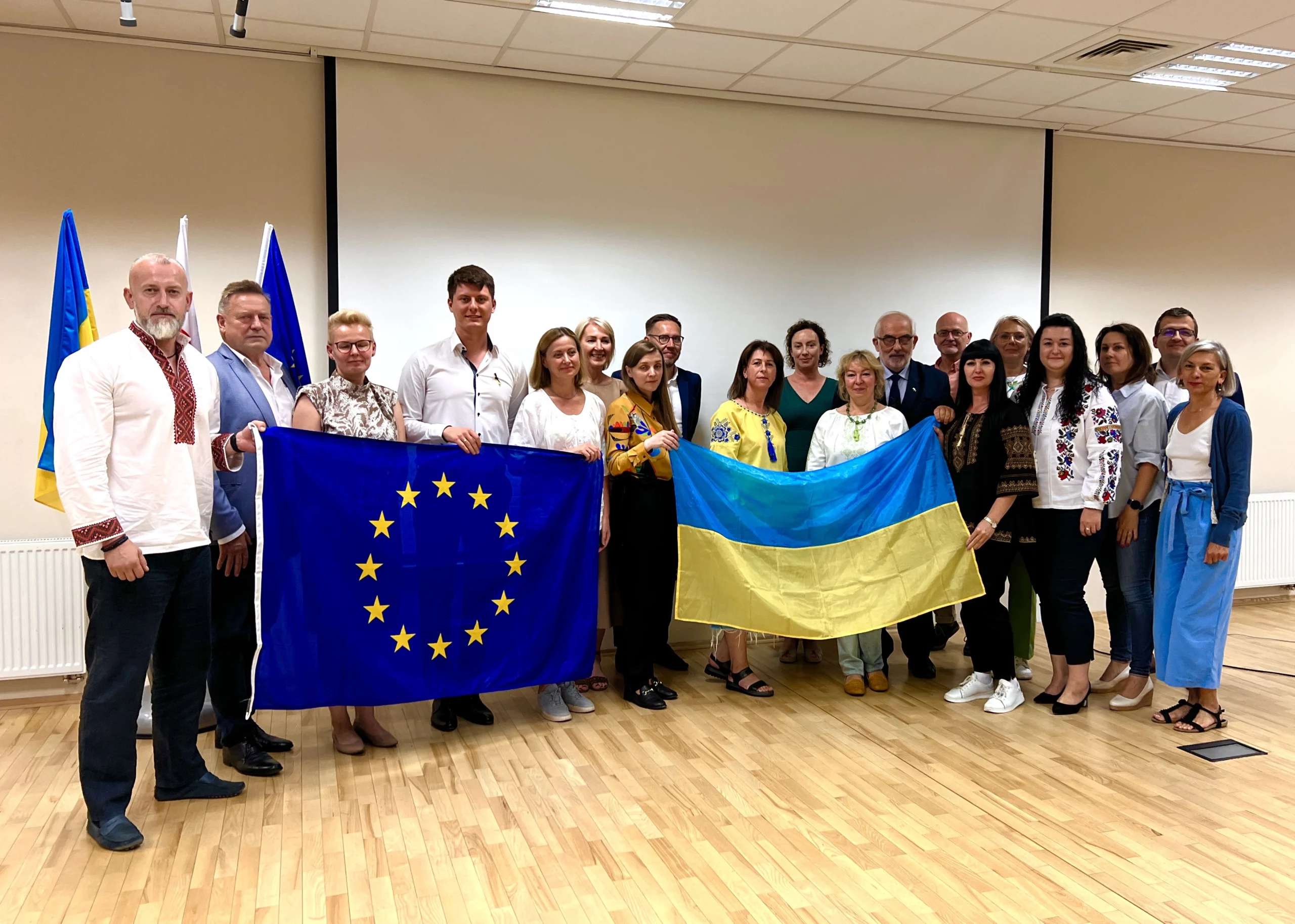
Ukraine's 2022 full-scale war left many municipalities needing reconstruction support. Bridges of Trust, launched in 2021 by the Council of European Municipalities and Regions (CEMR) with the Association of Ukrainian Cities and the U-LEAD with Europe programme (GIZ), pairs Ukrainian municipalities with EU counterparts for reconstruction-focused peer learning.
To broker peer-to-peer municipal partnerships that help Ukrainian cities plan and finance reconstruction, using structured twinning facilitated through national municipal associations.
In its 2023 phase, 30 Ukrainian municipalities from 10 regions were paired with 30 EU municipalities in Italy, France, Spain, Hungary, Poland, Slovenia, Latvia, Czechia and Sweden, coordinated through 10 national municipal associations. Pairs conducted study visits and worked jointly on reconstruction project proposals.
30 study visits were conducted and 48 joint project proposals were co-developed, including 20 water-supply/wastewater facilities and 8 hospital or cultural-facility reconstructions. 80% of partnerships reached moderate-to-high interaction and 67% had formal partnership agreements in place. CEMR reports more than 100 cumulative partnerships since 2021.
The model demonstrates that structured municipal twinning can be organised at pace during wartime, but CEMR itself notes that wartime conditions limit systematic institutionalisation, and there is no public data on how many of the 48 proposals were actually funded or built.
National / regional programmes Interreg (European Territorial Cooperation)
Indicative funding routes for practices of this type — always check each programme's current calls and eligibility rules.
Do you run this practice? Claim it — verified implementers get a public contact pathway and can propose corrections.
Where this practice's information was retrieved from, and when.
Germany
Founded in Bonn in 1990, ICLEI now links over 2,500 local and regional governments across 125+ countries in a peer-learning …
Kenya
Born in Nairobi during Kenya's 2008 post-election violence, Ushahidi's open-source crowdsourcing platform has since been deployed 150,000+ times in 160+ …
China
Since 2009, China Agricultural University has embedded graduate students in villages to co-develop farming practices with smallholders; a Nature-published evaluation …
Bhutan
Since 2022, UNICEF Bhutan and the Ministry of Education have scaled UPSHIFT from 65 to 264 schools nationwide, training 27,000+ …
Open full copilot Grounded in cited practices — always check the sources.