GRASS — Verified Carbon Revenue Reaches Communal Rangeland Farmers in South Africa
South Africa
TASC and Meat Naturally Africa's GRASS project issued 266,255 Verra VM0042/CCB-certified carbon units for regenerative grazing on 95,000+ ha of …
Chile · Santa Juana · See the Chile profile
Evidence: Descriptive / self-reported Top 76% 33/100 · Ask Evidence Copilot about this practice
Since 2017 a Chilean native-forest reserve has used a rotating goat herd (16, then 150, now about 250) to graze down flammable understory across roughly 60 hectares; when a 2023 megafire destroyed nearly 70% of the surrounding municipality, the grazed forest was not penetrated.
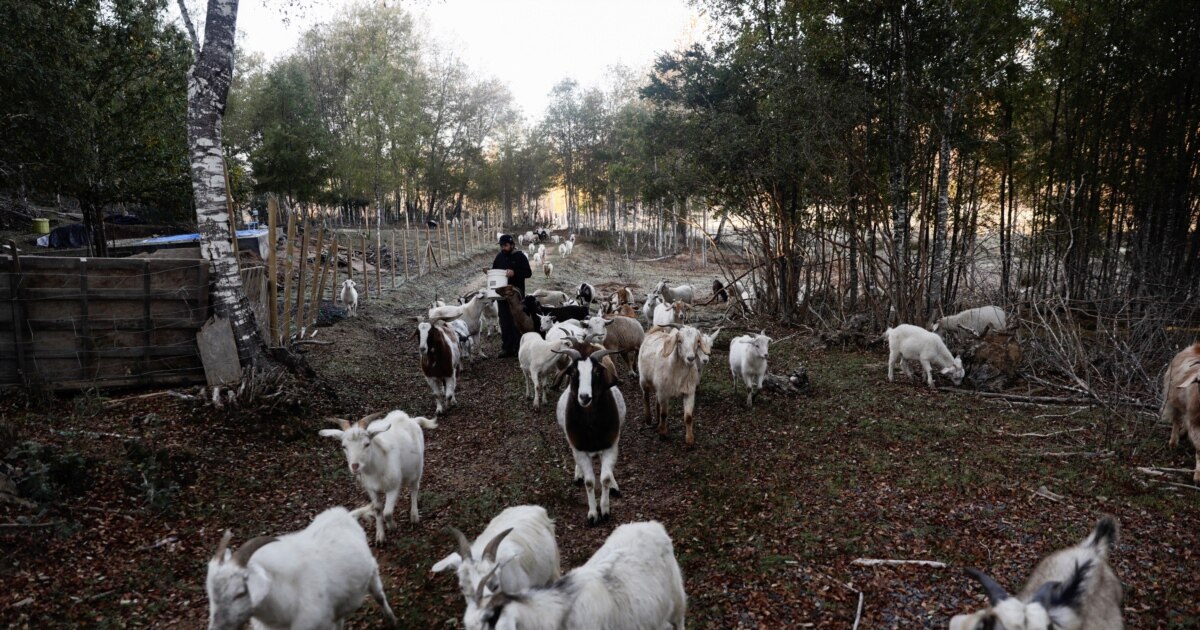
Bosques de Chacay is a native-forest reserve in Santa Juana municipality (Biobío Region, Chile) restored from an abandoned property since 2017, in an area vulnerable to wildfire.
Founders Rocío Cruces and Víctor Faúndez adopted rotational goat grazing, moving a herd through fenced sections to keep flammable understory (bramble, retama shrub, dry grass) low; the herd grew from 16 goats (2017) to about 150 by 2023 and roughly 250 by 2026, with grazing extended to about 60 hectares.
When a February 2023 megafire burned close to 440,000 hectares regionally and destroyed an estimated 70% of Santa Juana's territory, the fire surrounded but did not penetrate the grazed sections, with less than 10% of the reserve's trees affected, per BioBioChile and VOA News reporting; a University of Concepción forestry engineer has publicly endorsed the approach, and general (non-Chile-specific) research found grazing cut fire severity 15-68% (Sardinia) and burn probability ~45% (California).
The founders themselves say the project lacks the stable long-term financing from forestry companies, utilities or municipalities needed to replicate it at scale, though Santa Juana municipal officials have expressed interest.
Own resources / municipal budget
Indicative funding routes for practices of this type — always check each programme's current calls and eligibility rules.
Do you run this practice? Claim it — verified implementers get a public contact pathway and can propose corrections.
Where this practice's information was retrieved from, and when.
South Africa
TASC and Meat Naturally Africa's GRASS project issued 266,255 Verra VM0042/CCB-certified carbon units for regenerative grazing on 95,000+ ha of …
United States of America
After 1996 and 2002 wildfires choked Denver's reservoirs with sediment, Denver Water and the US Forest Service treated 120,000+ acres …
Papua New Guinea
PNG's REDD+ programme verified 17M tCO₂e of avoided deforestation (2014–2016), earning USD 63.4M in GCF results-based payments (July 2025). Covers …
Canada
Since 2019, the Yunesit'in and Xeni Gwet'in First Nations have revived spring and fall cultural burning across Tsilhqot'in Territory, British …
Open full copilot Grounded in cited practices — always check the sources.