Ley N.º 18.561 — Uruguay's Pioneering Workplace Sexual Harassment Law
Uruguay
Uruguay's 2009 sexual-harassment law gives workers in public and private employment the right to file complaints with the national Labour …
Chile · Santiago · See the Chile profile · See the Santiago profile
Evidence: Observational / pre–post Top 26% 85/100 · Ask Evidence Copilot about this practice
Chile's Ley Karin (Law 21.643), in force since 1 August 2024, mandates employer protocols and fast-track investigations for workplace harassment and violence. In its first year, the Labour Directorate logged 44,212 complaints, 66.4% filed by women, and confirmed violations in ove
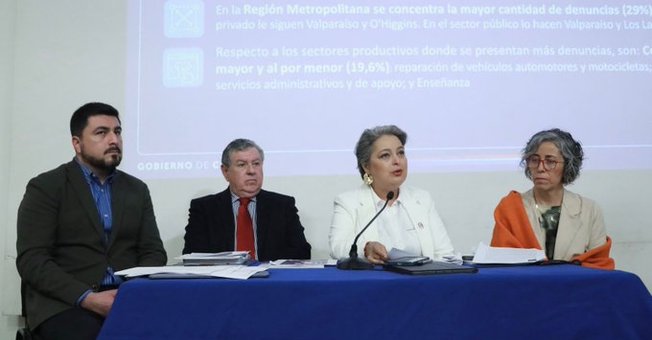
Chile's Ley Karin (Law 21.643), named after a nurse who died by suicide after workplace bullying, entered into force on 1 August 2024, mandating employer prevention protocols, confidential reporting channels, and fast-track investigations for workplace harassment and violence.
In its first full year (August 2024-July 2025), the Labour Directorate logged 44,212 complaints (66.4% filed by women), carried out 2,117 labour inspections, issued 993 fines, and confirmed a violation in 21.3% of closed, classified inspections; by December 2025 cumulative complaints reached 66,596, with monthly volume down from about 4,800 to 3,599.
Mediation centres reportedly 'collapsed' within the law's first month, with average investigation delays of 4-6 months against a 30-day target; the Labour Minister described the Directorate as under-resourced, and implementation has been markedly weaker in the public sector than in private firms.
Implementation detail (cost, timeline, staffing, conditions for success) is not yet available for this practice.
National / regional programmes
Indicative funding routes for practices of this type — always check each programme's current calls and eligibility rules.
Do you run this practice? Claim it — verified implementers get a public contact pathway and can propose corrections.
Where this practice's information was retrieved from, and when.
Uruguay
Uruguay's 2009 sexual-harassment law gives workers in public and private employment the right to file complaints with the national Labour …
Chile
Chile's Ley Karin (2024) obliges every employer to run a harassment/sexual-harassment complaint channel; 44,212 complaints were filed in its first …
Japan
Japan's 2020/2022 law forces every employer to define, prevent and respond to 'power harassment' — but it carries no fines …
Philippines
Enacted in 2004, RA 9262 grants women who are victims of abuse up to 10 days' paid leave to pursue …
Open full copilot Grounded in cited practices — always check the sources.