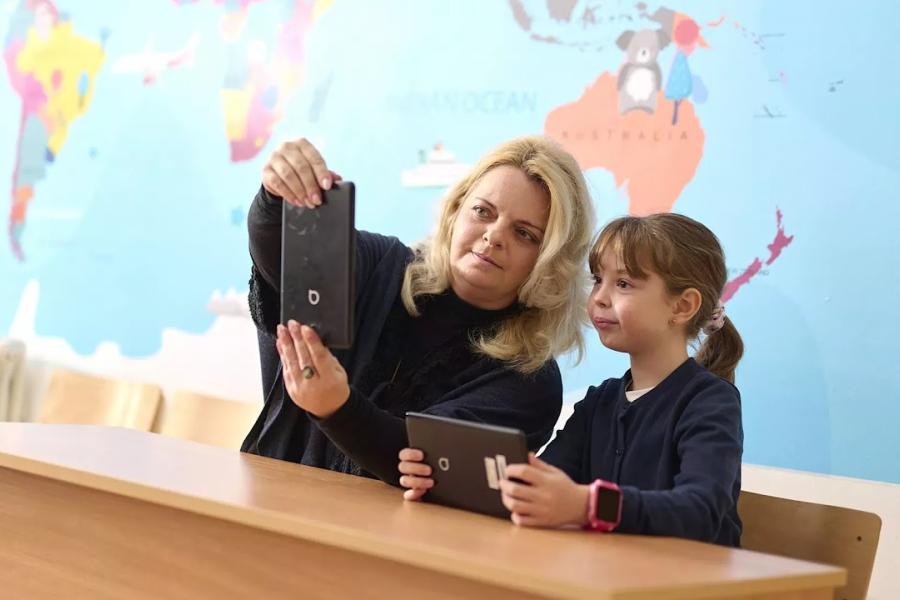
A $500,000 UNICEF–UNESCO–ILO joint programme is closing the digital divide for children in northern Montenegro, training 170 ICT coordinators and 300+ teachers and reaching over 6,000 students, with explicit quotas for girls and targeted inclusion of Roma and disabled students.
500,000 USD
Programme funding
12 schools across 6 municipalities
Schools initially targeted
102 schools nationwide
Schools with EdTech Hub infrastructure after expansion
170
ICT coordinators trained
300+
Teachers trained in Office 365-based digital tools
141
Teachers trained in media and information literacy
150+
Teachers trained in STEM/coding
48%
Girls quota among child beneficiaries
6,000+
Direct child/adolescent beneficiaries
91 students and educators
2025 summer digital camp reach
Details
Maturity
Scaling
Promoter
UNICEF Montenegro
Period
2023/2024–2026
Keywords
digital literacy, education equity, teacher training, Roma inclusion, disability inclusion
Context
A joint programme by UNICEF, UNESCO and the ILO with Montenegro's Ministry of Education, Science and Innovation, funded with USD 500,000 from the Montenegro SDG Acceleration Fund and backed by the EU and the governments of Luxembourg, Switzerland, Austria and Ireland, addressing unequal digital access and weaker infrastructure in Northern Montenegro's schools.
Objectives
Close documented equity gaps in digital education access, explicitly targeting Roma students, economically disadvantaged and disabled students, with a 48% quota for girls among child beneficiaries.
Activities
Initially targeted 12 primary and secondary schools across six municipalities (Berane, Rožaje, Plav, Mojkovac, Petnjica, Pljevlja) before expanding EdTech Hub infrastructure to 102 schools nationwide; trained ICT coordinators and teachers in Office 365 tools, media/information literacy, and STEM/coding; ran a 2025 summer digital camp.
Results
Documented reach of over 6,000 direct child/adolescent beneficiaries, 170 trained ICT coordinators, 300+ teachers trained in Office 365, 141 in media literacy, 150+ in STEM/coding, and a further 91 students/educators reached via the 2025 summer camp.
Conclusions
The programme runs on a fixed-term SDG Acceleration Fund grant originally scheduled to close in late 2025/early 2026; continuation depends on Montenegro's government absorbing the EdTech Hub network and coordinator-training model into regular budgets, which this research could not independently confirm.
Implementation
Implementation detail (cost, timeline, staffing, conditions for success) is not yet available for this practice.