Solar- and Satellite-Powered Blended Learning Reaches 1,650 Students in Rural Haiti
Haiti
A foundation-funded pilot equipped 33 rural Haitian schools with solar power, satellite internet and tablets, training 100 teachers and reaching …
Lesotho · Maseru · See the Lesotho profile · See the Maseru profile
Evidence: Observational / pre–post Top 24% 92/100 · Ask Evidence Copilot about this practice
A $7.1M World Bank/GPE-financed project gave Lesotho teachers tech-enabled training and ran youth clubs in junior secondary schools, reaching 40,569 learners, cutting dropout from 27% to 19.8%, and lifting early-years literacy from 71% to 85%.
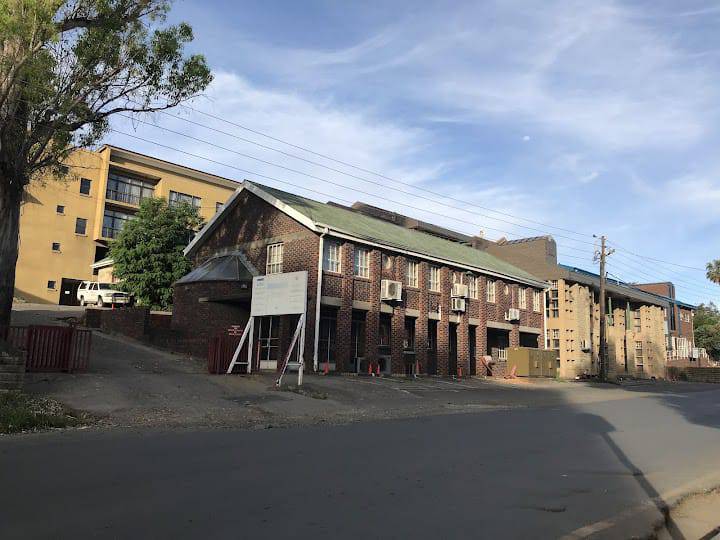
The Basic Education Strengthening Project (BESP) was a three-year, $7.1 million initiative financed by the Global Partnership for Education and implemented by Lesotho's Ministry of Education and Training with World Bank support. It combined technology-enabled professional development for teachers, youth clubs as safe spaces for adolescents, and a modernised early-childhood curriculum built around learning through play.
BESP aimed to strengthen teaching quality and reduce dropout in junior secondary education, while improving early-childhood learning outcomes and creating supportive spaces for adolescents.
The project trained 87% of secondary science and mathematics teachers and enrolled instructors in an online certification programme completed by 222 teachers. It supported 352 reception classes and early childhood development (ECCD) centres, trained 81% of the 754 ECCD instructors, and established 259 youth clubs across 69 secondary schools, engaging more than 3,400 adolescents directly.
BESP directly benefited 40,569 learners nationwide. In targeted community councils, junior secondary dropout fell from 27% in 2021 to 19.8% by the time the project closed in February 2025. Among five-year-olds in supported ECCD centres, literacy rose from 71% to 85% and numeracy from 63.6% to 77.2%.
The project formally closed in February 2025, with the Ministry continuing to carry forward the revised curriculum and certified teacher cohorts.
Implementation detail (cost, timeline, staffing, conditions for success) is not yet available for this practice.
National / regional programmes
Indicative funding routes for practices of this type — always check each programme's current calls and eligibility rules.
Do you run this practice? Claim it — verified implementers get a public contact pathway and can propose corrections.
Where this practice's information was retrieved from, and when.
Haiti
A foundation-funded pilot equipped 33 rural Haitian schools with solar power, satellite internet and tablets, training 100 teachers and reaching …
Seychelles
Dubai-based The Digital School, part of the Mohammed bin Rashid Al Maktoum Global Initiatives, trained 395 Seychellois teachers across 11 …
Sierra Leone
Solar-powered, offline tablets deliver adaptive literacy and numeracy lessons in rural Sierra Leone schools, partnered with the Ministry of Education …
Sudan
Since 2014, War Child Holland, UNICEF and Ahfad University have run tablet-based learning games for out-of-school children in three Sudanese …
Open full copilot Grounded in cited practices — always check the sources.