SCORE Perú — ILO Workplace-Cooperation Training Lifts SME Output by Up to 43%
Peru
Since 2015, ILO's SCORE Training has combined classroom instruction with in-factory coaching for Peruvian manufacturing SMEs, reporting output gains of …
India · Mumbai · See the India profile · See the Mumbai profile
Evidence: Randomised controlled trial Top 83% 52/100 · Ask Evidence Copilot about this practice
A randomised trial gave free Accenture consulting to 17 Mumbai textile firms (28 plants). Treated plants raised productivity 16.6% in a year, cut quality defects roughly in half, and added ~US$325,000 in annual profit each — the barrier was information, not cost.
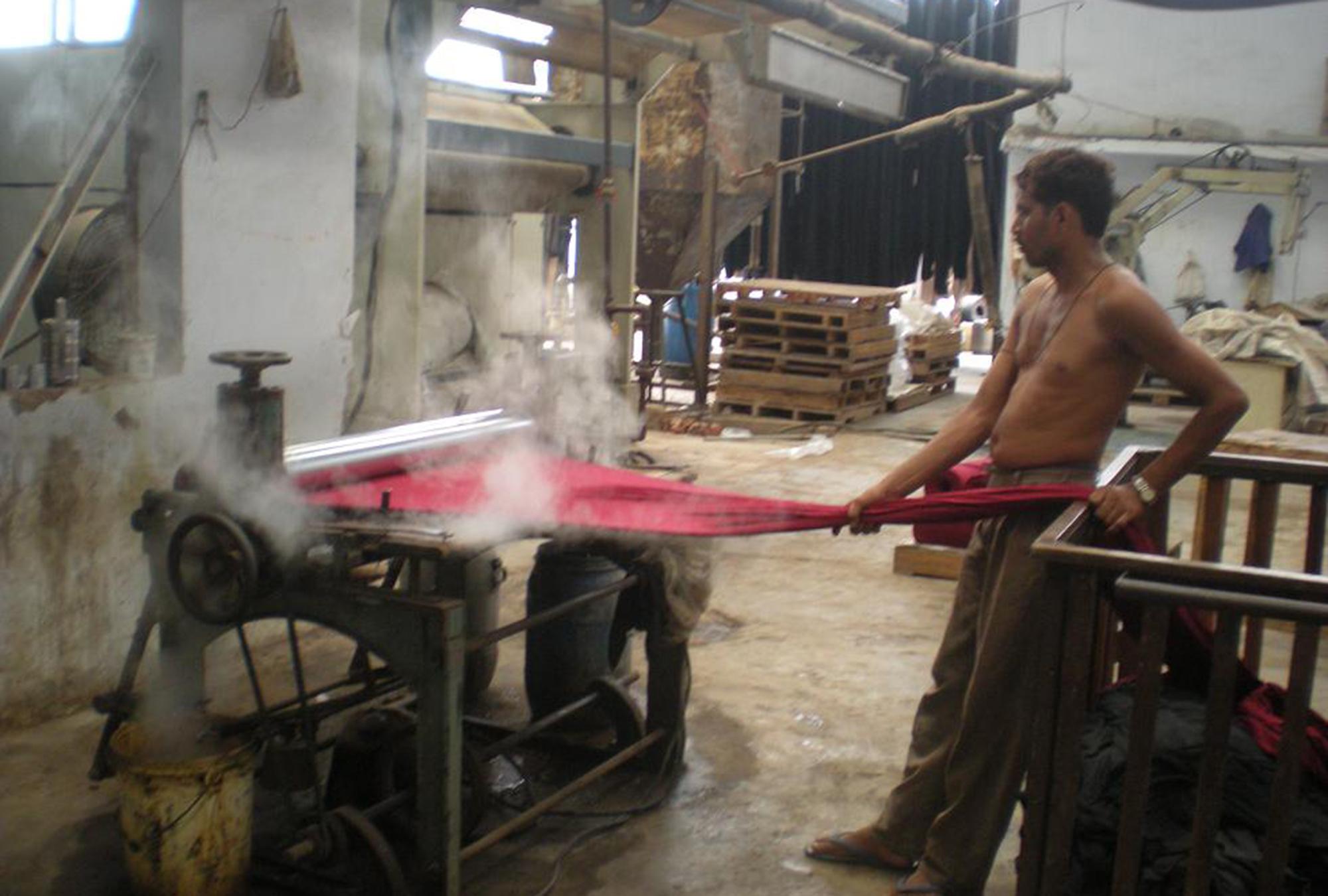
In 2008, Stanford and World Bank researchers (Bloom, Eifert, Mahajan, McKenzie and Roberts) randomly assigned 17 large Indian textile firms operating 28 plants around Mumbai to receive five months of free management consulting from Accenture, or to a control group that received only a short diagnostic.
The trial tested the causal impact of intensive management consulting on factory productivity, quality and profitability, in firms with baseline adoption of standard management practices ranging from just 8% to 55% of a 38-point scorecard.
The consultants worked on factory operations, quality control, inventory management, human resources and sales/order management over five months of free consulting.
Within four months, treated plants raised output by 9.4%; within a year, productivity was up 16.6%, quality defects fell by roughly half, and inventory levels dropped, adding an estimated US$325,000 in annual profit per treated plant. A later NBER follow-up found the gains persisted for years after the consultants left, and firms that adopted better practices went on to open more plants.
The sample was large, formal firms in the top 1% of Indian manufacturers by employment and sales — the study says little about whether five months of top-tier consulting is affordable or effective for small or informal enterprises, and the intervention itself (a global consultancy donating senior staff time) is not cheap to replicate at scale without a similar subsidy.
Do you run this practice? Claim it — verified implementers get a public contact pathway and can propose corrections.
Where this practice's information was retrieved from, and when.
Peru
Since 2015, ILO's SCORE Training has combined classroom instruction with in-factory coaching for Peruvian manufacturing SMEs, reporting output gains of …
India
A randomized experiment gave free Accenture consulting to 20 Mumbai textile plants; adopting standard management practices raised productivity 11% in …
South Korea
South Korea's long-running national scheme co-finances manufacturing SMEs to install smart-factory systems — automation, data and process control; independent trade …
South Korea
Since 2014 South Korea's Ministry of SMEs and Startups has subsidised smart-factory conversions for SMEs. Government survey data and an …
Open full copilot Grounded in cited practices — always check the sources.