National AI Campaign — Mongolia's Nationwide AI Teacher-Training Drive Across All 21 Provinces
Mongolia
AI Academy Asia's five-year National AI Campaign, backed by UNICEF Mongolia, M Bank and Golomt Bank, has trained 1,000 teachers …
Australia · Sydney · See the Australia profile · See the Sydney profile
Evidence: Observational / pre–post Top 56% 47/100 · Ask Evidence Copilot about this practice
A UNSW/Day of AI Australia study of a one-day AI-literacy workshop with 199 NSW students found girls made larger post-workshop gains in AI understanding and confidence, narrowing a STEM gender gap; boys reported far higher rates of making or sharing deepfakes.
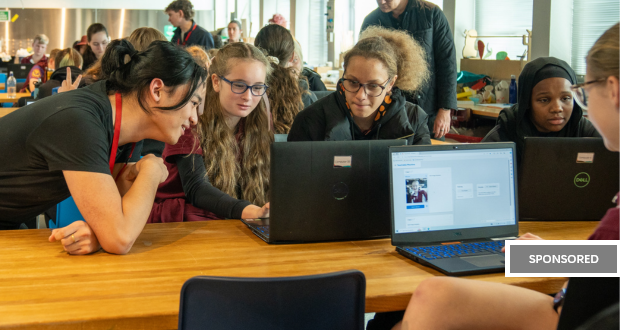
Researchers from UNSW Sydney and Day of AI Australia ran a single-day AI-literacy workshop with students in Years 7, 8 and 10 at two co-educational New South Wales government schools, surveying 199 students before the workshop and 136 after it. The workshop covered core AI concepts alongside a module on deepfakes and online safety.
Measure gendered differences in AI knowledge, confidence and career interest before and after a short AI-literacy intervention, including awareness of deepfakes and online safety.
All participating students received the same one-day workshop; there was no random assignment to a treatment and control group. Pre- and post-workshop surveys were administered, and a companion analysis by the same team was published in Springer's peer-reviewed proceedings.
Before the workshop, boys reported significantly higher interest in AI, computer science and engineering careers, while girls were more likely to already use AI tools for schoolwork and to seek advice from them; boys were also significantly more likely to say they had created or shared deepfake content. After the workshop, both genders gained AI knowledge, but girls showed a wider spread of gains — stronger conceptual understanding, higher confidence, and a bigger rise in AI/CS career interest — partially narrowing the pre-existing gender gap in STEM aspiration.
The study is a single-day intervention with real attrition between pre- and post-surveys (199 to 136 respondents) and covers only two schools, so the findings speak to short-term shifts in attitudes and self-reported knowledge rather than durable learning or career outcomes.
Do you run this practice? Claim it — verified implementers get a public contact pathway and can propose corrections.
Where this practice's information was retrieved from, and when.
Mongolia
AI Academy Asia's five-year National AI Campaign, backed by UNICEF Mongolia, M Bank and Golomt Bank, has trained 1,000 teachers …
Romania
UiPath Foundation's open-source AI Generation curriculum piloted with 94 underserved Romanian teens in 2024 (97% said they learned something new, …
Hong Kong
CUHK professors and 17 principals and teachers from 6 secondary schools co-created Hong Kong's first pre-tertiary AI curriculum; a mixed-methods …
Taiwan
A quasi-experimental study (n=109, grade 5) in Tainan found girls entered an AI course scoring lower on AI literacy than …
Open full copilot Grounded in cited practices — always check the sources.