JudgeGPT — a Nationwide Randomized Trial of Generative AI for Pakistan's Trial-Court Judges
Pakistan
A randomized trial gave ~1,559 Pakistani trial-court judges (about half the bench) access to JudgeGPT, a GPT-4 tool searching 129,235 …
Slovenia · Ljubljana · See the Slovenia profile · See the Ljubljana profile
Evidence: Quasi-experimental Top 62% 53/100 · Ask Evidence Copilot about this practice
HomeDOCtor gives Slovenian citizens 24/7 AI primary-care guidance grounded in national protocols. In peer-reviewed testing it scored 90.7% on national medical-exam questions vs 80.7% for generic ChatGPT-4o. Authors call it a research prototype, not a permanent service.
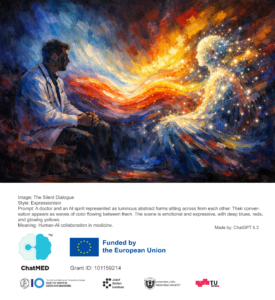
HomeDOCtor is a conversational AI system built by the Jozef Stefan Institute's Department of Intelligent Systems, funded through the EU Horizon Europe 'ChatMED' project, combining retrieval-augmented generation with a curated database of Slovenian medical guidelines to give round-the-clock primary-care guidance.
Opened for nationwide public testing end of 2024 through February 2025 and evaluated in a peer-reviewed 2025 study. On 100 international clinical vignettes, HomeDOCtor variants reached up to 99% Top-1 diagnostic accuracy. On 150 questions from Slovenia's national medical licensing exam, HomeDOCtor (GPT-4o-based) scored 90.7% versus 80.7% for a generic ChatGPT-4o baseline (p=0.0135), with average response time under three seconds.
The authors are explicit that HomeDOCtor remains a research prototype: not integrated with electronic health records, scope limited to internal medicine, usability testing informal and limited to expert reviewers, and by design it retains no session data, which protects privacy but precludes personalisation or longitudinal outcome tracking.
Indicative funding routes for practices of this type — always check each programme's current calls and eligibility rules.
Do you run this practice? Claim it — verified implementers get a public contact pathway and can propose corrections.
Where this practice's information was retrieved from, and when.
Pakistan
A randomized trial gave ~1,559 Pakistani trial-court judges (about half the bench) access to JudgeGPT, a GPT-4 tool searching 129,235 …
France
France's public employment service rolled out ChatFT to nearly 40,000 advisors from November 2024, saving up to 3 hours/week each, …
Costa Rica
Costa Rica's public health service (CCSS) uses an AI assistant, CLEO, to contact surgical-waitlist patients via WhatsApp, phone and email, …
Ghana
Ghana Health Service and Jacaranda Health adapted Kenya's decade-old PROMPTS platform into 'Nurse Mary,' an AI-triaged two-way SMS service that …
Open full copilot Grounded in cited practices — always check the sources.