Oslo's Blue-Green Factor — A Mandatory Stormwater & Greenery Score for New Developments
Norway
Oslo requires new developments to hit a minimum 'Blue-Green Factor' score for stormwater, vegetation, biodiversity and recreation; a peer-reviewed study …
Indonesia · Jakarta · See the Indonesia profile · See the Jakarta profile
Top 99% 13/100 · Ask Evidence Copilot about this practice
Indonesian law has required Jakarta to keep 30% of its area as green open space since 2007. Nearly two decades on, official figures put the city at roughly 5%, illustrating how a well-designed nature-based mandate can fail without enforcement against land-value pressure.
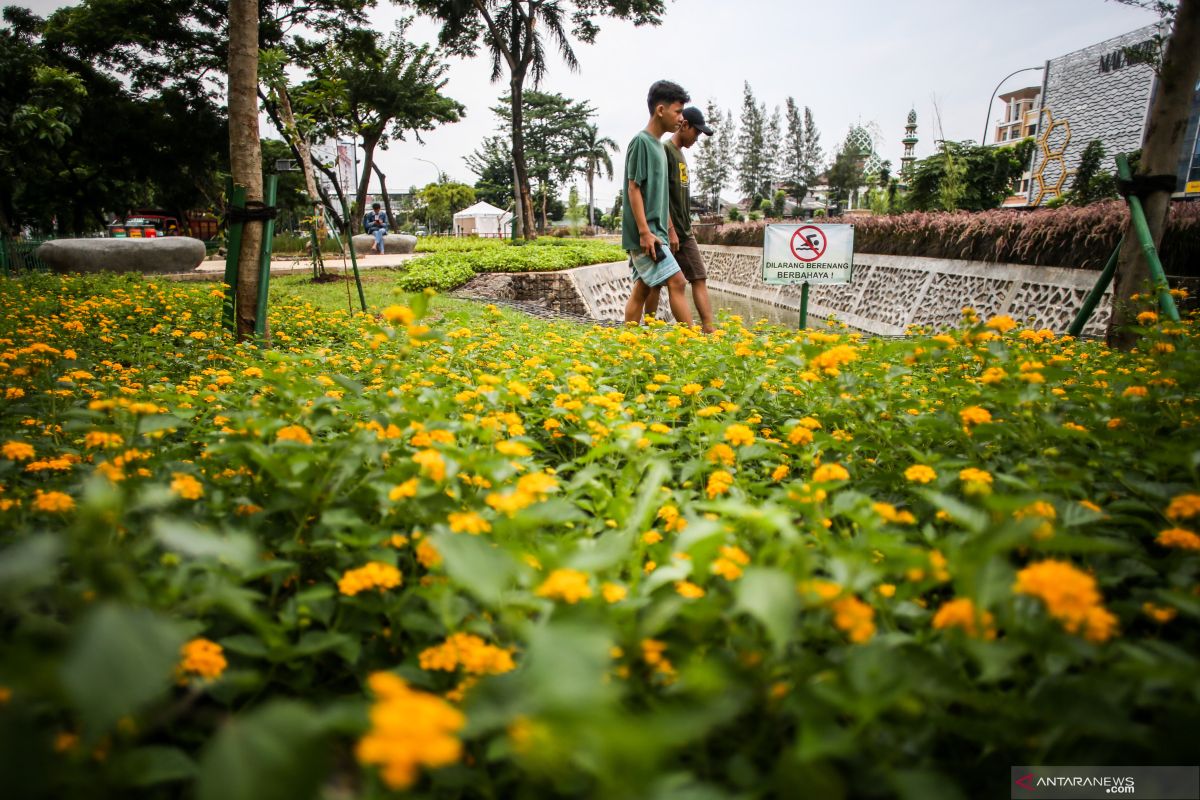
Indonesia's 2007 national Spatial Planning Law (Law No. 26/2007) requires every city to reserve at least 30% of its land as Ruang Terbuka Hijau (RTH) — green open space — split into 20% public and 10% private green space. Jakarta wrote the same target into local regulation, most recently Jakarta Governor Regulation No. 9 of 2022.
Compliance has stayed far below target. Antara News, Indonesia's state news agency, reported RTH at 5.2% of the city's 661.5 km² in 2024, unevenly distributed: East Jakarta reached 26.2% while West Jakarta had only 8.64%. The Jakarta Post documented residents converting private gardens into parking and living space as land values rose, and described enforcement as "rare, especially in residential areas."
The provincial government has responded with incremental additions — 29 new city parks totalling roughly 5.1 hectares planned for 2024 and a pledge to plant more than 20,000 trees — and has set a public target of reaching 30% by 2030. The gap between the two-decade-old legal mandate and today's roughly 5% coverage is itself the lesson: green-space quotas need enforcement mechanisms, not just zoning language, to become real nature-based infrastructure.
Read the full analysis: https://en.antaranews.com/news/309144/green-open-spaces-improve-quality-of-life-in-jakarta-metropolis
Implementation detail (cost, timeline, staffing, conditions for success) is not yet available for this practice.
Do you run this practice? Claim it — verified implementers get a public contact pathway and can propose corrections.
Where this practice's information was retrieved from, and when.
Norway
Oslo requires new developments to hit a minimum 'Blue-Green Factor' score for stormwater, vegetation, biodiversity and recreation; a peer-reviewed study …
Canada
Toronto's 2009 bylaw made green roofs mandatory on new mid-to-large buildings, delivering 1,200+ green roofs and 450,000+ m² of coverage, …
Colombia
Bogotá's Secretaría de Ambiente delivered 13,000 m² of green roofs and vertical gardens by mid-2018 (against a 20,000 m² by-2020 …
Estonia
An EU LIFE project (2018-2023) that built nature-based stormwater systems across four demonstration sites in Tallinn and Viimsi, cutting annual …
Open full copilot Grounded in cited practices — always check the sources.