Shack Dwellers Federation of Namibia — Community-Led Savings and In-Situ Upgrading
Namibia
Since the early 1990s, Namibia's shack-dweller savings groups have secured land tenure for 3,200 households and self-built 1,350 homes at …
Uganda · Kampala · See the Uganda profile · See the Kampala profile
Evidence: Observational / pre–post Top 74% 57/100 · Ask Evidence Copilot about this practice
World Bank-financed KIIDP (2008-2021, $33.6M then $183.7M) gave 1.3M+ Kampala residents road access, beating its target -- but a drainage sub-project lost funding after unresolved resettlement, and an Inspection Panel complaint needed 18 months of mediation.
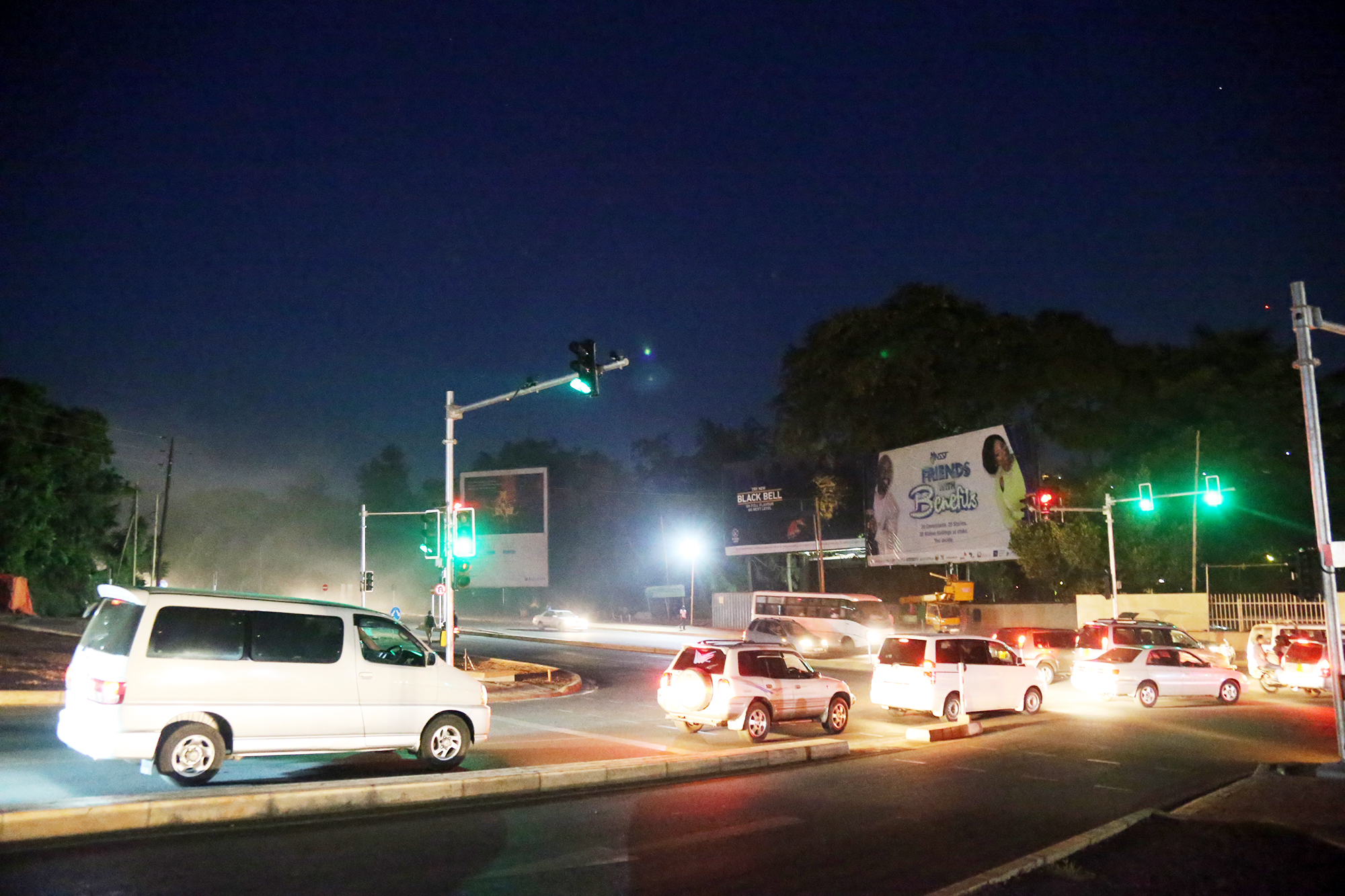
Kampala Capital City Authority (KCCA) implemented two consecutive World Bank-financed programmes to rebuild urban infrastructure and institutional capacity across the city's five divisions. The first phase, the Kampala Institutional and Infrastructure Development Project (KIIDP), ran from roughly 2008 to 2017 with an SDR 22 million (about $33.6 million) IDA credit. A second phase, KIIDP-2, ran from 2015 to 2021 with a total value of $183.7 million. Combined, the programmes rebuilt roads and drainage, and modernised KCCA's property registers, road asset management, traffic management and revenue-collection systems.
On its headline metric, the programme outperformed its target: 1,307,837 urban residents gained access to all-season roads within 500 metres of their homes, against an end-of-project target of 1,048,000. It formed part of a broader Greater Kampala Metropolitan Area vision, originally costed at $3 billion and later scaled back to $1.18 billion, with the World Bank contributing $566 million and the French Development Agency $42.66 million; Uganda's own committed co-financing of $571.31 million went largely unfulfilled.
The project's informal-settlement and resettlement record is markedly weaker than its infrastructure delivery. The World Bank recalled funding for the Nalukolongo drainage sub-component after the Uganda government failed to compensate Project Affected Persons, leaving only the Lubigi channel (62 billion UGX) and Nakamiro secondary channel (20 billion UGX) works completed. A community affected by the Lubigi channel works filed a formal complaint with the World Bank Inspection Panel in July 2021, alleging a coercive and exclusionary resettlement process; the case was resolved through 18 months of mediation, concluding in a Dispute Resolution Agreement in June 2023 with confidential terms. Separately, Ugandan investigative reporting found that of a $48 million institutional-strengthening grant intended for KCCA and eight other beneficiary authorities, the responsible central ministry allocated $18 million to itself, leaving only about $3.3 million for each of the nine implementing bodies. KIIDP is therefore a genuinely mixed case: strong, target-beating delivery on physical infrastructure, undercut by resettlement-compliance failures serious enough to trigger the World Bank's own accountability mechanism, and governance concerns over how shared funding was allocated.
National / regional programmes ERDF — European Regional Development Fund
Indicative funding routes for practices of this type — always check each programme's current calls and eligibility rules.
Do you run this practice? Claim it — verified implementers get a public contact pathway and can propose corrections.
Where this practice's information was retrieved from, and when.
Namibia
Since the early 1990s, Namibia's shack-dweller savings groups have secured land tenure for 3,200 households and self-built 1,350 homes at …
South Africa
A 'second-generation' crime-prevention-through-design programme in Cape Town's Khayelitsha township pairs infrastructure upgrading with community safety work; a peer-reviewed 2020 study …
Pakistan
Since 1980, residents of Karachi's Orangi settlement have self-financed and self-built underground sewers guided by the Orangi Pilot Project, cutting …
Kenya
Kenya's first citywide Special Planning Area designation (2017) gave 100,560 households on 689 acres of Nairobi's Mukuru settlements a co-produced …
Open full copilot Grounded in cited practices — always check the sources.