Nyandungu Urban Wetland Eco-Park: Restoring 122 Hectares in Kigali for Flood Control and Biodiversity
Rwanda
REMA restored 121.7 ha of degraded urban wetland in Kigali into the Nyandungu Eco-Park (2016–2020), replanting 17,000 native trees across …
Rwanda · Kigali · See the Rwanda profile · See the Kigali profile
Evidence: Descriptive / self-reported Top 27% 53/100 · Ask Evidence Copilot about this practice
Kigali is rehabilitating five degraded urban wetlands (491 ha: Gikondo, Rwampara, Nyabugogo Lower, Kibumba, Rugenge-Rwintare) into flood-control eco-parks under a $27M GEF/World Bank/NDF programme expected to benefit 220,000+ residents, building on the Nyandungu pilot.
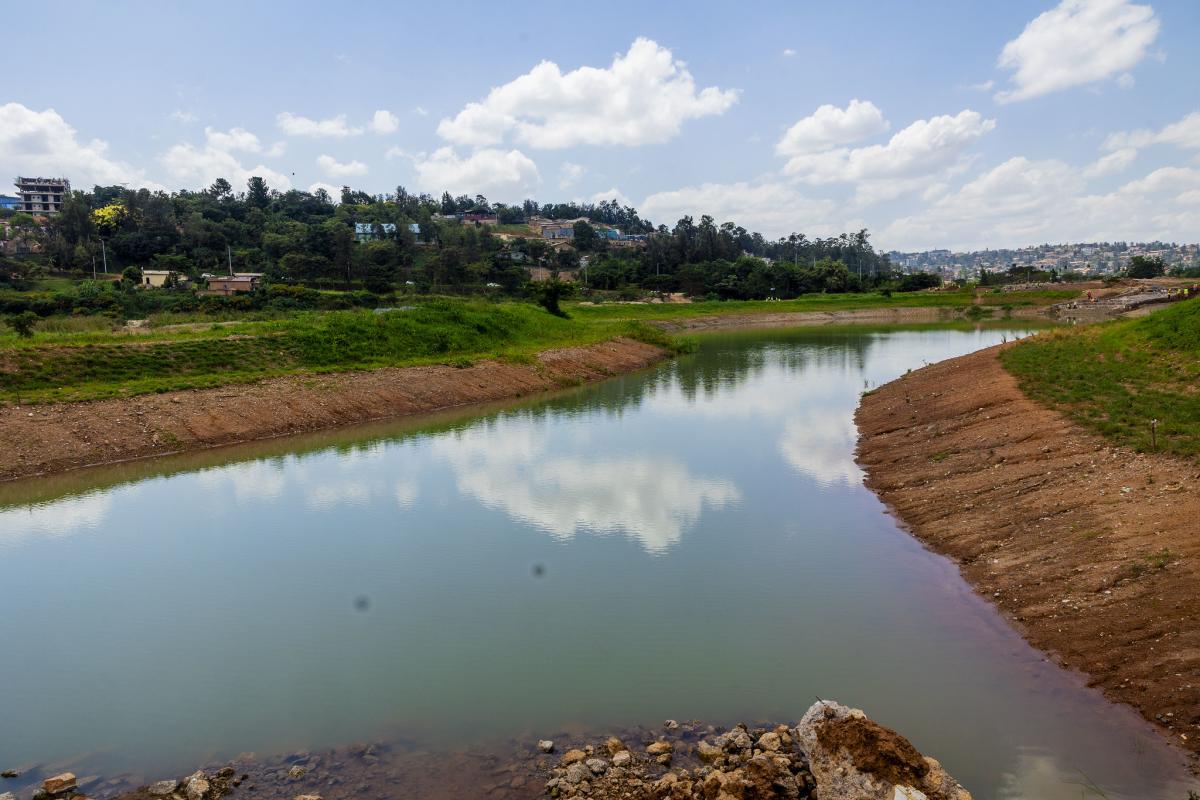
Following Rwanda's 2018 wetlands-protection law, which required eviction of informal industry and farming from Kigali's wetlands, the City of Kigali is rehabilitating five interconnected wetlands — Gikondo (162 ha), Nyabugogo Lower (131 ha), Kibumba (68 ha), Rwampara (65 ha) and Rugenge-Rwintare (65 ha), totalling roughly 491 hectares — into flood-control eco-parks, following the template of the earlier Nyandungu Eco-Park.
Regulate stormwater flow and stabilise water tables for a city where wetlands cover about 12.5% of land area, reducing flooding for surrounding neighbourhoods while adding recreational green infrastructure.
Works began in March 2024 and reached about 75% completion by late 2025. Engineering elements include constructed ponds, artificial lakes, sediment-trapping channels and river reprofiling, plus new walking/cycling paths, bird sanctuaries and recreational facilities.
The $27 million programme (Global Environment Facility, World Bank RUDP II, Nordic Development Fund, Government of Rwanda) is expected to benefit over 220,000 residents of surrounding neighbourhoods (Gikondo, Bweramvura, Gatsata) through reduced flooding.
Because the five-wetland phase is still under construction, independent post-completion measurements of flood reduction, water quality or biodiversity recovery are not yet published — the evidence to date concerns engineering design, funding and institutional commitment rather than confirmed ecological outcomes.
Do you run this practice? Claim it — verified implementers get a public contact pathway and can propose corrections.
Where this practice's information was retrieved from, and when.
Rwanda
REMA restored 121.7 ha of degraded urban wetland in Kigali into the Nyandungu Eco-Park (2016–2020), replanting 17,000 native trees across …
Mauritania
Created to compensate for the Diama and Manantali dams, Diawling National Park's engineered dikes and sluices reflood the Senegal River …
Mozambique
A €51M rehabilitation of Beira's silted Chiveve River created a 47-hectare mangrove-lined park with a tidal flood-control outlet, giving over …
Canada
Toronto's 2009 bylaw made green roofs mandatory on new mid-to-large buildings, delivering 1,200+ green roofs and 450,000+ m² of coverage, …
Open full copilot Grounded in cited practices — always check the sources.