Digital Learning Hub — Luxembourg's National Campus Bringing AI Training to Job-Seekers and Refugees
Luxembourg
Luxembourg's government-run Digital Learning Hub logged 6,000 registrations and 700 courses in its first two years — 44% by women …
Oman · Muscat · See the Oman profile · See the Muscat profile
Evidence: Descriptive / self-reported Top 81% 33/100 · Ask Evidence Copilot about this practice
Oman's ICT ministry runs a national digital and AI competencies initiative combining short courses, vendor certifications and a 16-week bootcamp with 8 weeks of on-the-job training. The ministry reports over 11,000 trainees and a 50% employment rate in the bootcamp track.
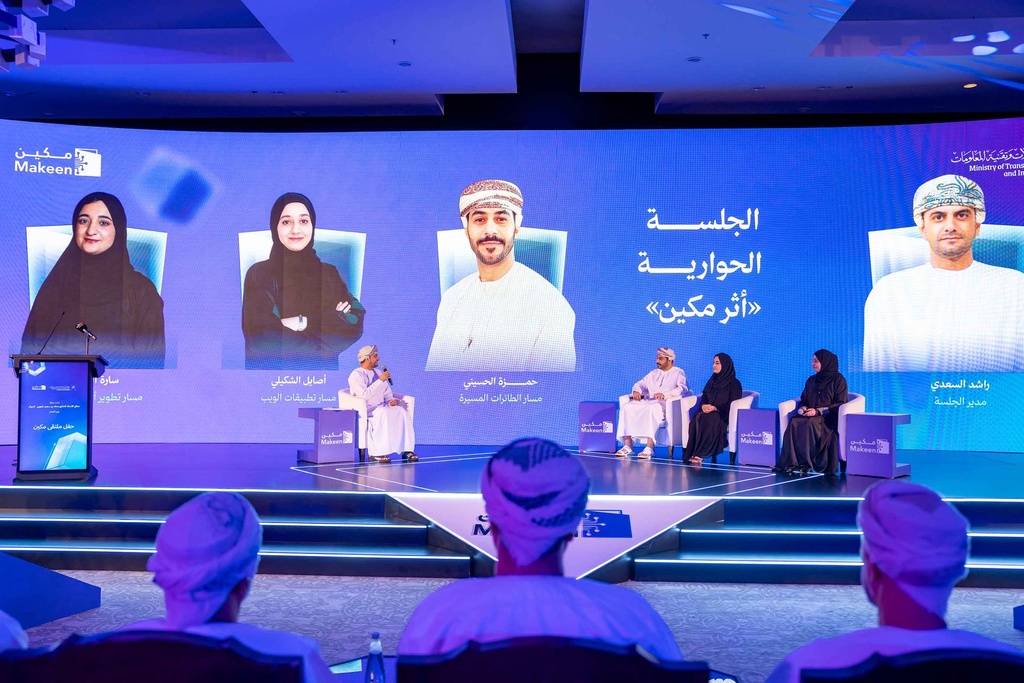
Makeen, the National Initiative for Digital Competencies, is run by Oman's Ministry of Transport, Communications and Information Technology (MTCIT) under the national Oman AI and Digital Future Programme 2024-2026, delivering digital and AI skills to graduates and jobseekers through five tracks including micro-credentials and vendor-certified qualifications with Huawei, Cisco and Microsoft.
The employability core is a 16-week technology bootcamp followed by 8 weeks of on-the-job training, delivered in Muscat, Suhar, Sur and Salalah, covering data science and AI, web, mobile, systems engineering and cybersecurity.
MTCIT's five-year review (April 2026) reports more than 11,000 trainees against more than 27,000 registrations, 139 programmes across more than 30 technology fields, more than 2,425 micro-credentials awarded, a 50% employment rate in the technology bootcamp track, and 2,790 Omanis supported into employment. Bootcamp cohorts are small relative to the headline: the first edition trained 100 graduates, with the second edition targeting 200 across three cohorts in 2025.
The evidential caveats are significant: every figure is ministry-reported with no independent evaluation, tracer study or counterfactual; the 50% employment rate has no published definition (measurement point or denominator), and at least one secondary source quotes 60% instead; sector aggregates presented alongside the programme (45.5% ICT-sector Omanisation, 4,949 Omanis entering sector professions) carry no attribution analysis and must not be read as effects of Makeen.
National / regional programmes
Indicative funding routes for practices of this type — always check each programme's current calls and eligibility rules.
Do you run this practice? Claim it — verified implementers get a public contact pathway and can propose corrections.
Where this practice's information was retrieved from, and when.
Luxembourg
Luxembourg's government-run Digital Learning Hub logged 6,000 registrations and 700 courses in its first two years — 44% by women …
Congo
Founded by young Congolese entrepreneurs, ENIA 2.0 offers free three-year AI and digital-technology training in Brazzaville, enrolling over 410 of …
Togo
Togo's Ministry of Public Service Efficiency and Digital Transformation ran the country's first AI Summer School in Lomé, training 100 …
Finland
A free 30-hour course by the University of Helsinki and MinnaLearn has taught AI basics to over a million learners …
Open full copilot Grounded in cited practices — always check the sources.