Lake Urmia Restoration Program (ULRP)
Iran
A decade-long Iran–UNDP programme cutting agricultural water use 25% and raising irrigation efficiency ~42% around Ramsar-listed Lake Urmia; independent monitoring …
Netherlands · Lelystad · See the Netherlands profile
Top 76% 33/100 · Ask Evidence Copilot about this practice
Silt dredged from Lake Markermeer is used to build an archipelago of new marsh islands. Five years of monitoring show 47 breeding bird types and 170 plant species, but the lake-wide water-clarity effect is still unproven.
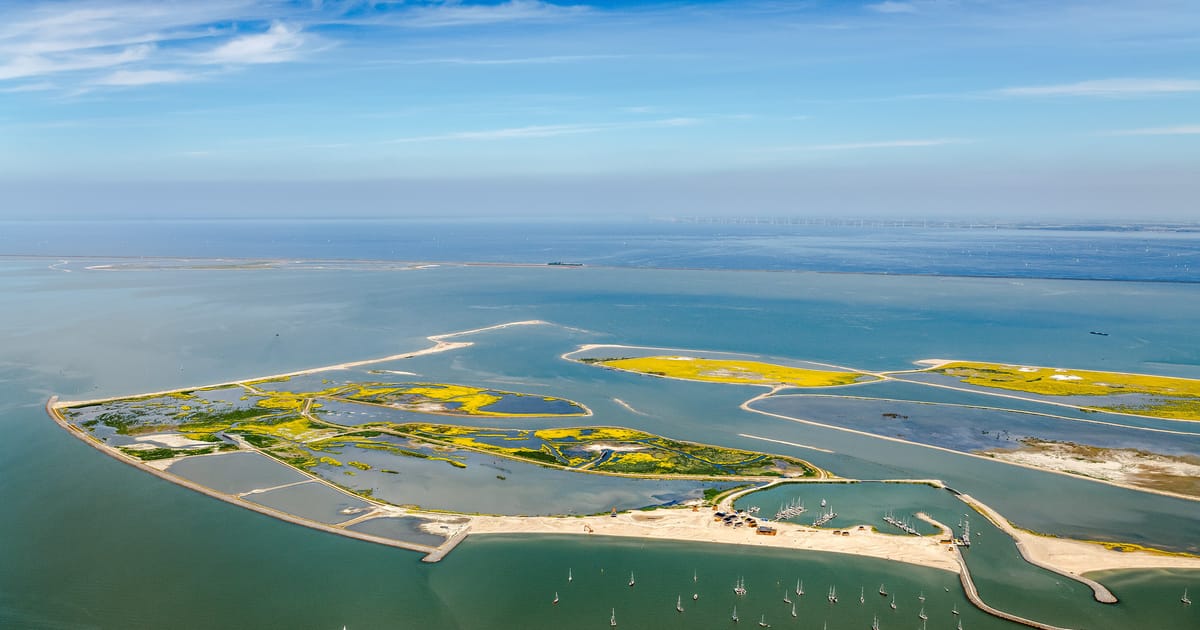
Since the 1976 Enkhuizen–Lelystad dike cut off its natural dynamics, Lake Markermeer has silted up and turned turbid, hurting water plants, shellfish, fish and birds. Natuurmonumenten, Rijkswaterstaat and the Province of Flevoland are building the Marker Wadden, an archipelago of marsh islands (about 1,300 ha of new nature is the stated goal), using sand, clay and silt dredged from the lake bed by contractor Boskalis. The idea is to let sheltered shallows, silt-trapping and a turbidity gradient rebuild the food web that waterbirds and fish depend on.
Results of the first five years of research (KIMA programme, published by Rijkswaterstaat and reported by EcoShape) record 47 types of breeding bird and 170 plant species settling within a few years, including rare long-tailed duck, little gull and corncrake. Clearer water has been measured on the lee side of the islands, and water east of the islands is described as improved, but the official summary calls the lake-wide effect tentative: construction and maintenance keep stirring up silt, so the total effect on clarity cannot yet be stated. The summaries give no bird counts against a baseline and are largely authored by project partners.
Costs reported for the first phase (one 5 km² island plus a 10 km² underwater landscape) are about €75 million, with €22 million from the Dutch Postcode Lottery and the rest from national and provincial government and private partners; no verified total cost for later phases was found. The project is a rare large-scale public–NGO–private partnership in nature-based solutions, but no carbon, water-retention or fire-risk results are published, so it scores on biodiversity and governance rather than on the other services.
Read the full analysis: https://www.natuurmonumenten.nl/marker-wadden/english/the-project
Implementation detail (cost, timeline, staffing, conditions for success) is not yet available for this practice.
Do you run this practice? Claim it — verified implementers get a public contact pathway and can propose corrections.
Where this practice's information was retrieved from, and when.
Iran
A decade-long Iran–UNDP programme cutting agricultural water use 25% and raising irrigation efficiency ~42% around Ramsar-listed Lake Urmia; independent monitoring …
Jordan
Since 1994, RSCN has worked to rewet Jordan's Azraq Oasis after over-extraction dried its springs in 1992; a 2020 AFD/FFEM-funded …
United Kingdom
Since 2000 the Knepp Estate has replaced intensive farming on 1,400 ha with free-roaming grazers and natural regeneration; surveys report …
Mauritania
Created to compensate for the Diama and Manantali dams, Diawling National Park's engineered dikes and sluices reflood the Senegal River …
Open full copilot Grounded in cited practices — always check the sources.