Brasil Mais Produtivo — Subsidised Lean-Manufacturing Consulting for 3,000 Industrial SMEs
Brazil
Brazil gave 3,000 industrial SMEs 120 hours of on-site lean consulting (R$18k cost, firm paid R$3k). Monitoring reported +52% productivity …
Türkiye · Ankara · See the Türkiye profile · See the Ankara profile
Top 62% 62/100 · Ask Evidence Copilot about this practice
Türkiye's Model Factories are simulated production lines where SME staff learn lean methods, then apply them in their plants with coaching. Since Ankara (2018) there are 12; reported gains include +52% output for 65 Kayseri firms, but no independent counterfactual evaluation.
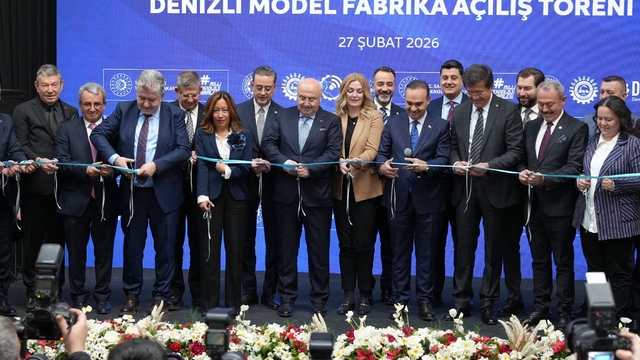
A Model Factory (Model Fabrika) is a learning factory: a working, simulated production line where staff from manufacturing SMEs practise lean methods (waste reduction, flow, standard work). The flagship 'Learn & Transform' (Öğren-Dönüş) programme then sends trainers into participants' own plants to apply the methods. The first centre opened in Ankara in 2018, hosted by the Ankara Chamber of Industry and set up by the Ministry of Industry and Technology with UNDP and KfW funding. Later centres opened in Kayseri, Konya, Bursa, Gaziantep and other cities, with Denizli the twelfth in 2026; the ministry targets 16. Digital-transformation services have been added alongside lean training, and KOSGEB co-finances services for eligible SMEs.
Reported results: UNDP reported in 2023 that 65 Kayseri firms completing Learn & Transform raised production by 52% and cut waste by 38% on average, with maxima of +187% production and +41% capacity. A 2021 UNDP release reported 23–100% productivity gains for six early Kayseri firms. In 2026, Minister Kacır said that firms using the service achieved up to 76% higher productivity, average 34% shorter production times and up to 140% more output without new machinery. The Denizli Chamber of Industry reported first-phase gains of up to 35% in delivery times, 48% in capacity and 56% in overall productivity.
Caveats: all figures are self-reported by the programme's promoters (the ministry, UNDP and chambers), are measured on participating firms without a comparison group, and several are 'up to' maxima, not averages. Selection is a concern, since motivated firms opt in. No published counterfactual impact evaluation was found, so persistence of gains and effects on employment and profits remain unverified. The model combines strong public–private–international collaboration with a clear, replicable format, but its impact evidence is still at the monitoring stage.
Read the full analysis: https://www.haberturk.com/denizli-haberleri/116784598-model-fabrika-ile-kapasite-yuzde-48-artarken-yapilan-yatirimlar-sadece-5-ayda-geri
Implementation detail (cost, timeline, staffing, conditions for success) is not yet available for this practice.
Do you run this practice? Claim it — verified implementers get a public contact pathway and can propose corrections.
Where this practice's information was retrieved from, and when.
Brazil
Brazil gave 3,000 industrial SMEs 120 hours of on-site lean consulting (R$18k cost, firm paid R$3k). Monitoring reported +52% productivity …
Colombia
Launched in 2019, Fábricas de Productividad co-finances certified 'extensionistas' who work inside SMEs on productivity targets. A Fedesarrollo review of …
Singapore
Singapore's IMDA-led SMEs Go Digital programme has supported ~88,000 SMEs since 2017 via tiered digital grants. A 2023 impact evaluation …
Cambodia
Since 2001, ILO-IFC's Better Factories Cambodia has tied garment-export access to independently monitored labour standards. A Tufts/NBER study (2015-18) found …
Open full copilot Grounded in cited practices — always check the sources.