Vietnam Women's Union Savings & Credit Groups — Mass-Organisation Microfinance for Rural Women
Vietnam
Since 1992, the Vietnam Women's Union has organised village-level Savings and Credit Groups channelling collateral-free loans to rural women via …
Colombia · Bogota · See the Colombia profile · See the Bogota profile
Evidence: Descriptive / self-reported Top 67% 52/100 · Ask Evidence Copilot about this practice
Facing 29.2% unemployment among Venezuelan migrant women in Colombia (vs 14.9% for men), Pro Mujer's USAID/OSF-backed programme capitalised 566 women's businesses and helped 1,142 reach formal employment across 9 cities in its first year (2022-2023).
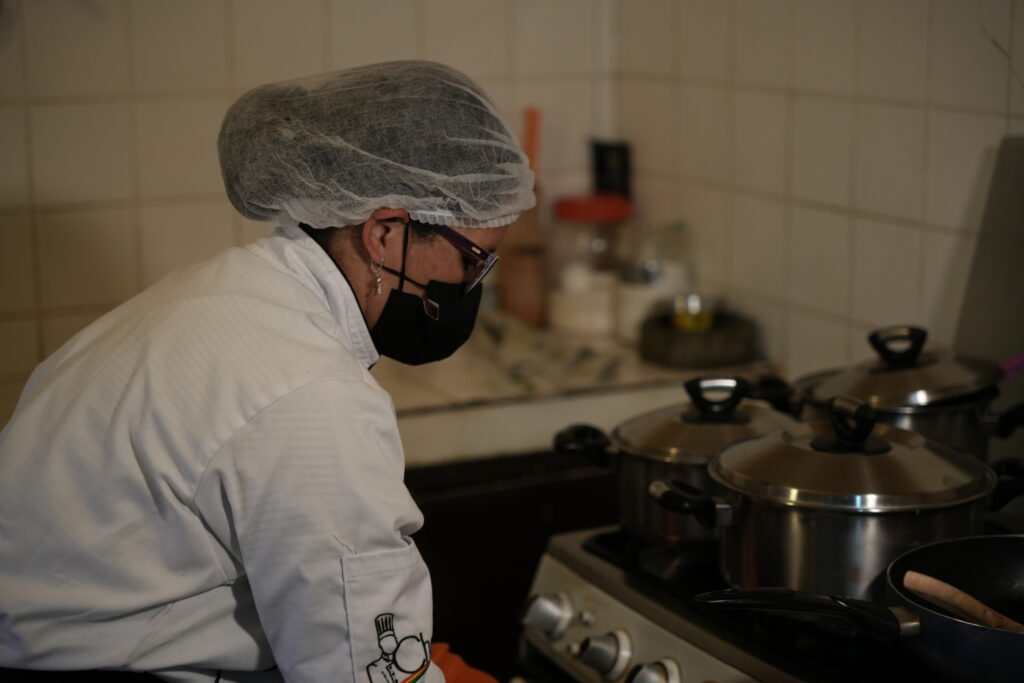
By August 2023, Colombia hosted roughly 2.88 million Venezuelan migrants, 52% of them women. Female migrants faced a 29.2% unemployment rate versus 14.9% for male migrants, alongside widespread informality: around 90% of Venezuelan migrants work informally, against 60% of Colombians.
Opportunities Without Borders (Oportunidades Sin Fronteras), a USAID-funded initiative implemented in part by Pro Mujer with Open Society Foundations support, targeted this gap with a package of training (costing and pricing, financial education, digital marketing, gender and social inclusion) plus access to capital and financial services. It operates in nine Colombian cities: Barranquilla, Bogota, Cali, Cucuta, Medellin, Riohacha, Bucaramanga, Cartagena and Santa Marta.
In its first year of operation (2022-2023), the programme reported reaching 566 Venezuelan migrant women with direct business capitalisation, 2,870 women with access to financial services (savings, credit, transfers), and 1,142 women who reached formal employment, of whom 659 were heads of household and 453 had caregiving responsibilities. Capitalised businesses concentrated in Cartagena (22.4%), Bucaramanga (17.3%), Cali (15%) and Barranquilla (11%), mostly in food and beverages (38%), health and beauty (16.6%) and commerce (13.6%).
Philanthropic / foundation funding
Indicative funding routes for practices of this type — always check each programme's current calls and eligibility rules.
Do you run this practice? Claim it — verified implementers get a public contact pathway and can propose corrections.
Where this practice's information was retrieved from, and when.
Vietnam
Since 1992, the Vietnam Women's Union has organised village-level Savings and Credit Groups channelling collateral-free loans to rural women via …
Bangladesh
Since the 2017 Rohingya influx, UNFPA has run Women-Friendly Spaces in Cox's Bazar's camps, growing from 19 sites in 2018 …
Malawi
CARE's Village Savings and Loan Associations (VSLAs) organise rural Malawian women into self-governing groups of 20–25. An IPA RCT found …
Tanzania
On Zanzibar's Pemba Island, where 88% of seaweed farmers are women, the NGO Aqua-Farms Organization lets women's cooperatives rent-to-own deep-water …
Open full copilot Grounded in cited practices — always check the sources.